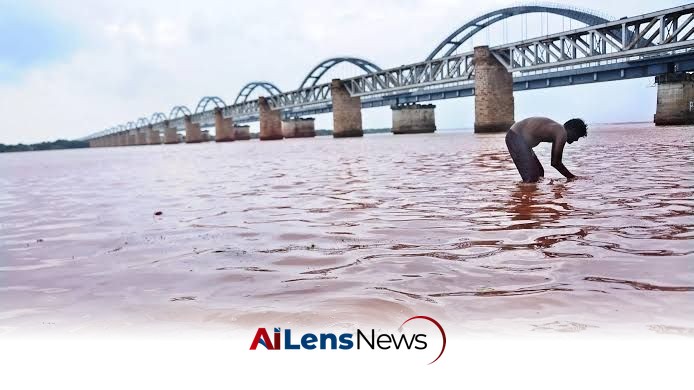


The Godavari River continues to swell due to heavy rainfall, affecting road connectivity and prompting intensified rescue operations in Telangana.
Hyderabad, India Jul 31, 2026 ALN: Heavy rains continuing over the past two days have severely affected the agency areas of Mulugu and Jayashankar Bhupalpally districts in the erstwhile Warangal region, leading to rising river levels, disrupted road connectivity, and intensified rescue operations.
The Godavari River is continuing to swell due to incessant rainfall in the upper catchment areas. Its level at Ramannagudem in Mulugu district is 70.26 metres at 5 p.m. on Thursday. Although the level is 3.06 metres below the first warning mark, officials said inflows have been steadily increasing and they are constantly monitoring the situation. The Godavari River, one of the longest rivers in India, is crucial for the region as it serves as a major source of irrigation and drinking water, as well as a vital transportation route.
The Godavari River has a significant historical and cultural importance, with its banks being home to various communities that rely on it for their livelihoods. The river is essential not just for agriculture but also for fishing, which is a primary source of income for many families in the region. The current situation, therefore, poses a threat not only to lives but also to the economic stability of these communities.
Search operations are continuing for the second day for the tourist who got swept away in the flooded Jampannavagu near Medaram on Wednesday. Teams from the National Disaster Response Force (NDRF), assisted by police personnel, are continuing to intensively search the area using boats and specialized safety equipment despite strong currents. This incident highlights the dangers posed by sudden floods, particularly in areas where rainfall can lead to rapid changes in water levels. The NDRF is trained to handle such emergencies, and their presence is crucial in ensuring the safety of those affected by the floods. Their expertise in swift water rescue operations is vital in such scenarios, where time is of the essence.
Authorities have advised residents of low-lying areas to remain vigilant and avoid venturing into rivers or streams, warning that water levels in the Godavari and its tributaries are expected to rise further. The advisory comes as part of a broader public safety campaign aimed at educating residents about the risks associated with flooding. Floods can lead to not only immediate dangers such as drowning but also longer-term issues such as waterborne diseases, making it critical for communities to heed warnings and take precautions. Public health officials are also on alert, ready to address potential outbreaks of diseases that can arise in the wake of flooding, such as cholera and leptospirosis.
Heavy rainfall in the Godavari and Indravati river basins due to the low-pressure system are bringing inflows into the Sammakka Sagar Barrage. On Thursday, inflows that stood at 3.63 lakh cusecs at 9 a.m. increased to 7.60 lakh cusecs by 5 p.m. In view of the rising inflows, officials have sounded the first flood warning around 7 p.m. The increase in inflows indicates that the rainfall has been significant enough to raise water levels rapidly, a situation that requires immediate action to prevent flooding downstream. The government’s proactive measures in issuing warnings and mobilizing rescue teams reflect the seriousness with which they are treating the situation.
Fishermen have been directed not to enter the river. Residents have been asked not to move their livestock across flooded stretches. The prohibition on fishing and livestock movement is a precautionary measure designed to protect both human life and the animals from the dangers posed by rising waters. Livestock can be particularly vulnerable during floods, and their safety is a priority for local authorities. Farmers are also being advised to secure their crops and take necessary measures to mitigate the impact of flooding on their agricultural activities.
Flood-related damage has disrupted transportation. Vehicular movement on National Highway 163, which connects Telangana and Chhattisgarh, remains suspended after the diversion road near the under-repair Isukavagu Bridge between Cheekupalli and Peddagollagudem villages in Wazeedu mandal got washed away. The suspension of traffic on key highways can have significant economic implications, affecting trade and the movement of goods and people between states. It also complicates rescue and relief efforts, as access to affected areas becomes restricted. Local businesses that rely on transportation for supplies and distribution are also feeling the strain, which could lead to longer-term economic challenges if the situation does not improve soon.
Further downstream, flood inflows into the Medigadda (Lakshmi) Barrage in Jayashankar Bhupalpally district have increased significantly. Heavy rains and rising water levels in the Pranahita and Godavari rivers have reached the Pushkar Ghat at the Triveni Sangamam in Kaleshwaram. The situation at the Medigadda Barrage is particularly concerning, as it serves as a critical infrastructure point for managing water levels in the region. With the barrage's storage capacity of 16.17 TMC, the management of inflows is essential to prevent overflow and potential flooding in surrounding areas. The barrage plays a key role in irrigation and flood control, underscoring the importance of its effective management during such weather events.
Officials said the Medigadda Barrage, with a storage capacity of 16.17 TMC, is receiving an inflow of 2.12 lakh cusecs. To regulate floodwaters, all the 85 gates of the barrage have been opened, releasing the water downstream. This decision to open the gates is a standard procedure in flood management, aimed at controlling the water levels and preventing catastrophic flooding in the vicinity. However, it also means that downstream areas must be prepared for increased water levels, which can lead to further flooding. The opening of the gates is a critical balancing act, as it aims to protect the areas around the barrage while managing the risks posed to communities further downstream.
Officials said the Godavari level continues to remain below the danger mark. However, continued rainfall upstream will lead to a further rise in the level of water over the next 24 hours. This ongoing rainfall poses a significant risk, and authorities are on high alert, prepared to implement additional safety measures if necessary. The potential for further flooding underscores the need for ongoing monitoring and community preparedness in the face of natural disasters. The situation serves as a reminder of the vulnerability of the region to extreme weather events, which may be exacerbated by climate change, leading to more intense and unpredictable rainfall patterns.
In summary, the current situation along the Godavari River is a stark reminder of the impact of heavy rainfall and the importance of preparedness in flood-prone areas. As the region continues to experience adverse weather conditions, the collaboration between local authorities, disaster response teams, and the community will be crucial in managing the situation effectively. The implications of these floods extend beyond immediate safety concerns, affecting transportation, agriculture, and the overall economy of the region, making it imperative for all stakeholders to remain vigilant and proactive in their response efforts. The experiences gained from this incident will also be vital in shaping future disaster preparedness and response strategies, as communities learn to adapt to the changing climate and its impacts.
To learn more about the latest developments in Crime & Law, stay updated with our exclusive reports and analyses on AiLensNews.

