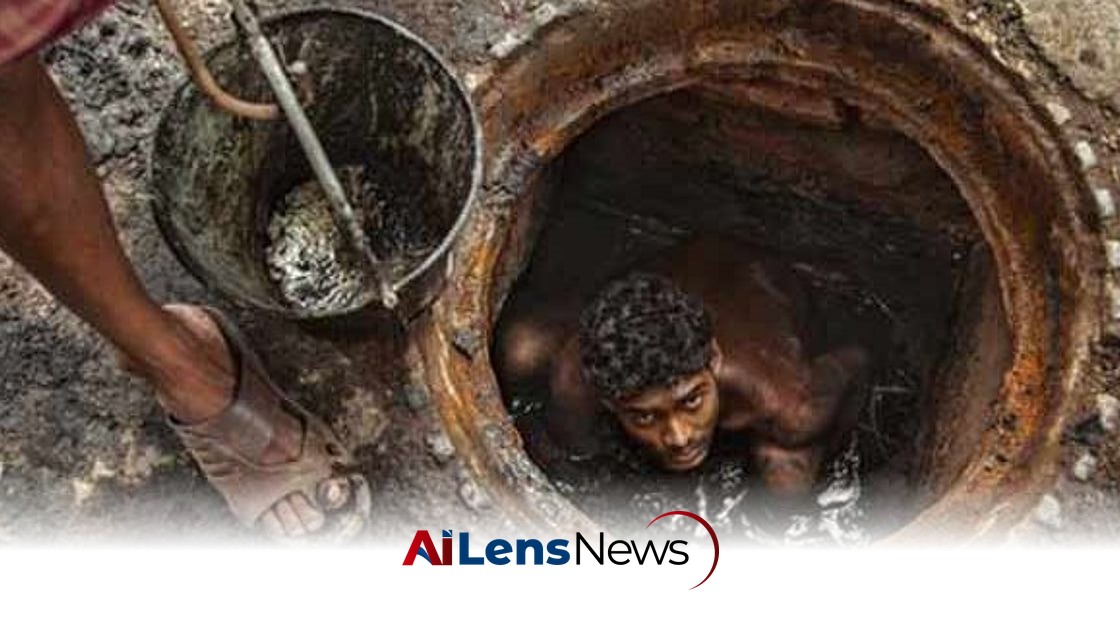


Tamil Nadu has recorded the third-highest fatalities among cleanliness workers during hazardous sewer cleaning, with 38 deaths reported in 2026.
Chennai, India Jul 21, 2026 ALN: With 38 fatalities, Tamil Nadu has recorded the third-highest number of cleanliness worker deaths during the hazardous cleaning of sewers and septic tanks in the country. The alarming figures highlight the ongoing risks faced by manual scavengers, a profession that remains perilously dangerous despite legal prohibitions against it.
The data from January 1 to June 30, 2026, was tabled in the Lok Sabha on Tuesday (July 21). Maharashtra topped the list with 58 deaths, followed by Haryana with 47, while Uttar Pradesh reported 37 deaths. These statistics reveal a troubling trend in the safety of sanitation workers across India, emphasizing the urgent need for systemic changes to protect those who perform these essential but hazardous jobs.
The figures were furnished by Minister of State for Social Justice and Empowerment, Ramdas Athawale, in response to an unstarred question raised by MP D Ravi Kumar on the eradication of manual scavenging. The fact that these numbers are presented in Parliament underscores the seriousness of the issue, yet they also reveal a persistent gap between legislation and reality on the ground.
The data showed that 332 cleanliness workers lost their lives across 18 states and union territories during the period. Besides the leading states, 29 deaths were reported in Delhi, 27 in Gujarat, 23 in Rajasthan, 13 each in Madhya Pradesh and West Bengal, 12 each in Karnataka and Punjab, nine in Telangana and five in Andhra Pradesh. This widespread occurrence of fatalities highlights a national crisis that calls for immediate attention and action from both state and federal governments.
The Union government informed Parliament that 193 FIRs had been registered against agencies or officials responsible for employing persons for hazardous manual cleaning over the last five years. This legal action indicates some level of accountability, yet the number of FIRs pales in comparison to the number of deaths recorded, suggesting that enforcement of existing laws is inadequate. Furthermore, the government admitted that no evaluation had been carried out on the implementation of mechanized sewer cleaning across states, raising questions about the effectiveness of policies aimed at eradicating manual scavenging.
Reiterating that manual scavenging is prohibited under the Prohibition of Employment as Manual Scavengers and their Rehabilitation Act, 2013, the Centre stated that anyone employing a person for manual scavenging could face imprisonment of up to two years, a fine of up to Rs 1 lakh, or both. Despite these legal frameworks, the continued prevalence of manual scavenging suggests a significant disconnect between legislation and enforcement, as well as a societal acceptance of practices that endanger lives.
It also said no instances of manual scavenging had been reported in the recent survey conducted across all districts. This claim raises skepticism among activists and advocates who argue that the absence of reported cases does not reflect the reality faced by many sanitation workers. The survey's findings may be influenced by a lack of awareness or fear among workers to report their circumstances, particularly in regions where manual scavenging is deeply entrenched in local practices.
The issue of manual scavenging is rooted in the caste system and socio-economic disparities that have persisted in India for centuries. Many manual scavengers belong to marginalized communities, often facing discrimination and limited opportunities for advancement. The work is not only hazardous but also stigmatized, which can isolate workers from mainstream society and limit their access to healthcare, education, and social services.
Efforts to mechanize sewer cleaning have been slow and inconsistent across the country. While some states have made progress in adopting technology to reduce the reliance on human labor for hazardous tasks, others have lagged behind, leaving many workers vulnerable to dangerous conditions. The lack of investment in infrastructure and technology is a significant barrier to eradicating manual scavenging, as is the inadequate training and support for workers transitioning to safer employment opportunities.
In addition to the immediate health risks posed by manual scavenging, there are broader implications for public health and sanitation. The unsafe practice can lead to the spread of infectious diseases, posing risks not only to the workers but also to the communities they serve. The deaths of sanitation workers due to accidents or exposure to toxic substances highlight the urgent need for comprehensive reforms in the sanitation sector.
Advocacy groups have called for increased government accountability and the implementation of robust safety measures for sanitation workers. This includes providing protective gear, training, and access to healthcare, as well as ensuring that workers are compensated fairly for their labor. Furthermore, there is a pressing need for public awareness campaigns to shift societal attitudes towards manual scavenging and promote dignity for all workers, regardless of their occupation.
As India continues to grapple with the challenges of urbanization and sanitation, the plight of manual scavengers remains a critical issue that demands attention. The government must take decisive action to enforce existing laws, promote mechanization, and support the transition of workers to safer jobs. Only through a concerted effort can the cycle of manual scavenging be broken, ensuring that no worker has to risk their life for the sake of cleanliness.
The historical context of manual scavenging in India cannot be overlooked. This practice has deep roots in the caste system, where certain communities have been relegated to perform menial and hazardous jobs. Despite constitutional guarantees of equality and various legislative measures aimed at protecting the rights of marginalized groups, the stigma associated with manual scavenging continues to persist. This societal stigma not only hinders the rehabilitation of manual scavengers but also perpetuates a cycle of poverty and exclusion.
Moreover, the issue of manual scavenging is not merely a labor rights concern; it is also a significant public health issue. The unsafe disposal of human waste can lead to severe health hazards, including the spread of diseases such as cholera, dysentery, and other gastrointestinal infections. The lack of proper sanitation facilities exacerbates these risks, particularly in urban areas where the population density is high. The deaths of sanitation workers, therefore, are not just individual tragedies but reflect a systemic failure to provide safe working conditions and adequate sanitation infrastructure.
In response to the alarming rates of fatalities among sanitation workers, various non-governmental organizations (NGOs) and civil society groups have been advocating for better protections and reforms. These groups argue for a multi-faceted approach that includes not only legal reforms but also social and economic support for manual scavengers. They emphasize the importance of integrating manual scavengers into the broader workforce and providing them with opportunities for skill development and employment in safer sectors.
Furthermore, the role of technology in addressing the issue of manual scavenging cannot be overstated. Mechanized cleaning solutions and modern sanitation technologies can significantly reduce the risks associated with manual scavenging. However, the transition to mechanization must be accompanied by a comprehensive strategy that includes training for workers on how to operate new technologies and ensuring that they are not left behind in the process.
In conclusion, the tragic deaths of manual scavengers in Tamil Nadu and across India serve as a stark reminder of the urgent need for systemic change. As the government grapples with the dual challenges of urbanization and public health, it must prioritize the safety and dignity of sanitation workers. Comprehensive reforms, robust enforcement of existing laws, and a commitment to eradicating manual scavenging are essential steps toward ensuring that all workers can perform their duties without fear for their lives.
To learn more about the latest developments in Crime & Law, stay updated with our exclusive reports and analyses on AiLensNews.

