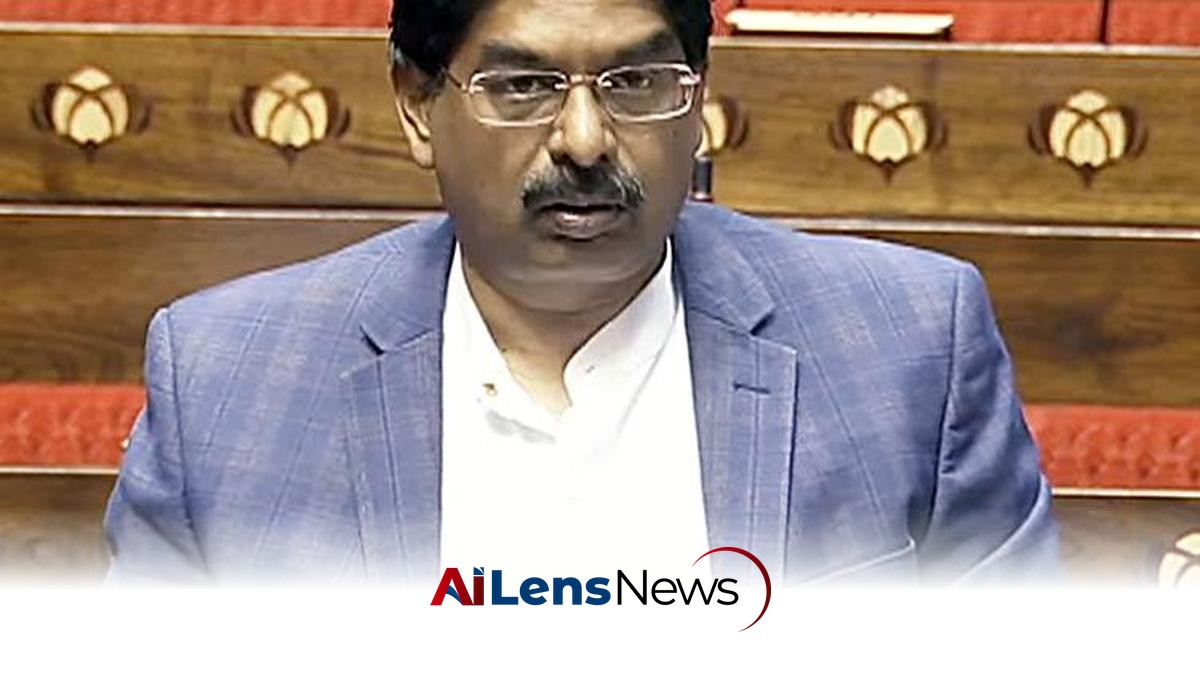


DMK members walked out of Parliament, demanding Tamil Nadu's rightful share of Cauvery water, criticizing Congress for neglecting the issue.
Chennai, India Aug 4, 2026 ALN: The ongoing Cauvery water dispute has once again taken center stage in Indian politics, particularly affecting the southern state of Tamil Nadu. On a recent Monday, members of the Dravida Munnetra Kazhagam (DMK) party, which governs Tamil Nadu, staged a significant protest in Parliament to draw attention to what they claim is an unjust denial of their state's rightful share of water from the Cauvery River. The protest involved a walk-out from both Houses of Parliament, as well as demonstrations outside the Parliament premises.
The Cauvery River, one of the major rivers in southern India, has been a source of contention between Tamil Nadu and Karnataka for decades. The dispute primarily revolves around the allocation of water resources, particularly during the monsoon season when water levels fluctuate significantly. The Cauvery Water Management Authority (CWMA), established by the Supreme Court in 2018, was tasked with overseeing the allocation and management of the river's waters among the riparian states, including Tamil Nadu, Karnataka, Kerala, and Puducherry.
According to the directives issued by the CWMA, Tamil Nadu is entitled to receive a specific quantity of water during the monsoon months. This year, the authority mandated that Tamil Nadu should receive 9.9 thousand million cubic feet (TMC) of water in June and 32 TMC in July, totaling 42 TMC for the two months. However, DMK leaders assert that Tamil Nadu has not received any water allocation thus far in 2026, which has exacerbated the already tense situation regarding water scarcity in the state.
The DMK has been vocal about its demands, with Rajya Sabha MP P. Wilson highlighting the urgency of the situation. He stated, "The original demand of 7,000 cusecs based on the already existing backlog has to be released to us. We wanted the House to debate and pass a resolution on this." The reference to 7,000 cusecs pertains to the flow rate that the DMK believes is necessary to address the backlog of water that has accumulated due to previous shortfalls. Wilson's remarks underscore the broader implications of the water dispute, which not only affects agricultural practices but also has ramifications for drinking water supply and overall economic stability in Tamil Nadu.
The protest was marked by DMK MPs carrying placards in both Houses of Parliament, signaling their discontent and demand for immediate action. In the Rajya Sabha, Chairman C.P. Radhakrishnan took note of the protest, naming Mr. Wilson among others for their actions. The situation escalated when the DMK's request for a debate on the issue was ignored, prompting the MPs to stage a walk-out in frustration. This act of protest reflects the growing discontent among regional parties regarding the perceived indifference of the central government to local issues.
In addition to their protest in Parliament, the DMK MPs have also taken legal recourse by approaching the Supreme Court to seek intervention in the matter. This legal strategy indicates the seriousness with which the party views the water crisis and its impact on the lives of Tamil Nadu's residents. The Supreme Court's previous rulings on the Cauvery water dispute have set important precedents, and the DMK hopes that further judicial scrutiny will compel the central government to act more decisively in favor of Tamil Nadu.
Wilson further criticized the Congress party, accusing them of neglecting the pressing water issues that affect the people of Tamil Nadu. He stated, "The Congress is not bothered about the problems of Tamil Nadu. They are only talking about other issues, so we have brought to the attention of the Parliament that this issue has to be sorted out by the Union government." His comments reflect a sentiment that has been echoed by various regional parties, which often feel sidelined in favor of political narratives. The DMK's protest serves as a reminder of the complexities of federalism in India, where regional interests can sometimes clash with priorities.
The implications of this ongoing dispute are significant. Water scarcity in Tamil Nadu can lead to severe consequences for agriculture, which is a vital part of the state's economy. The agricultural sector employs a large portion of the population and is crucial for food security in the region. A lack of water can lead to crop failures, increased farmer distress, and economic instability. Additionally, the water crisis can exacerbate existing social tensions and lead to protests, as seen in the recent demonstrations.
Moreover, the Cauvery water dispute is not just a political issue; it has deep social and cultural dimensions. Water is a lifeline for the communities that depend on the Cauvery River, and any perceived injustice can lead to widespread unrest. The DMK's actions in Parliament are part of a broader strategy to mobilize public sentiment and rally support for their cause, which they believe is crucial for the welfare of their constituents.
As the situation develops, it will be important to watch how the central government responds to the DMK's demands. The Union government's approach to water resource management has significant implications for inter-state relations, and how they handle the Cauvery dispute could set a precedent for future conflicts over water resources across the country. The DMK's protest highlights the urgent need for dialogue and negotiation among the states involved to ensure that water is allocated fairly and sustainably, in accordance with the directives of the CWMA.
The Cauvery River has historically been a lifeline for millions of people across southern India, providing water for drinking, irrigation, and industrial use. The river flows through Karnataka, Tamil Nadu, Kerala, and Puducherry, making it a crucial resource for multiple states. The complexities of inter-state water disputes often arise from differing needs, population pressures, and agricultural practices, which can lead to fierce competition for limited resources.
The Supreme Court's establishment of the CWMA was a significant step towards addressing these disputes, aiming to create a framework for equitable water distribution. However, the effectiveness of this authority has often been questioned, especially when states fail to comply with its directives. The DMK's insistence on the need for immediate action underscores the perceived inadequacies of the CWMA in enforcing its mandates, particularly in times of crisis.
Furthermore, the political landscape in India adds another layer of complexity to the Cauvery dispute. Water-related issues often become intertwined with regional politics, influencing electoral strategies and party alignments. The DMK's protest is not only a reaction to the immediate water crisis but also a calculated move to reinforce its political base in Tamil Nadu, where water scarcity is a pressing concern for voters. By taking a stand in Parliament, the DMK aims to position itself as the defender of Tamil Nadu's interests, contrasting its approach with that of the central government and opposition parties.
The situation is further compounded by the fact that monsoon patterns are increasingly unpredictable due to climate change, leading to greater variability in water availability. This unpredictability can exacerbate existing tensions between states as they vie for limited resources during dry spells. As such, the Cauvery water dispute is emblematic of a broader challenge facing India and many parts of the world: how to manage shared water resources in a sustainable and equitable manner amidst growing demand and changing environmental conditions.
In conclusion, the DMK's protest in Parliament over the Cauvery water dispute reflects the ongoing complexities of water resource management in India. The issue is not merely a political one but is deeply intertwined with the livelihoods and welfare of millions of people in Tamil Nadu. As the central government faces pressure from regional parties, the need for effective governance and equitable resource distribution becomes ever more critical. The resolution of the Cauvery water dispute will require a concerted effort from all stakeholders, including state governments, the central government, and the CWMA, to ensure that the rights and needs of all parties are respected, fostering a spirit of cooperation rather than conflict.
To learn more about the latest developments in Politics, stay updated with our exclusive reports and analyses on AiLensNews.

