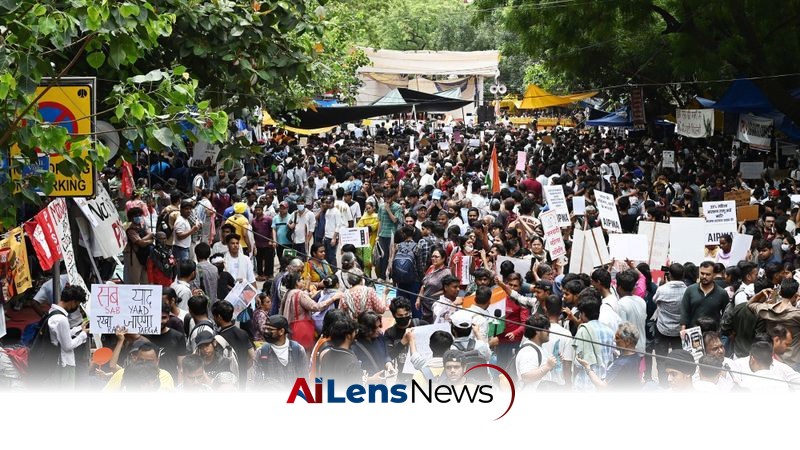


The Supreme Court has announced it will oversee the steps taken by the Centre to prevent NEET paper leaks, following the government's commitment to implement stringent measures.
New Delhi, India Jul 24, 2026 ALN: The Supreme Court of India has taken a proactive stance regarding the recent incidents of NEET paper leaks. On Friday, the court stated that it would closely monitor the actions taken by the Centre to address this pressing issue. This announcement comes after the government assured the court that it was implementing stringent measures to prevent such leaks in the future.
NEET, or the National Eligibility cum Entrance Test, is a crucial examination for students aspiring to enter medical colleges in India. The integrity of this examination is paramount, as it determines the future of countless students. Any breach in the examination process can lead to significant ramifications, not only for the students involved but also for the credibility of the examination itself.
The NEET examination is conducted by the National Testing Agency (NTA) and serves as a gateway for admission into undergraduate medical programs across the country. Given the vast number of candidates—often exceeding 15 lakh (1.5 million)—the stakes are incredibly high. The examination process is designed to be rigorous and fair, ensuring that only the most qualified candidates gain entry into medical colleges. However, incidents of paper leaks undermine this integrity, calling into question the fairness of the entire examination system.
In light of the recent leaks, the Supreme Court's involvement signifies the seriousness of the matter. The court's decision to monitor the situation reflects its commitment to ensuring that the examination process remains fair and transparent. This oversight is particularly important in a country where educational opportunities can drastically alter the life trajectory of students, making the examination not just a test of knowledge but a determinant of future success.
Following the recent incidents, the Centre has indicated that it is taking various steps to enhance the security and integrity of the NEET examination. These measures include the implementation of advanced technology to safeguard the examination papers, such as biometric verification of candidates, the use of secure examination centers, and the deployment of surveillance systems during the examination process. Additionally, strict penalties for those found guilty of leaking or attempting to leak the papers have been proposed, which may include imprisonment and hefty fines.
It is important to note that the issue of examination paper leaks is not confined to NEET alone. Similar incidents have plagued various competitive examinations in India, leading to widespread public outcry and calls for reform. The recurring nature of these leaks has raised concerns about the systemic issues within the examination process and the need for comprehensive reforms to prevent future occurrences.
The Supreme Court's intervention is expected to bring a level of accountability to the situation. By overseeing the measures implemented by the government, the court aims to ensure that the actions taken are not merely superficial but lead to substantial improvements in the examination's integrity. The court's involvement also serves to reassure students and parents that their concerns are being taken seriously, which is crucial for restoring public confidence in the examination system.
As the situation develops, both students and educational authorities will be keenly observing the effectiveness of the measures put in place. The Supreme Court's oversight will likely play a crucial role in restoring confidence in the NEET examination process. Stakeholders, including educators, policy-makers, and students, are all invested in the outcome of this situation, as it affects not only current candidates but also future generations of medical aspirants.
In conclusion, the Supreme Court's decision to monitor the steps taken to curb NEET paper leaks is a significant move towards ensuring the integrity of one of India's most important examinations. The commitment from the Centre to implement stringent measures is a positive step, but the effectiveness of these measures will ultimately determine the future of the NEET examination. The ongoing developments will be closely watched, as they may set a precedent for how similar situations are handled in the future, potentially leading to broader reforms in the educational and examination systems across India.
Moreover, the implications of the Supreme Court's involvement extend beyond just the NEET examination. It could signal a shift in how the judiciary engages with educational policies and the administration of examinations in India. As the court takes a more active role in overseeing these processes, it may pave the way for enhanced judicial scrutiny of educational reforms, accountability in examination management, and a more robust framework for safeguarding the rights of students.
Ultimately, the integrity of examinations like NEET is not just about maintaining standards; it is about ensuring that every student has an equal opportunity to succeed based on merit. The actions taken in response to the recent leaks will be critical in shaping the future landscape of medical education in India and restoring faith in a system that is foundational to the aspirations of millions.
To understand the broader context, it is essential to recognize that the NEET examination is not just a mere test; it is a pivotal moment in the lives of students who aspire to become medical professionals. The examination is designed to assess the knowledge and skills of candidates in subjects such as Physics, Chemistry, and Biology, ensuring that only those who are truly prepared can enter medical colleges. However, when the integrity of this examination is compromised, it raises questions about the fairness of the selection process and the qualifications of those who ultimately gain admission.
The implications of paper leaks extend beyond individual candidates; they can tarnish the reputation of the educational institutions involved and diminish public trust in the entire examination system. If students believe that success in NEET is attainable through dishonest means, it could discourage genuine efforts to study and prepare, ultimately undermining the quality of medical education in India.
Furthermore, the recurring incidents of examination paper leaks highlight systemic issues within the educational framework. These issues may include inadequate security measures, lack of accountability among examination authorities, and insufficient legal repercussions for those involved in such unethical practices. Addressing these challenges requires a comprehensive approach that not only focuses on immediate solutions but also aims to create a more resilient and trustworthy examination system in the long run.
The Supreme Court's involvement in this matter could also lead to a reevaluation of the policies governing examinations in India. As the court demands transparency and accountability, it may encourage the government and educational bodies to adopt more stringent regulations and protocols. This could involve revisiting the processes of examination administration, the training of invigilators, and the overall management of examination logistics.
Moreover, the NEET paper leak incidents serve as a reminder of the need for continuous dialogue among stakeholders in the education sector. Engaging educators, policymakers, students, and parents in discussions about examination integrity can foster a collaborative approach to addressing these challenges. By working together, stakeholders can develop innovative solutions that not only prevent future leaks but also enhance the overall quality of education in India.
In summary, the Supreme Court's decision to oversee measures against NEET paper leaks is a critical step towards safeguarding the integrity of one of India's most significant examinations. The government's commitment to implementing stringent measures is commendable, but the real test will be the effectiveness and sustainability of these actions. As the situation unfolds, it will be essential to monitor the ongoing developments and their implications for the future of medical education in India, ensuring that the examination process remains fair, transparent, and equitable for all students.
To learn more about the latest developments in Crime & Law, stay updated with our exclusive reports and analyses on AiLensNews.

