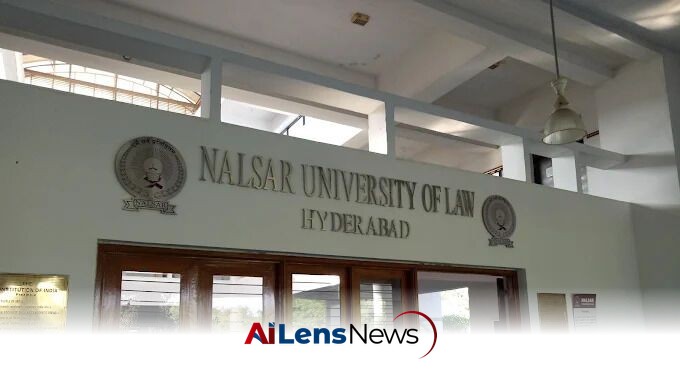



The Supreme Court has intervened to protect NALSAR University students from punitive actions by the Bar Council of India, emphasizing their right to protest.
New Delhi, India Aug 14, 2026 ALN: The Supreme Court on Friday issued notice to the Bar Council of India (BCI) and directed that no punitive action be taken against NALSAR University of Law students or faculty over a controversy surrounding a campaign opposing Chief Justice of India (CJI) Surya Kant's proposed participation in the university's convocation.
A Bench headed by CJI Surya Kant and comprising Justices Joymalya Bagchi and V Mohana also strongly criticised the BCI's move to halt the enrolment of NALSAR's 2026 graduates, observing that students have a right to peacefully protest. This ruling underscores the importance of academic freedom and the right to dissent, which are fundamental principles in democratic societies.
The matter has been posted for hearing after two weeks. The Supreme Court's intervention highlights the judiciary's role in protecting the rights of students and maintaining the integrity of educational institutions against external pressures.
"BCI is unnecessarily taking action. If the students have a cause to protest, they have the right to protest," the CJI observed while hearing a petition challenging the BCI chairman's directions. This statement reinforces the judiciary's commitment to upholding constitutional rights, particularly the right to free speech and assembly, which are essential in a functioning democracy.
Questioning the council's intervention, he added, "Students might have written a letter to me. It's a dialogue between students and me. Who are they (BCI) to unnecessarily raise an issue? This is totally uncalled for. BCI has nothing to do with this." This assertion by the CJI emphasizes the importance of direct communication between students and their university administration, and the role of the judiciary in mediating disputes that arise within academic environments.
The court's observations came a day after the BCI directed all state bar councils not to enrol NALSAR's 2026 graduates as advocates until further orders, citing a campaign against the CJI's proposed invitation to the university's convocation. The directive sparked widespread criticism from legal circles and social media, prompting the BCI to withdraw it within hours, illustrating the potential backlash that regulatory bodies might face when perceived as overstepping their authority.
Senior advocate K Parameshwar, who mentioned the petition before the court, argued that the issue remained alive despite the withdrawal of the order and questioned whether the BCI chairman had been authorised by the council to take such a decision. This raises critical questions about the governance structure of the BCI and the decision-making processes that guide its actions, particularly in matters that affect students' futures.
Justice Bagchi also sought answers from the BCI, asking, "Was BCI convened to take a resolution like that? We want to know." This inquiry reflects the court's concern over the procedural legitimacy of the BCI's actions and its broader implications for the autonomy of law schools in India.
The court subsequently passed an interim order restraining the BCI and state bar councils from taking any action against students or faculty over the campaign relating to the CJI's proposed convocation participation. This interim measure serves to protect the students from any retaliatory actions while the legal proceedings unfold, providing a breathing space for the academic community to engage in dialogue without fear of repercussions.
In a significant gesture, CJI Surya Kant invited NALSAR students to join the Supreme Court Bar and encouraged them to obtain their licences at the earliest. "Join the Supreme Court Bar. We will empanel them for legal aid cases. This will be the befitting answer to all those who caused impediment in their career," he said. This invitation not only serves to empower the students but also highlights the judiciary's commitment to ensuring that legal professionals are well-equipped to serve the public interest.
Defending the council's conduct, BCI chairman Manan Kumar Mishra said the original order had been issued "in haste" and was withdrawn within 40 minutes. He said the matter was later discussed by the council, which unanimously decided that students should not suffer. This admission of haste suggests a need for clearer communication and procedures within the BCI, particularly regarding how decisions that affect students are made and communicated.
The controversy originated after a section of NALSAR students wrote to the university administration opposing any proposal to invite the CJI as chief guest at the convocation, the date of which is yet to be announced. This letter reflects a growing awareness among students of their rights and the importance of voicing dissent in a constructive manner, which is a positive development in the context of legal education.
While the BCI later allowed enrolment of all graduating students, it retained a proposal for an inquiry into those allegedly involved in the campaign. This dual approach raises questions about the balance between accountability and the protection of free speech within academic institutions. The inquiry could be seen as a necessary step to maintain decorum, but it also risks chilling dissent if not handled sensitively.
NALSAR Vice-Chancellor Srikrishna Deva Rao has earlier said the issue would be placed before the university's Executive Council to determine whether such an inquiry would be constitutionally and legally permissible. This step indicates the university's commitment to uphold academic integrity while navigating the complexities of student activism and institutional governance.
The implications of this case extend beyond NALSAR, as they resonate with broader themes of student rights, academic freedom, and the role of regulatory bodies in education. As legal professionals in training, NALSAR students are at the forefront of these issues, and their actions may set precedents for how similar situations are handled in other institutions across the country.
In conclusion, the Supreme Court's intervention in this matter serves as a reminder of the judiciary's role in safeguarding constitutional rights and the importance of dialogue between students and educational authorities. As the case progresses, it will be crucial to observe how it influences the relationship between law schools, regulatory bodies, and the students they serve.
To learn more about the latest developments in Crime & Law, stay updated with our exclusive reports and analyses on AILensNews.

