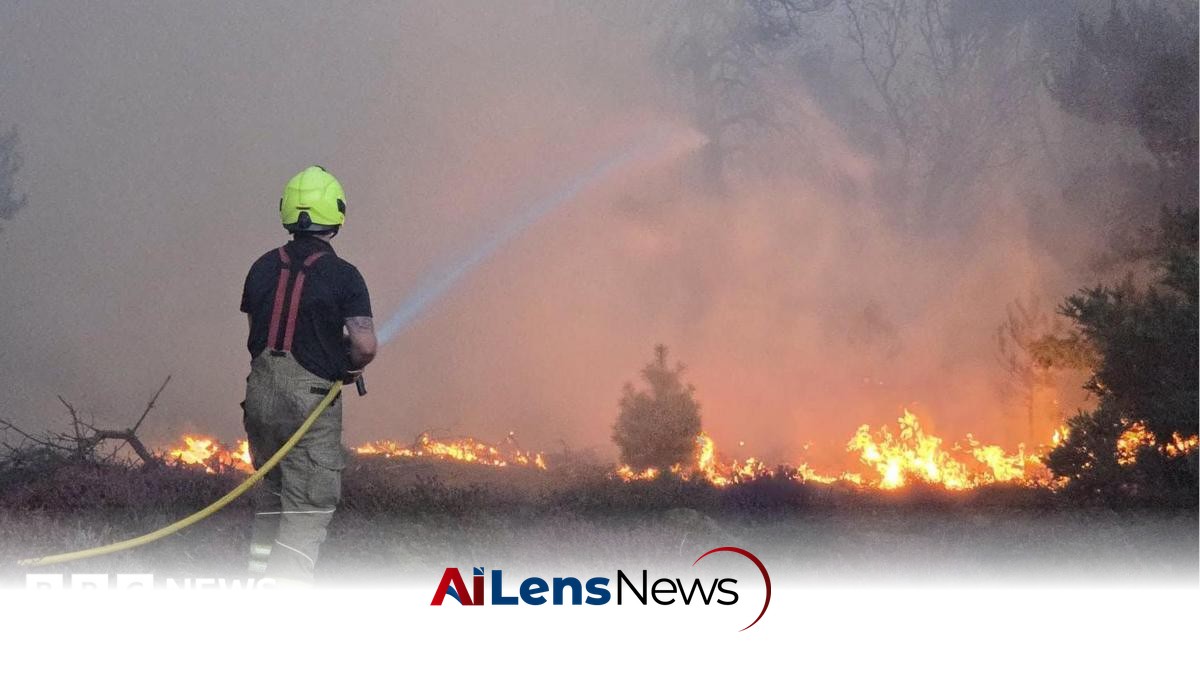


Firefighters in Suffolk are battling a wildfire that has expanded to 150 hectares, with unpredictable conditions complicating efforts.
New Delhi, India Jul 31, 2026 ALN: More than 100 firefighters are continuing to tackle a wildfire that has grown to the size of 210 football pitches (150 hectares) and has been burning for more than 24 hours on the Suffolk coast.
The county's fire service reported that the "unprecedented" blaze broke out on Dunwich Heath, near Leiston, at about 17:00 BST on Wednesday. This area, known for its unique coastal heathland, is a popular destination for tourists and nature enthusiasts, as it provides a habitat for various species of flora and fauna.
A spokesperson for the Sizewell B nuclear power station, located about three miles (5km) from the fire, stated that it is monitoring the "dynamic situation" closely. The proximity of the fire to critical infrastructure has raised alarms, prompting heightened vigilance from the operators of the power station, which is one of the UK's key energy facilities.
The fire service indicated that its response to the fire would continue for at least another 48 hours, with changing wind conditions making it difficult to predict how the fire may spread. The unpredictability of the fire's behavior is a significant concern for firefighters, as wind can exacerbate the situation, pushing flames into new areas and complicating containment efforts.
Homes and a holiday caravan park were evacuated after the fire broke out, raising concerns for rare birds and wildlife inhabiting the heath and nearby RSPB Minsmere, a renowned nature reserve. The swift action taken to evacuate residents and visitors reflects the seriousness with which authorities are treating the incident, especially given the ecological significance of the area.
The "large-scale, wind-driven" fire was declared a major incident on Thursday morning due to its size and complexity, exacerbated by south-westerly winds. This declaration enables the mobilization of additional resources and support from neighboring fire services and national agencies, highlighting the collaborative effort required to manage such emergencies.
On Thursday evening, Suffolk's chief fire officer, Jon Lacey, reported that eighteen fire engines and 120 firefighters were involved in the response. However, difficult terrain and limited access routes have made it challenging for crews to reach some areas of the wildfire. The topography of Dunwich Heath, characterized by its sandy soil and dense vegetation, presents significant obstacles to firefighting efforts, necessitating strategic planning and careful execution of containment tactics.
Approximately 100 to 150 people have been evacuated from their accommodations, with the fire service's website stating that they are being supported by firefighters from neighboring brigades, including engines sent from London. The inter-agency cooperation is crucial in ensuring that all available resources are utilized effectively in combating the blaze.
"We have also requested additional national support, including wildfire specialist appliances, officers, and tactical advisers," the fire service added. This indicates the seriousness of the situation, as specialized equipment and expertise are often required to manage wildfires effectively, particularly in challenging environments.
Approximately 50 people have received assistance through the rest center, which remains open, and the fire service expects the response to continue for at least the next 48 hours. The establishment of a rest center is a vital component of emergency response, providing shelter, food, and support to those affected by the fire.
Prime Minister Andy Burnham has pledged to provide the fire service with "all the support it needs" to tackle the "very serious" heathland blaze. This commitment from the government underscores the importance of rapid and effective response measures in the face of natural disasters, particularly as they become more frequent due to climate change.
Communities Secretary Angela Rayner praised the firefighters for their "skill, dedication, and bravery." The acknowledgment of the firefighters' efforts serves to highlight the risks they face while working to protect lives, properties, and natural resources during such emergencies.
Green Party leader Zack Polanski has called for Burnham to host an emergency Cobra meeting to discuss the outbreak of wildfires in Britain, including in Suffolk. The Cobra meetings, which involve key government officials and agencies, are convened to address national emergencies, indicating that the situation in Suffolk may have broader implications for wildfire management across the UK.
Sizewell B power station confirmed that the fire was "not affecting operations," as fields separate the plant from the blaze, which is impacting the heathland further north along the coast. This separation is a relief for local residents and officials, as any disruption to the power station could have significant repercussions for the energy supply in the region.
Meanwhile, Sizewell C, currently under construction, has offered rooms at its Pakefield accommodation block should residents need them. This gesture demonstrates a commitment to community support during the crisis, as local facilities are mobilized to assist those displaced by the fire.
UK Power Networks reported that it had turned off power to 116 homes in the Darsham area at the fire service's request due to the proximity of the fire to overhead lines. This precautionary measure is essential for ensuring the safety of residents and firefighters alike, as electrical hazards can pose additional risks during firefighting operations.
Dunwich Heath, owned by the National Trust, and nearby RSPB Minsmere are home to various rare birds and wildlife, including Dartford warblers, nightjars, and stonechats, as well as reptiles like adders and common lizards. The ecological significance of this area cannot be overstated, as it serves as a critical habitat for species that are already vulnerable due to habitat loss and climate change.
While no human injuries have been reported, retired ecologist Chris Keeling expressed concern over the fire's impact on wildlife and habitats, calling the situation "so terribly sad" and "horrendous." His comments reflect a broader concern among conservationists and local residents about the long-term effects of such wildfires on biodiversity and ecosystem health.
Properties including Coastguard Cottages, Mount Pleasant Farm, and Cliff House Holiday Park were evacuated overnight. Barry Banks, a local resident, took in evacuees, describing the situation as "a bit chaotic" but noted that villagers wanted to help. This community spirit is vital in times of crisis, as local residents often band together to support those affected by disasters.
About 60 people, including families with babies and dogs, have attended a relief center at Westleton Village Hall. The presence of families at the relief center highlights the emotional toll such emergencies can take, particularly on vulnerable populations, including children and pets.
Jude Bayly, who owns caravans in the evacuated area, expressed her emotional distress over the wildfire, stating, "The devastation of this area, which is a natural beauty, and the wildlife is just awful." Claire, a camper with her family, described the chaotic evacuation process, emphasizing the emotional toll on her children. These personal accounts underscore the profound impact that wildfires can have on local communities, both in terms of immediate safety concerns and long-term emotional distress.
BBC Weather's Chris Fawkes indicated that some rain and a north-westerly wind were expected, which could help blow the smoke and wildfire fronts out to sea. However, there had been concerns that the fire might spread inland towards homes. The unpredictability of weather patterns, particularly during summer months, poses significant challenges for firefighting efforts and increases the urgency of the response.
Suffolk is among the areas of England where drought has been declared by the Environment Agency, which warns that droughts increase the risk of wildfires. The Met Office reported that Suffolk has only received 2% of its average monthly rainfall for July so far. This lack of rainfall not only exacerbates the current situation but also raises alarms about the potential for future wildfires in the region, as dry conditions create a more favorable environment for fire spread.
The UK Health Security Agency had earlier issued an amber heat-health alert for the region. This alert serves as a reminder of the broader implications of climate change and extreme weather events, which are becoming increasingly common across the UK and around the world.
Do you have a story suggestion for Suffolk? Contact us below.
To learn more about the latest developments in Crime & Law, stay updated with our exclusive reports and analyses on AiLensNews.

