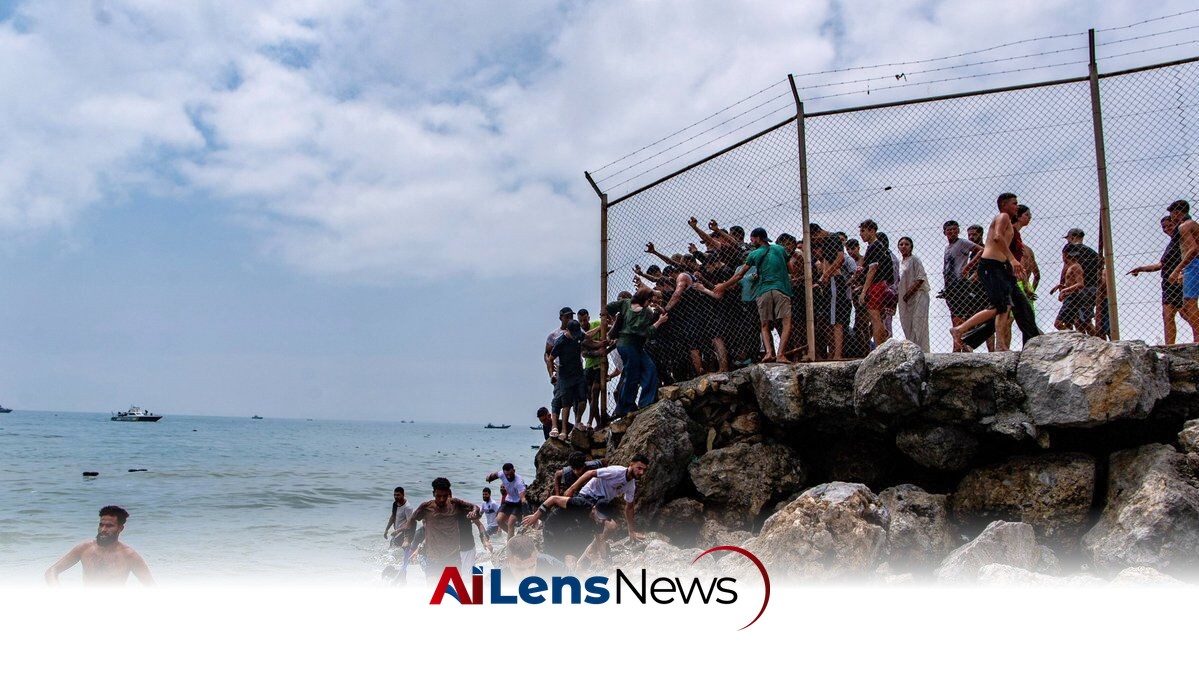


A humanitarian crisis unfolds in Ceuta, Spain, as military reinforcements are deployed following the deaths of 18 migrants attempting to cross from Morocco.
New Delhi, India Jul 31, 2026 ALN: Ceuta (Spain), July 31: At least 18 migrants have died attempting to reach the Spanish exclave of Ceuta after thousands crossed from Morocco into the territory, prompting Spain to deploy military reinforcements. The situation has escalated dramatically, highlighting the ongoing migrant crisis affecting many European nations, particularly those along the Mediterranean coast.
Ceuta, a small Spanish enclave located on the northern coast of Africa, shares a border with Morocco and has historically been a focal point for migrants seeking to enter Europe. The recent surge in crossings underscores the desperation faced by many individuals fleeing conflict, poverty, and persecution in their home countries. In this instance, the tragic loss of life has drawn attention to the perils associated with such crossings, where individuals often risk everything in hopes of a better future.
Rachid Sbihi, who leads a local workers association representing Civil Guard officers, described the situation as a "serious humanitarian crisis." His remarks reflect the dire conditions faced by the migrants, many of whom are left without basic necessities. "People are still entering. The reinforcements that have arrived are only helping the injured and other humanitarian efforts," he said, indicating that the military presence is primarily focused on providing immediate assistance rather than addressing the root causes of the migration.
The current influx has left thousands of migrants, including unaccompanied children, sleeping in parks and on sidewalks, with many wandering the streets in a state of confusion and fear. "It's chaotic," Sbihi added, emphasizing the lack of organization and resources available to manage the situation effectively. The presence of vulnerable populations, particularly children, raises significant concerns regarding their safety and well-being.
Among the 18 who died, many reportedly drowned while attempting to swim to safety, while others were killed in the chaos of a stampede as migrants rushed to cross the breakwater fence at Tarajal beach. This tragic loss of life highlights the extreme risks that migrants are willing to take in their pursuit of a better life, often exacerbated by the inadequate response from authorities to manage such large-scale movements of people.
Video footage captured on Thursday revealed crowds of individuals, predominantly young men from Morocco, navigating around the breakwaters at Tarajal beach and spilling onto local roads. Alongside these men, families with women and small children were also visible, illustrating the diverse demographics of those attempting to cross. The presence of families further complicates the humanitarian response, as their needs differ significantly from those of single adults.
It remains unclear what specifically prompted such a large number of migrants to attempt the crossing to Ceuta at this time. Moroccan authorities have yet to issue a public statement regarding the situation, and repeated requests for comment from Morocco's Interior Ministry have gone unanswered. This lack of communication adds to the uncertainty surrounding the motivations behind the surge in crossings.
The escalation at the frontier between Spain and Morocco comes in the wake of a significant uptick in migrant attempts to reach the small exclave, primarily through swimming. On Wednesday alone, reports indicated a marked increase in the number of individuals attempting the perilous journey, raising alarms among local authorities and humanitarian organizations.
This crisis has also reverberated beyond Spain, affecting neighboring countries such as Italy. Italian Premier Giorgia Meloni has threatened to suspend Italy's participation in the open-border Schengen agreement with Spain, stating that such measures are necessary to "defend our borders and ensure the safety of our citizens." This statement is particularly noteworthy given that Italy does not share a direct border with Spain, illustrating the interconnected nature of the migrant crisis across Europe.
Ceuta authorities have previously linked the surge in crossings to a ruling by the Spanish Supreme Court earlier this month. This ruling barred authorities from immediately returning migrants who arrive by sea without due process, thereby potentially incentivizing more individuals to attempt the crossing. However, it is important to note that this ruling does not apply to migrants who enter Spain by land, including those who climb over the border fence. The legal implications of this ruling are significant, as they may influence future migration patterns and the actions of both Spanish and Moroccan authorities.
Despite the official narrative linking the surge to the Supreme Court ruling, some activists in Morocco have expressed skepticism about this explanation. They argue that many migrants may be unaware of such legal developments and that other factors, such as economic hardship and social instability, are more likely driving the increased attempts to cross into Ceuta.
Spain has long been a primary entry point into Europe for migrants seeking better economic opportunities or fleeing violence and persecution in their home countries. The journey to Ceuta often involves perilous swimming from the Moroccan town of Fnideq, covering approximately 3 miles (5 km) to reach Spanish territory. Others may attempt the crossing from the nearby town of Belyounech, where the distance is shorter, but the risks remain substantial.
The humanitarian implications of this crisis are profound. As more individuals continue to arrive, the capacity of local authorities and humanitarian organizations to provide adequate support is severely tested. The lack of shelter, food, and medical care for those arriving in such large numbers raises urgent questions about the responsibilities of both Spanish and Moroccan authorities in addressing the needs of these vulnerable populations.
In conclusion, the tragic events unfolding in Ceuta serve as a stark reminder of the ongoing migrant crisis affecting Europe. As the situation continues to evolve, it is imperative for both local and international communities to prioritize the safety and dignity of migrants while addressing the underlying factors that compel individuals to undertake such dangerous journeys. The loss of life and the humanitarian challenges faced by those seeking refuge in Europe demand immediate attention and action from all stakeholders involved.
To learn more about the latest developments in Crime & Law, stay updated with our exclusive reports and analyses on AiLensNews.

