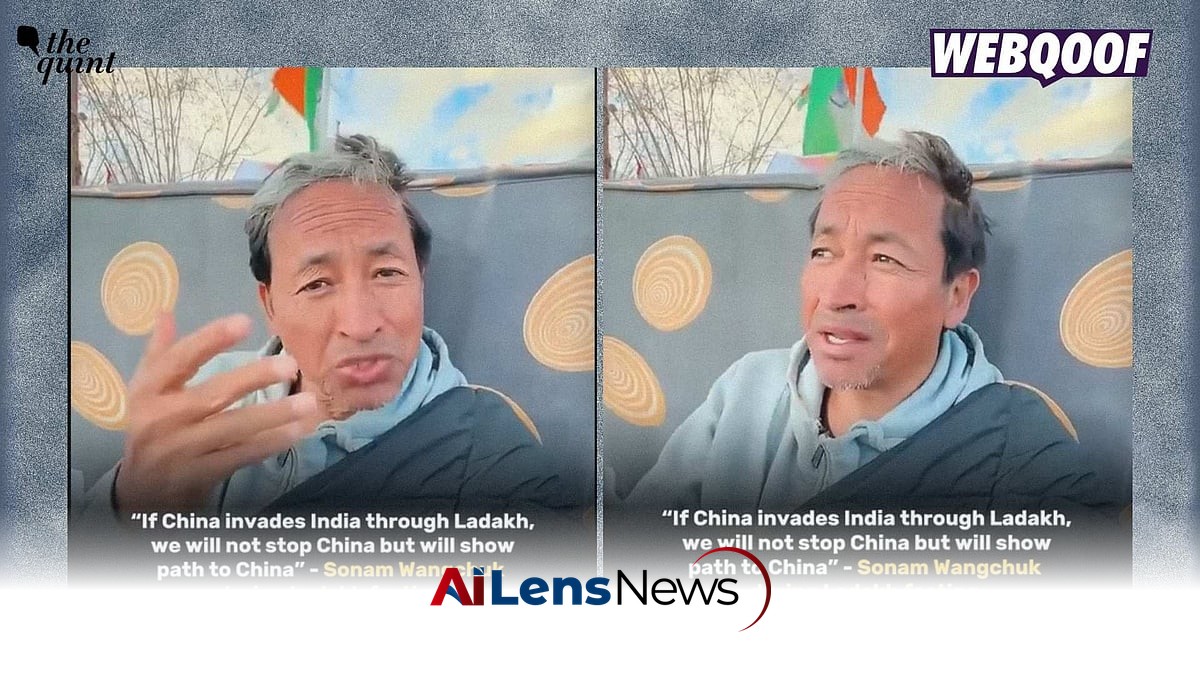


A viral video of Sonam Wangchuk has been misleadingly edited, misrepresenting his comments about China and Ladakh. The original clip attributes statements to a comedian.
New Delhi, India Jul 19, 2026 ALN: A video featuring Sonam Wangchuk has recently gained significant traction on social media, with many users sharing it under the impression that it depicts him discussing the potential consequences of a Chinese invasion of India, particularly through the region of Ladakh. The claims surrounding this video have sparked considerable debate and concern, as they touch upon sensitive geopolitical issues and the ongoing tensions between India and China.
What does he say in the viral claim? In the widely circulated clip, Wangchuk appears to express a dire warning about the sacrifices that the people of Ladakh would make in the event of an invasion, stating, "When China invades, then people of Ladakh sacrifice their lives to stop them. However, if the government of India doesn't do anything for us, we will show them the path and won't stop them the next time. Why should we give our lives if we are not being protected?" This statement, when taken at face value, suggests a deep frustration with the Indian government's perceived inaction regarding the security and welfare of Ladakh's residents.
However, the context of this statement is crucial for understanding its implications. The video has been edited, and in the longer version, which was later discovered, Wangchuk attributes the provocative statement to a comedian, indicating that it was not his original sentiment but rather a reflection of a broader public sentiment expressed in jest.
How did we find out? Investigations into the origins of the video led to a review of Wangchuk's official social media accounts, where a longer version of the clip was uploaded to his X account on 12 March 2024. This longer clip provides essential context that alters the interpretation of his words. In this extended version, Wangchuk discusses the end of his hunger strike, which was a significant event aimed at raising awareness for the demands of the people of Ladakh.
The video captures Wangchuk reflecting on his hunger strike, which lasted for 21 days, during which he called for statehood and constitutional safeguards for Ladakh under the Sixth Schedule of the Indian Constitution. This demand has been a focal point for many in the region, as residents seek greater autonomy and protections for their unique cultural identity.
At around the 1:38 timestamp of the longer video, Wangchuk clarifies, "A famous comedian from here said when China enters here, people from Ladakh sacrifice their lives to stop them. But now, if the Indian government doesn't do anything for us, we would show them [China] the path and won't stop them the next time. Why should we give our lives if we are not being protected? After this, he [the comedian] was questioned by the police." This statement underscores the blend of humor and serious commentary that characterizes much of the discourse surrounding Ladakh's political situation.
Wangchuk further emphasizes the importance of addressing the underlying issues rather than targeting individuals expressing frustration, stating, "Don't kill the messenger, solve the problem. People are expressing frustration, but the focus should be on solving the problems." This call for constructive dialogue highlights Wangchuk's commitment to finding solutions rather than exacerbating tensions.
The timing of this video is particularly notable, as it was released during a period of heightened sensitivity regarding national security and regional autonomy. The Indian government has faced criticism for its handling of border disputes with China, especially in light of recent skirmishes and the ongoing military standoff in Ladakh. The region has been a flashpoint for tensions between the two nations, with both sides reinforcing their military presence in the area.
Wangchuk's hunger strike was not just a personal protest; it was a reflection of the broader grievances held by many in Ladakh. Since the abrogation of Article 370 in 2019, which granted special status to Jammu and Kashmir, there has been widespread concern among Ladakhi residents about their rights and representation. The demand for constitutional safeguards under the Sixth Schedule is aimed at ensuring that the unique cultural and social fabric of Ladakh is preserved, allowing for local governance and autonomy over land and resources.
Moreover, the video has been previously circulated with similar misleading claims, as noted by fact-checking organizations. For instance, The Quint had debunked this video when it was shared in October 2025, highlighting the persistence of misinformation in the digital age. This underscores the importance of critical media literacy, particularly when discussing sensitive topics that can easily be misconstrued or manipulated for political ends.
Conclusion: The viral video of Sonam Wangchuk serves as a reminder of how easily information can be distorted in the digital landscape. While his statements reflect genuine concerns about the safety and autonomy of Ladakh, the context in which they were made is crucial for understanding their meaning. The edited version of the video misrepresents his views, potentially inflaming tensions rather than fostering constructive dialogue. As discussions about national security and regional autonomy continue, it is essential for both media consumers and producers to engage thoughtfully with the information they encounter.
In summary, the misleading claims surrounding Wangchuk's video highlight the ongoing challenges of misinformation in the context of complex geopolitical issues. As the situation in Ladakh continues to evolve, the voices of its residents, including those like Sonam Wangchuk, will remain vital in shaping the discourse around their rights and aspirations.
Wangchuk, an engineer and education reformist, has been a prominent figure advocating for the rights of the Ladakhi people. His activism is rooted in a deep understanding of the region's unique challenges, including environmental concerns, cultural preservation, and the need for sustainable development. The ongoing tensions between India and China, particularly regarding border disputes, have further complicated the socio-political landscape in Ladakh.
The region's strategic significance cannot be understated, as it borders both China and Pakistan, making it a focal point for military and geopolitical interests. The Line of Actual Control (LAC), which demarcates the border between India and China, has seen numerous confrontations in recent years, leading to heightened military deployments from both nations. This backdrop adds urgency to Wangchuk's calls for greater autonomy and protection for Ladakh, as the local population grapples with the implications of national security policies that may not always align with their interests.
Furthermore, the cultural identity of Ladakh is at stake. The region is home to a diverse population, including Buddhists, Muslims, and other ethnic groups, each contributing to its rich cultural tapestry. The fear of cultural dilution following the abrogation of Article 370 has motivated many residents to seek constitutional safeguards that would ensure their voices are heard in the political arena. Wangchuk's activism serves as a rallying point for these sentiments, as he articulates the need for a governance structure that respects and preserves the unique identity of Ladakh.
As misinformation continues to proliferate, it becomes increasingly important for individuals to approach such content critically. The viral nature of social media can lead to rapid dissemination of misleading narratives, which can exacerbate existing tensions and polarize public opinion. The case of Wangchuk's video illustrates the potential consequences of such misinformation, as it not only misrepresents his views but also risks inflaming sentiments in an already sensitive geopolitical context.
In conclusion, while the video featuring Sonam Wangchuk has generated significant attention, it is imperative to recognize the importance of context and accuracy in discussions surrounding geopolitical issues. The ongoing situation in Ladakh requires careful consideration of the voices and concerns of its residents, as well as an understanding of the broader implications of national security policies. As the dialogue around these issues evolves, the role of activists like Wangchuk will remain crucial in advocating for the rights and aspirations of the people of Ladakh, ensuring that their voices are not lost amidst the noise of misinformation and political maneuvering.
To learn more about the latest developments in Society & Social Issues, stay updated with our exclusive reports and analyses on AiLensNews.

