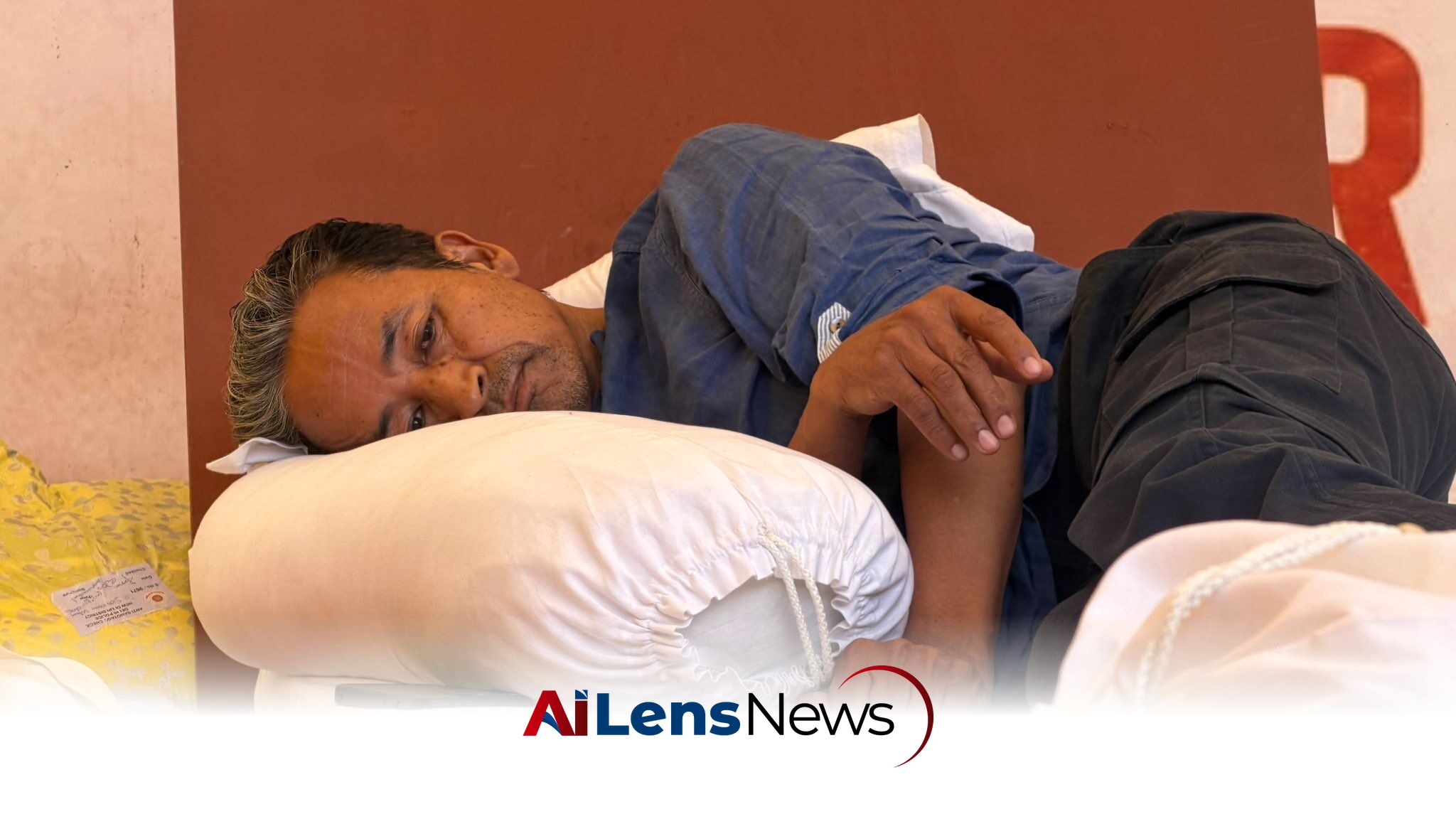


Sonam Wangchuk, a prominent educator and climate activist, insists on continuing his hunger strike until July 20, despite critical health warnings from doctors.
New Delhi, India Jul 17, 2026 ALN: Educator and climate activist Sonam Wangchuk has declared that he will "stay alive till July 20 at any cost," as his indefinite hunger strike enters its 20th day. This comes amid alarming health warnings from doctors who state that his prolonged fast has reached a critical stage. Wangchuk, known for his innovative approaches to education and sustainable development, has gained prominence in recent years for his advocacy on climate change and environmental issues affecting the Himalayan region.
Wangchuk's hunger strike is not an isolated incident but part of a larger movement that highlights the urgent need for government action on climate policies and educational reforms. His commitment to fasting serves as a form of protest against what he perceives as the government's inaction regarding these pressing issues. The hunger strike symbolizes a desperate plea for change, drawing attention to the environmental degradation that threatens the livelihoods of communities in the Himalayas.
Simultaneously, the Cockroach Janta Party (CJP) is continuing its protest at Jantar Mantar over alleged examination irregularities, which has now lasted 28 days. This protest reflects widespread dissatisfaction among students regarding the transparency and fairness of examination processes in India. The CJP has rallied support from various student organizations and civil rights groups, arguing that systemic issues in educational institutions must be addressed to ensure that students receive a fair chance at success.
Wangchuk has called on his supporters to ensure a significant turnout for the planned march to Parliament on July 20, indicating the importance of this date as a pivotal moment for both his cause and the broader student movement. The march to Parliament is designed to bring together various stakeholders, including students, educators, and environmental activists, to collectively voice their demands for accountability and action from the government.
Speaking to supporters at the protest site, Wangchuk acknowledged his deteriorating physical condition but emphasized that his resolve remains unshaken. "I am weak from the outside but very strong inside. I am sure all of you are strong from the inside, and outside too. We need this energy for July 20, when we will take out a peaceful march to Parliament. We will go together and present our plea in the temple of democracy," he stated. His words resonate with many who are inspired by his courage and determination in the face of adversity.
In a lighter moment, he added, "I will stay alive till July 20 at any cost. If you don't come and July 20 is not successful, I will come back as a ghost." This remark, while intended to inject humor into a serious situation, underscores the gravity of his commitment and the high stakes involved in the upcoming march. It reflects Wangchuk's ability to connect with his audience on a personal level, using humor as a tool to galvanize support.
These remarks were made following a warning from doctors attending to Wangchuk, who indicated that his condition has become critical due to the extended fasting. They cautioned that continued fasting could result in organ damage, highlighting the serious health implications associated with such protests. Wangchuk's willingness to risk his health raises ethical questions about the lengths to which activists will go to draw attention to their causes. It also poses challenges for the healthcare system, which must balance the need to respect an individual's right to protest while ensuring their safety and well-being.
Despite these medical warnings, Wangchuk remains steadfast in his decision to continue the fast, asserting that ending it without a response from the government would send the wrong message. He has urged his supporters to concentrate on making the July 20 Parliament march a success, indicating that the outcome of this protest could have far-reaching implications for future activism in India. The determination shown by Wangchuk and his supporters reflects a broader trend among young activists who are increasingly willing to engage in direct action to advocate for their rights and the environment.
The situation has also drawn the attention of the Delhi High Court, which has instructed authorities to monitor Wangchuk's health daily and provide immediate medical assistance if his condition worsens. This judicial intervention highlights the legal and ethical responsibilities of the state in safeguarding the health of individuals engaged in hunger strikes. It also raises questions about the legal protections available for activists and the role of the judiciary in mediating conflicts between the state and civil society.
Additionally, the All India Students' Association (AISA), affiliated with the CPI(ML) Liberation, reported that the health of its members Neha, Manish, and Aameen, who are also on an indefinite hunger strike at a separate location within the protest site, has reached a "severe stage." This situation underscores the interconnectedness of various protest movements in India, as students and activists unite across different causes to amplify their voices and demands. The solidarity shown among these groups signals a growing awareness of the need for collective action in the face of systemic challenges.
The implications of these protests extend beyond the immediate demands of the activists. They reflect a rising tide of youth engagement in political and social issues, driven by a sense of urgency regarding climate change, educational reform, and social justice. As young people increasingly mobilize to advocate for their rights, the government may be compelled to respond to their concerns, potentially leading to significant policy changes and reforms.
In conclusion, Sonam Wangchuk's hunger strike serves as a poignant reminder of the power of individual action in the face of systemic challenges. His commitment to his cause, despite the health risks involved, reflects the determination of a generation that is increasingly unwilling to accept the status quo. As the date of the planned march approaches, the eyes of the nation will be on Wangchuk and his supporters, as they seek to make their voices heard in the corridors of power.
To learn more about the latest developments in Health & Public Safety, stay updated with our exclusive reports and analyses on AiLensNews.

