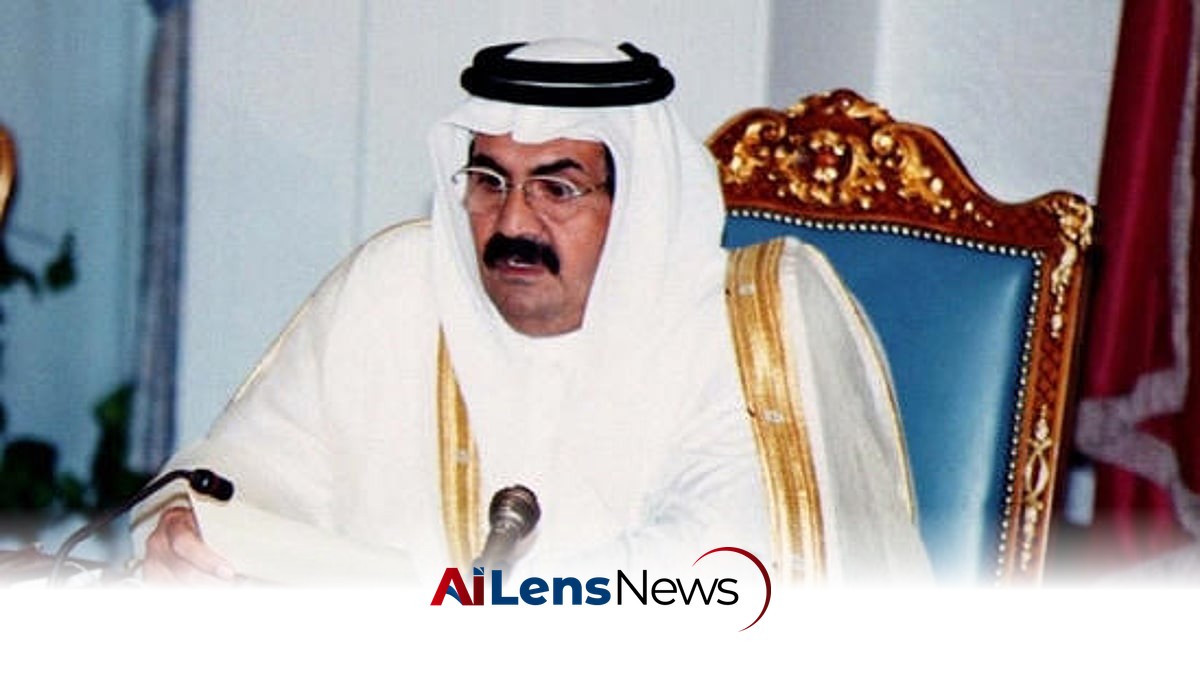


India has declared a day of national mourning in honor of Sheikh Hamad bin Khalifa Al-Thani, former Amir of Qatar, who passed away at 74.
Gangtok, India Jul 14, 2026 ALN: The national flag atop the Rashtrapati Bhavan and other buildings in Delhi flew at half-mast as India observed one day of national mourning on Monday as a mark of respect for Qatar's former Amir, Sheikh Hamad bin Khalifa Al-Thani, following his death.
The Ministry of External Affairs (MEA) shared pictures of buildings on X that showed the national flag flying at half-mast. This act of mourning reflects India's longstanding diplomatic relations with Qatar and signifies the importance of Sheikh Hamad's contributions to the region and beyond.
India has declared one day of national mourning following the demise of Sheikh Hamad, who passed away at the age of 74 years, on Sunday. The announcement of national mourning is a solemn gesture that underscores the respect and recognition of Sheikh Hamad's role in international diplomacy, especially in fostering ties between Qatar and India.
"The Government of India has declared one-day national mourning tomorrow, 13 July 2026, as a mark of respect for His Highness Sheikh Hamad bin Khalifa Al-Thani, Father Amir of the State of Qatar, who passed away today. The National Flag will be flown at half-mast on the day of mourning throughout India on all buildings where the National Flag is flown regularly, and there will be no official entertainment on the day," the MEA said on Sunday. This formal declaration is a customary practice in India when a prominent leader or dignitary passes away, reflecting the nation's values of respect and remembrance.
Parliamentary Affairs and Minority Affairs Minister Kiren Rijiju is expected to visit Qatar shortly to convey condolences on behalf of the Indian government, according to the MEA statement. This visit will likely serve to strengthen the diplomatic ties between the two nations during this period of mourning and transition in leadership for Qatar.
Prime Minister Narendra Modi on Sunday expressed grief over the death of Sheikh Hamad, describing him as a "visionary leader" and a "true friend". The personal acknowledgment from the Prime Minister illustrates the strong bilateral relations that have been cultivated over the years between India and Qatar, especially under Sheikh Hamad's leadership.
He offered his condolences to Amir Sheikh Tamim bin Hamad Al Thani and the entire royal family and people of Qatar. The passing of Sheikh Hamad marks the end of an era in Qatari politics, as he was instrumental in steering the nation towards modernization and global prominence.
"We deeply mourn the passing of Father Amir of State of Qatar, HH Sheikh Hamad bin Khalifa Al Thani. A visionary leader who led Qatar to great levels of development and prosperity, we remember him also as a true friend whom I had the honour of meeting during my last visit to Qatar in February 2024. I convey my sincere condolences to the Amir of Qatar, HH Sheikh Tamim bin Hamad Al Thani and the entire royal family and people of Qatar. May the departed soul rest in eternal peace," PM Modi posted on X.
Sheikh Hamad bin Khalifa Al-Thani ruled Qatar from 1995 until his abdication in 2013, when he transferred power to his son, Sheikh Tamim. His reign is often credited with transforming Qatar into a significant player on the global stage, particularly in terms of economic development, international relations, and cultural influence.
During Sheikh Hamad's rule, Qatar experienced rapid economic growth fueled by its vast natural gas reserves. The country became one of the richest per capita nations in the world, and the wealth generated during this time enabled significant investments in education, healthcare, and infrastructure. His leadership also saw the establishment of Al Jazeera, the influential news network that has changed the landscape of media in the Arab world.
Sheikh Hamad was known for his forward-thinking policies, which included a focus on education and cultural development. He played a pivotal role in promoting Qatar as a center for education and research, establishing several prestigious institutions, including branches of international universities. His commitment to education was reflected in initiatives that attracted global educational institutions to Qatar, fostering a culture of learning and innovation.
In addition to domestic advancements, Sheikh Hamad was also a prominent figure in international diplomacy. He sought to position Qatar as a mediator in regional conflicts and a proponent of peace in the Middle East. His efforts in diplomacy helped Qatar to establish strong ties with various countries, including India, where bilateral relations have flourished under his guidance. Sheikh Hamad's diplomatic approach was characterized by a willingness to engage with both Western and Arab nations, positioning Qatar as a neutral ground for dialogue and negotiation.
The mourning period not only serves as a tribute to Sheikh Hamad's legacy but also highlights the importance of Qatar in the geopolitical landscape of the Middle East and its relationship with India. As both nations navigate the changing dynamics of the region, the passing of Sheikh Hamad may lead to discussions on the future of bilateral cooperation and shared interests. The implications of this loss extend to various sectors, including energy, trade, and cultural exchanges, all of which have been significantly influenced by the strong ties established during his leadership.
As the world reflects on Sheikh Hamad's contributions, it is essential to acknowledge the impact of his leadership on Qatar's development and its role in regional stability. The mourning observed in India signifies a recognition of the shared values and mutual respect that underpin the relationship between the two nations. It also serves as a reminder of the interconnectedness of global politics, where the loss of a leader can ripple across borders and affect international relations.
The implications of Sheikh Hamad's death extend beyond immediate condolences, as they may influence Qatar's domestic and foreign policies under the new leadership of Sheikh Tamim. Observers will be keen to see how the new Amir continues the legacy of his father while addressing contemporary challenges facing Qatar and the Gulf region. Sheikh Tamim has already indicated a commitment to maintaining and expanding the policies initiated by his father, particularly in areas such as economic diversification and enhancing Qatar's role in global affairs.
In conclusion, the national mourning observed in India for Sheikh Hamad bin Khalifa Al-Thani reflects the deep-rooted ties between India and Qatar, highlighting the significance of his leadership in shaping the modern state of Qatar. As both nations honor his memory, they also look forward to continuing their partnership in the years to come, navigating a complex international landscape together. The legacy of Sheikh Hamad will likely influence the future of Qatar's development and its relations with global partners, including India, as both countries strive for mutual growth and stability in an increasingly interconnected world.
To learn more about the latest developments in World News & International Affairs, stay updated with our exclusive reports and analyses on AiLensNews.

