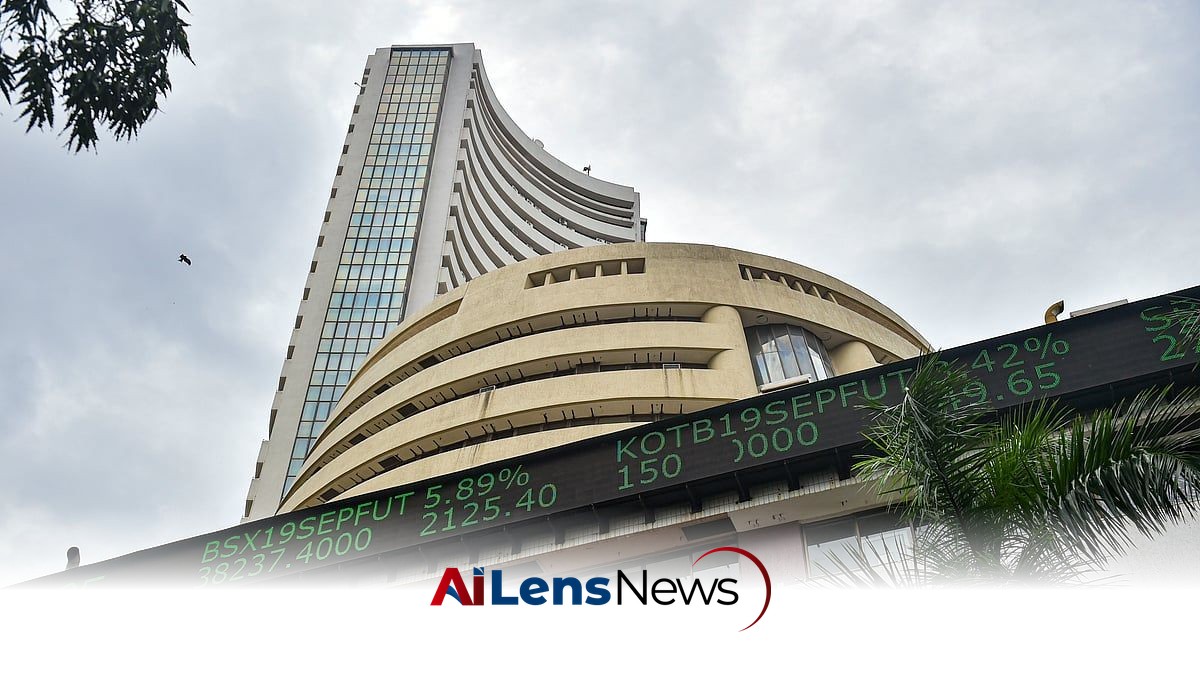


The Sensex and Nifty indices fell sharply on Tuesday due to surging crude oil prices and renewed tensions in West Asia, impacting investor sentiment.
New Delhi, India Jul 14, 2026 ALN: MUMBAI: Stock market benchmark indices Sensex and Nifty tumbled on Tuesday as a sharp surge in crude oil prices due to the renewed flare-up in West Asia dented investors' sentiment. This decline follows a brief period of gains, highlighting the volatility that often characterizes financial markets, particularly in response to geopolitical events and fluctuations in commodity prices.
After three consecutive days of gains, the 30-share BSE Sensex dropped 561.46 points, or 0.72 per cent, to settle at 77,054.94. During the day, it experienced a more significant decline, tumbling 614.92 points, or 0.79 per cent, to reach a low of 77,001.48. Meanwhile, the 50-share NSE Nifty also faced losses, dropping 158.95 points, or 0.66 per cent, to end at 24,052.05. These movements reflect the interconnectedness of global markets, where local indices can be heavily influenced by international events.
The sharp rise in crude oil prices has been primarily attributed to escalating tensions in West Asia, a region that has historically been a focal point for geopolitical strife. Brent crude, the global oil benchmark, surged 4.26 per cent to USD 86.85 per barrel. Such increases in oil prices can have profound implications for economies reliant on oil imports, including India, as they can lead to higher inflation and increased costs for consumers and businesses alike.
In addition to rising oil prices, fresh foreign fund outflows and the rupee falling below the 96 mark against the US dollar further impacted market sentiment. Analysts noted that the rupee touched a low of 96.33 during the day’s trade, ultimately settling down 57 paise at 96.27 against the dollar. The depreciation of the rupee raises concerns about imported inflation, as it makes foreign goods more expensive, compounding the challenges faced by the economy.
Vinod Nair, Head of Research at Geojit Investments Ltd, remarked, "Domestic equities came under renewed pressure as escalating West Asia tensions drove crude oil prices sharply higher, reviving fears that global energy supply will further delay a recovery in India's corporate earnings." The implications of such sentiments are significant, as they can lead to reduced investor confidence and a slowdown in economic growth.
The pain for investors was compounded by the rupee breaching the 96-per-dollar mark, which fanned concerns over imported inflation. The wholesale price inflation data released recently indicated a rise to 9.87 per cent in June, up from 9.68 per cent in May, driven by sharp increases in the prices of food and non-food items. Such inflationary pressures can erode consumer purchasing power and dampen economic activity.
The broader markets also closed lower, with the BSE MidCap Select index tumbling 1.01 per cent and the SmallCap Select index declining 0.55 per cent. Among sectors, the BSE MidSmall Private Banks Quality Tilt index tanked 1.92 per cent, while Realty, PSU Bank, Auto, Financial Services, Bankex, and IT sectors also closed lower, indicating widespread selling across various segments of the market.
Despite the overall negative sentiment, some stocks managed to gain, including Bharti Airtel, Tata Consultancy Services, Sun Pharma, Tata Steel, Adani Ports, and Eternal. This divergence highlights the selective nature of market movements, where certain companies can perform well even amid broader market declines. Such resilience in specific stocks can be attributed to strong fundamentals, market positioning, or positive news that may not be affected by the overall market downturn.
The market dynamics were further complicated by the activity of Foreign Institutional Investors (FIIs), who offloaded equities worth Rs 3,062.27 crore on Monday, according to exchange data. Such outflows can exacerbate market volatility, as they reflect a lack of confidence in the domestic market and can lead to further declines in stock prices. The behavior of FIIs is often closely watched by market participants, as their investment choices can signal broader trends in investor sentiment.
Ajit Mishra, Senior Vice President of Research at Religare Broking Ltd, noted, "Markets traded under pressure on Tuesday, with benchmark indices losing over half a per cent amid renewed geopolitical concerns. Investor sentiment remained subdued following renewed escalation in the Middle East, which pushed Brent crude prices above the USD 85 per barrel mark and revived concerns over inflation." These comments underline the significant impact that geopolitical events can have on financial markets, often leading to swift and pronounced reactions from investors.
In the context of global markets, while Indian indices struggled, some Asian markets showed resilience. South Korea's Kospi, Japan's Nikkei 225, and Shanghai's SSE Composite index rebounded and ended in positive territory, with Hong Kong's Hang Seng index also settling higher. However, markets in Europe were trading lower, and US markets ended in negative territory on the previous day, reflecting a complex global economic landscape. The contrasting performance of Asian markets relative to Indian indices suggests that regional factors may be influencing market sentiment differently across various economies.
The volatility observed in the Indian stock market is indicative of broader economic challenges, including concerns about inflation, currency depreciation, and geopolitical instability. As investors navigate these turbulent waters, the focus will likely remain on forthcoming economic data and geopolitical developments that could further influence market dynamics. Analysts are particularly keen on monitoring upcoming inflation reports and central bank policies, as these will play a crucial role in shaping market expectations.
In summary, the significant drop in the Sensex and Nifty on Tuesday serves as a reminder of the interconnected nature of global financial markets and the myriad factors that can influence investor sentiment. As crude oil prices rise and geopolitical tensions escalate, the implications for inflation and economic growth in India and beyond will continue to be closely monitored by analysts and investors alike. The interplay between local economic indicators, global oil prices, and geopolitical events will remain pivotal in determining market trends, and investors are advised to stay informed and prepared for potential market fluctuations.
To learn more about the latest developments in Economy, stay updated with our exclusive reports and analyses on AiLensNews.

