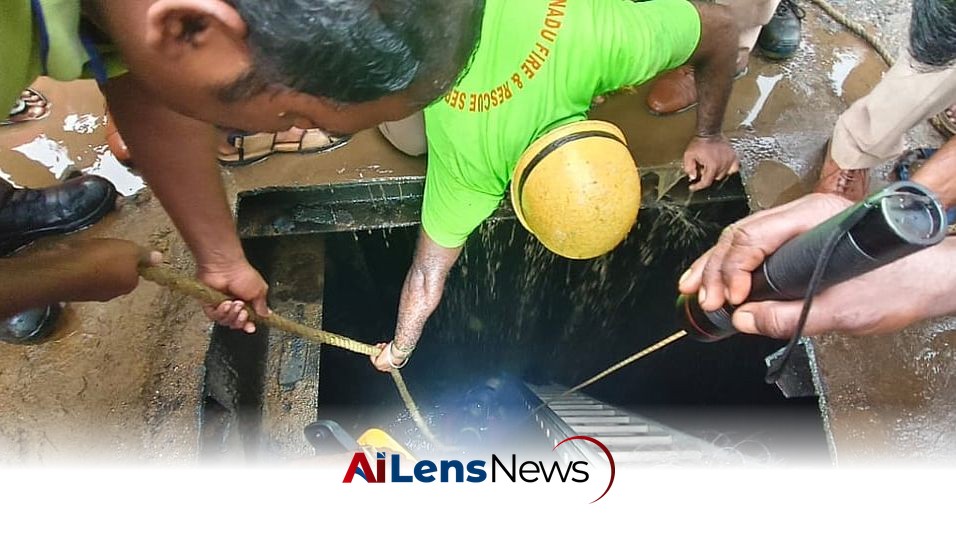


A security guard and a worker tragically died from asphyxiation while cleaning a sewage treatment plant tank in Noida's Sector 150.
New Delhi, India Jul 26, 2026 ALN: The tragic incident involving the deaths of two workers due to asphyxiation at a sewage treatment plant (STP) in Noida has raised significant concerns about workplace safety and the conditions under which sanitation workers operate. The event occurred in the early hours of Sunday at the Eldeco Society located in Sector 150, a residential area known for its modern infrastructure but, as this incident highlights, potentially hazardous working conditions.
Shashikant Sharma, a 40-year-old worker from Karauli district in Rajasthan, was performing maintenance work inside the STP tank when he lost consciousness. The STP is a critical facility designed to treat wastewater before it is released into the environment, but the confined spaces within such tanks can present serious health risks, including exposure to toxic gases such as hydrogen sulfide and methane, which can accumulate in sewage systems. These gases are not only dangerous but can be lethal in high concentrations, underscoring the importance of safety protocols in such environments.
In a courageous attempt to rescue Sharma, Akash, a 22-year-old security guard from Firozabad, also entered the tank. Tragically, he too succumbed to the hazardous conditions and lost consciousness. The local police and fire department were promptly alerted and arrived at the scene to recover both individuals. Despite their efforts, both men were pronounced dead upon arrival at the hospital, highlighting the urgent need for improved safety protocols in such dangerous work environments.
The authorities have since registered a case and arrested Manoj Jain, the contractor responsible for the maintenance work. This action reflects a broader concern regarding accountability in the construction and sanitation sectors, where contractors often hire workers without adequate safety training or equipment. The police have stated that the bodies of Sharma and Akash have been sent for postmortem examinations, which will provide further insight into the exact causes of death. The legal ramifications of this incident may extend beyond the contractor, potentially implicating other parties involved in the oversight and management of safety standards within the facility.
This incident is not isolated; it underscores a disturbing trend in India, where sanitation workers often operate in perilous conditions. The lack of safety measures and the absence of protective gear can lead to fatal accidents, as seen in this case. The Indian government has been criticized for not doing enough to protect the rights and safety of sanitation workers, many of whom come from marginalized communities and are often employed informally without job security or health benefits. This precarious employment status leaves workers vulnerable, as they may feel compelled to take on dangerous tasks without adequate training or protective measures.
In recent years, there have been several incidents across the country involving the deaths of workers in septic tanks and sewage systems. These tragedies have prompted calls for reform and better regulation of the sanitation industry. Activists and labor rights organizations argue that the government must enforce stricter safety regulations and provide proper training for workers who are tasked with cleaning and maintaining such hazardous environments. The lack of enforcement of existing laws further exacerbates the risks faced by these workers, making it imperative for authorities to act decisively in response to such incidents.
Moreover, the issue of manual scavenging, which involves the cleaning of human waste from open drains and septic tanks, remains a significant challenge in India. Despite the prohibition of manual scavenging by law, many workers continue to engage in this dangerous work due to a lack of alternative employment opportunities. This highlights the need for comprehensive social and economic policies that address the root causes of poverty and unemployment in these communities. Addressing these systemic issues is critical to preventing future tragedies and ensuring that workers have access to safe and dignified employment.
In the wake of this incident, there have been renewed calls for the implementation of safety protocols designed to protect workers in confined spaces. These protocols might include mandatory training on recognizing hazardous environments, the use of personal protective equipment (PPE), and the establishment of emergency response procedures to handle situations where workers may be at risk of asphyxiation or other health hazards. It is essential for the government and private sector to collaborate in developing these safety measures and ensuring their effective implementation in all sanitation-related work.
Furthermore, the role of contractors in ensuring the safety of their workers is critical. Contractors must be held accountable for the conditions under which their employees work and should be required to implement safety measures that comply with national labor laws. This incident serves as a grim reminder that without rigorous enforcement of safety regulations, the lives of workers remain at risk. There is an urgent need for a cultural shift within the construction and sanitation industries, where safety is prioritized over cost-cutting measures.
As the investigation continues, it is essential for local authorities and the state government to take proactive measures to prevent such tragedies from occurring in the future. This includes not only holding those responsible accountable but also ensuring that adequate resources are allocated to improve the working conditions of sanitation workers across the region. The government must also engage with labor unions and worker advocacy groups to better understand the challenges faced by workers and develop policies that address their needs.
The deaths of Shashikant Sharma and Akash have not only affected their families but have also sparked a larger conversation about the treatment of workers in hazardous occupations. As society grapples with the implications of this tragedy, it becomes increasingly clear that comprehensive reforms are necessary to protect the lives of those who perform essential but dangerous work in our communities. This incident serves as a catalyst for change, prompting a reevaluation of how sanitation workers are treated and the measures in place to safeguard their health and safety.
In conclusion, the asphyxiation deaths of two workers at the Noida sewage treatment plant highlight the urgent need for systemic reforms in workplace safety, particularly in hazardous environments. The tragedy serves as a reminder of the vulnerabilities faced by sanitation workers and the critical importance of implementing effective safety protocols. As the investigation unfolds, it is hoped that lessons will be learned, and meaningful changes will be made to prevent future incidents, ensuring that all workers can perform their jobs in safe and dignified conditions.
To learn more about the latest developments in Crime & Law, stay updated with our exclusive reports and analyses on AiLensNews.

