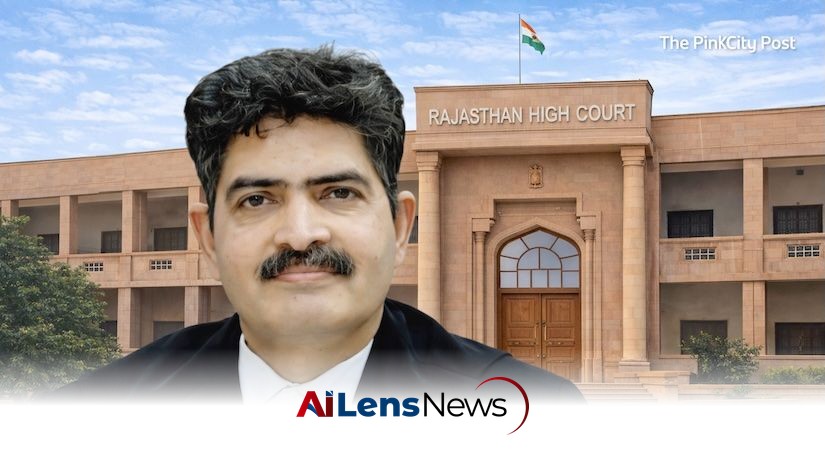


The Rajasthan High Court emphasized that a Station House Officer must personally vet chargesheets, reinforcing accountability in police investigations.
New Delhi, India Jul 15, 2026 ALN: The Rajasthan High Court has recently delivered a significant ruling concerning the responsibilities of Station House Officers (SHOs) in the context of police investigations. This ruling clarifies that SHOs cannot avoid accountability under Sections 166 and 167 of the Indian Penal Code (IPC) merely because they did not personally conduct the investigation. Instead, the court emphasized that an SHO's supervisory duty to review a chargesheet before its submission remains a critical component of their role, irrespective of who conducted the actual investigation.
Justice Anoop Kumar Dhand, presiding over the case, overturned a previous decision made by the Revisional Court that had quashed the cognizance taken against an SHO. The Revisional Court had based its decision on the technicality that the investigation was carried out by a Head Constable, thereby absolving the SHO of responsibility. However, the High Court firmly asserted that signing off on a chargesheet without a thorough review of the supporting evidence constitutes a failure to meet statutory obligations expected of an SHO.
In its ruling, the court articulated a strong stance regarding the role of the SHO, stating:
“The SHO is not just an administrator; he is the captain of the police station. The law requires him to steer the investigation so that it is lawful, timely, and aimed at truth—not just closure.”
The case that prompted this ruling originated from an incident involving the petitioner, Rajendra Prasad, who sustained a fracture in his left leg following a road accident on November 3, 2013. An FIR (No. 425/2013) was registered at Police Station Mundawar, Alwar, citing offenses under Sections 279 and 337 of the IPC. Despite medical reports confirming the severity of Prasad's injury, the chargesheet filed against the driver of the vehicle involved in the accident notably excluded Section 338 of the IPC, which pertains to causing grievous hurt by an act endangering life or personal safety of others.
Prasad contended that this omission was deliberate and effectively deprived him of adequate compensation for his injuries. He asserted that the actions of the then SHO, Dharm Singh Meena, along with the investigating Head Constable, constituted offenses under Sections 166 and 167 of the IPC, which address public servants who knowingly disobey the law and fail to perform their duties, respectively. On April 5, 2019, cognizance was taken against both officers. However, the Additional Sessions Judge in Mundawar subsequently quashed the cognizance order against the SHO on November 8, 2023, citing the rationale that the investigation had been conducted by the Head Constable.
During the legal proceedings, the petitioner's counsel argued that the SHO, as the head of the police station, bore the responsibility to ensure that the investigation conducted by the Head Constable was comprehensive and thorough before submitting the chargesheet. They contended that the Revisional Court had failed to recognize this crucial aspect of the SHO's duties.
Conversely, the Public Prosecutor and the SHO's counsel defended the position that since the investigation was carried out by the Head Constable, the SHO's act of merely forwarding the chargesheet did not imply any negligence or ill intent on his part. They maintained that the Revisional Court's decision to quash the cognizance order was justified and appropriate.
The High Court's ruling underscores the paramount importance of conducting fair and thorough investigations, which are integral to the constitutional guarantees enshrined in Articles 20 and 21 of the Indian Constitution. The court emphasized that the rule of law necessitates that investigations be fair, transparent, and judicious. Citing the precedent set in the case of Nirmal Singh Kahlon v. State of Punjab, (2009) 1 SCC 441, the court articulated that a flawed investigation not only undermines the rights of the victim but also impacts the rights of the accused, thereby jeopardizing the integrity of the judicial process.
In discussing the specific responsibilities of the SHO, the court reiterated that an SHO must ensure that investigations are executed properly and cannot simply function as a “post office,” forwarding documents to the court without due diligence. In this particular case, the court found that the evidence clearly indicated that the petitioner had sustained a serious fracture. The failure of the SHO to include charges under Section 338 IPC in the chargesheet was viewed as a significant oversight, leading the court to conclude that a prima facie case under Sections 166 and 167 IPC existed against the SHO.
In its conclusion, the court ruled that the Revisional Court's order regarding the SHO was legally unsustainable. The High Court quashed that portion of the order and allowed the criminal miscellaneous petition, directing the Revisional Court to reassess the matter concerning the SHO based on the evidence presented, without being influenced by prior observations.
Moreover, the court mandated that a copy of the order be forwarded to the Additional Chief Secretary of the Department of Home and the Director General of Police in Rajasthan. The court instructed these officials to issue comprehensive guidelines to all SHOs throughout the state, emphasizing the critical necessity for SHOs to refrain from acting merely as a “post office” when forwarding investigation results to the courts. Instead, they must diligently review the evidence and form an independent opinion before submitting the chargesheet or final report under Section 173 of the Criminal Procedure Code.
This ruling has broader implications for the functioning of police departments across Rajasthan and potentially beyond, as it reinforces the idea that accountability in police investigations is essential for upholding justice. By clarifying the supervisory role of SHOs, the court aims to ensure that investigations are conducted with the utmost integrity and thoroughness, thereby protecting the rights of victims and ensuring that justice is served. As a result, this ruling may lead to a more rigorous approach to police investigations, fostering a culture of accountability and responsibility within law enforcement agencies.
Title: Rajendra Prasad v. State of Rajasthan & Ors.
Case No.: S.B. Criminal Miscellaneous (Petition) No. 246/2024
Citation: 2026:RJ-JP:26052
Counsel for petitioner: Mr. Babu Lal Sharma
Counsel for respondent: Mr. Amit Kumar Gupta (PP), Mr. Abhishek Parashar, Mr. Dhanna Ram
To learn more about the latest developments in Crime & Law, stay updated with our exclusive reports and analyses on AiLensNews.

