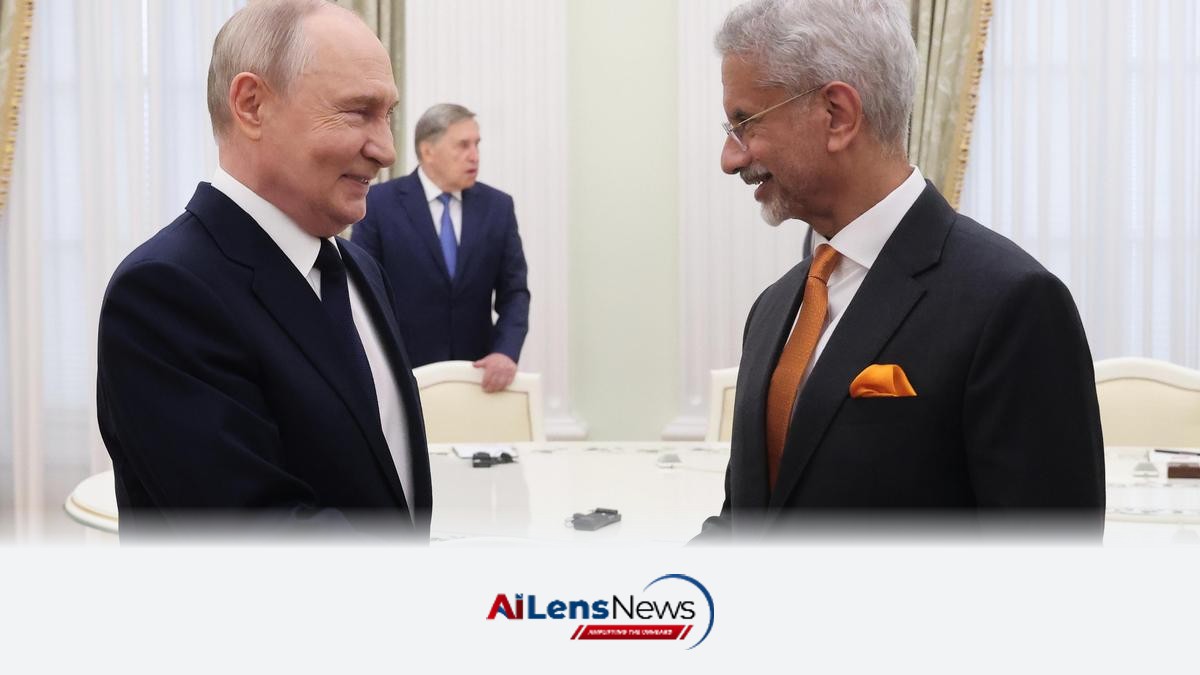



Russian President Vladimir Putin looks forward to meeting Prime Minister Modi at the SCO summit, emphasizing strong India-Russia ties.
New Delhi, India Aug 25, 2026 ALN: Russian President Vladimir Putin has recently expressed his eagerness to meet Indian Prime Minister Narendra Modi at the forthcoming summit of the Shanghai Cooperation Organisation (SCO), which is set to convene in Bishkek, Kyrgyzstan. This announcement was made during a meeting with India's External Affairs Minister, S. Jaishankar, who was visiting the Kremlin to discuss various matters of bilateral interest.
Putin's comments underscore the significance of the relationship between Russia and India, two nations that have historically maintained a strong partnership, especially in the realms of defense, energy, and economic cooperation. The SCO, which includes countries such as China, Kazakhstan, and Pakistan, serves as a platform for member states to collaborate on security, economic, and cultural issues. The upcoming summit is anticipated to address pressing regional security concerns, as well as economic cooperation among member states.
During the meeting, President Putin conveyed his best wishes to Prime Minister Modi, expressing hope for a timely meeting as planned within the framework of the SCO. He indicated that their schedules might align for additional meetings later in the year, reflecting a commitment to ongoing dialogue between the two leaders. This dialogue is essential not only for bilateral relations but also for addressing broader geopolitical challenges.
External Affairs Minister Jaishankar, while briefing President Putin, emphasized that Prime Minister Modi is looking forward to their meeting at the SCO summit. He also mentioned the importance of welcoming President Putin to India for the BRICS Summit, which is another significant multilateral forum that includes Brazil, Russia, India, China, and South Africa. The BRICS platform aims to enhance cooperation among emerging economies and address global challenges collaboratively.
In addition to these high-level discussions, Jaishankar delivered a personal message from Prime Minister Modi to President Putin, further solidifying the personal rapport between the two leaders. This relationship is crucial, especially as both countries navigate complex global dynamics, including shifting alliances and economic trends.
Furthermore, Jaishankar co-chaired the 27th India-Russia Inter-Governmental Commission on Trade, Economic, Scientific, Technological and Cultural Cooperation with First Deputy Prime Minister Denis Manturov. This commission plays a vital role in facilitating bilateral trade and investment, focusing on various sectors such as energy, technology, and cultural exchanges. During the discussions, Jaishankar highlighted the need for India and Russia to aim for a bilateral trade target of USD 100 billion by the year 2030.
However, he cautioned against the growing trade imbalance between the two nations. Currently, while India imports a significant amount of defense equipment and energy resources from Russia, it has been working to increase its exports to balance this trade. Jaishankar pointed out that achieving the USD 100 billion target will require concerted efforts to enhance market access, remove tariff and non-tariff barriers, and strengthen payment mechanisms. He emphasized that fostering robust business-to-business engagements will be critical in addressing the existing trade imbalance.
Moreover, Jaishankar referred to the current geopolitical landscape as a "complicated inter scenario," which presents both challenges and opportunities for India and Russia. The notion of "de-risking" implies that both nations are looking to diversify their economic partnerships and reduce dependency on any single market or supplier, a strategy that has become increasingly relevant in the context of global supply chain disruptions and geopolitical tensions.
The discussions between Jaishankar and the Russian leadership also reflect a broader trend of strengthening ties between India and Russia amidst changing global dynamics. As the geopolitical landscape evolves, with the rise of China and shifting alliances, both countries are keen to reinforce their strategic partnership. This partnership is not only crucial for their respective interests but also for regional stability in Asia.
In conclusion, the anticipated meetings between President Putin and Prime Minister Modi at the SCO summit and subsequent engagements throughout the year highlight the importance of the India-Russia relationship. As both countries seek to navigate an increasingly complex global environment, their collaboration in various sectors will likely play a pivotal role in shaping their mutual interests and addressing regional challenges. The outcomes of these discussions will be closely watched by inter observers, as they may have implications for broader geopolitical alignments and economic partnerships in the region.
To learn more about the latest developments in World News & International Affairs, stay updated with our exclusive reports and analyses on AILensNews.

