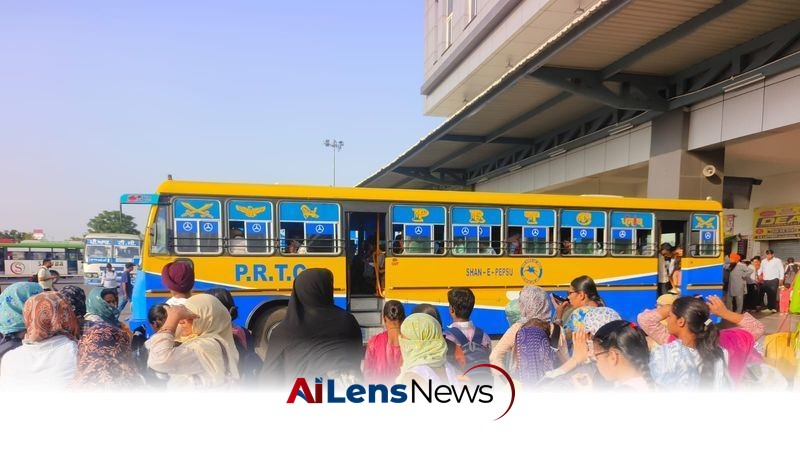


Contractual employees of Punjab Roadways and PRTC have initiated a strike, causing significant disruptions to bus services across Punjab, affecting commuters statewide.
Chandigarh, India Aug 3, 2026 ALN: Commuters across Punjab are facing significant disruptions as contractual employees of Punjab Roadways and the Punjab Road Transport Corporation (PRTC) have launched a statewide strike. This action has led to the suspension of bus services at various depots, leaving many passengers stranded. The ongoing strike highlights not only the immediate impact on public transportation but also the broader issues surrounding labor rights and employment conditions in the region.
The strike, which began early Monday morning, has resulted in long queues at bus stations as frustrated travelers attempt to find alternative means of transportation. Many commuters rely on these services for their daily commutes, whether for work, education, or other essential activities. The disruption is expected to cause widespread inconvenience, particularly for those who do not have access to private vehicles or alternative transport options.
The contractual staff are demanding better working conditions, job security, and fair wages. According to the striking employees, their contributions are essential to the functioning of the transport system, yet they are not afforded the same benefits as permanent employees. This disparity has led to growing discontent among the workforce, prompting them to take collective action.
Contractual employment in the public sector has been a contentious issue in India, with many workers facing precarious job situations, limited rights, and inadequate compensation. The PRTC and Punjab Roadways employ a significant number of contractual workers who often perform the same duties as their permanent counterparts but without the same level of job security or benefits. This inequality has fueled the current strike, as workers seek to improve their circumstances and demand recognition for their essential roles in public transport.
The contractual employees argue that their work is critical to the daily operations of public transport, yet they find themselves in a vulnerable position due to their employment status. Many of these workers have been employed on a contractual basis for extended periods, leading to calls for a reevaluation of the policies governing their employment. The lack of a stable income and benefits such as health insurance, paid leave, and retirement plans has left many employees feeling undervalued and exploited.
Reports indicate that several key routes have been affected, leading to delays and cancellations. Passengers have expressed their frustration, with many stating that they were not informed in advance about the strike. The lack of communication has exacerbated the situation, leaving commuters scrambling for alternatives at the last minute. Public transport is a lifeline for many, and the sudden disruption has serious implications for those who rely on it for timely access to jobs, schools, and other critical services.
In the face of these challenges, some commuters have turned to private taxis and carpooling as alternatives. However, these options may not be feasible for everyone, particularly those on a tight budget or those living in areas poorly served by private transport. The strike has not only caused delays but also increased transportation costs for many, further straining household budgets.
Additionally, the impact of the strike extends beyond just transportation. Many businesses that rely on the daily influx of commuters are also feeling the pinch, as fewer customers are able to reach their establishments. This ripple effect can lead to broader economic implications, particularly in urban areas where public transport is a critical component of the local economy.
Officials from the Punjab government have acknowledged the strike and are urging both parties to engage in dialogue to resolve the issues. However, as of now, no concrete steps have been taken to address the demands of the striking employees. The government’s response has been criticized by some observers, who argue that more proactive measures are needed to prevent such disputes from escalating in the future.
The Punjab government has faced similar labor disputes in the past, and the recurring nature of these strikes raises questions about the effectiveness of existing labor policies and the treatment of contractual employees. As public transport remains a vital service, ensuring the welfare of those who operate it is crucial for maintaining a functional and reliable system.
Moreover, the government’s handling of labor disputes has historically been reactive rather than proactive. This pattern has led to a cycle of strikes and negotiations that often fail to address the root causes of discontent among workers. Critics argue that a more comprehensive approach to labor reform is necessary to ensure fair treatment and adequate compensation for all workers, particularly those in the public sector.
As the strike continues, the government is under pressure to find a resolution that satisfies the contractual employees while minimizing the impact on the commuting public. The situation remains fluid, and further updates are expected as negotiations progress. Labor unions and advocacy groups are likely to keep a close watch on the developments, as the outcome may set a precedent for similar cases across the state and potentially the country.
In the meantime, commuters are advised to stay informed about the status of bus services and to plan their journeys accordingly to avoid further inconvenience. The strike serves as a reminder of the critical role that transport workers play in society and the importance of addressing their concerns in a timely and effective manner.
The implications of this strike extend beyond immediate transportation issues. It reflects broader societal challenges regarding labor rights, job security, and the treatment of workers in the informal and contractual sectors. As labor movements gain momentum across various industries, the Punjab Roadways and PRTC strike could contribute to a larger conversation about the need for reforms in labor laws and policies that protect the rights of all workers.
In conclusion, the ongoing strike by Punjab Roadways and PRTC contractual staff underscores the urgent need for dialogue and negotiation between workers and the government. It highlights the importance of fair employment practices and the necessity for a robust public transport system that serves the needs of all citizens. As negotiations unfold, the hope is that a resolution can be reached that not only addresses the immediate concerns of the striking workers but also paves the way for long-term improvements in labor conditions across the state.
The situation in Punjab serves as a microcosm of larger labor issues faced across India, where the balance between economic growth and workers' rights often comes into conflict. The outcome of this strike could influence future labor policies and the treatment of contractual employees not only in the transport sector but across various industries. As stakeholders navigate these complex dynamics, the importance of equitable labor practices and the recognition of workers' contributions remain paramount for fostering a just and sustainable economy.
To learn more about the latest developments in Transport & Mobility, stay updated with our exclusive reports and analyses on AiLensNews.

