

More
Checking your session
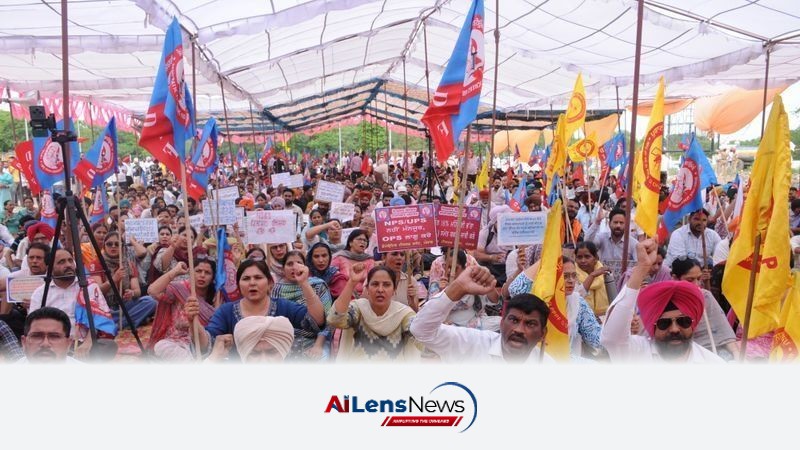



In Punjab, nearly four lakh government employees and pensioners are mobilizing for a 'maha hartal' to demand the release of their long-overdue dearness allowance.
Chandigarh, India Aug 27, 2026 ALN: Punjab is bracing for a significant mobilization of government employees and pensioners as they prepare for a 'maha hartal' today. Nearly four lakh government employees, alongside a substantial number of pensioners, are set to participate in this protest aimed at pressuring the Aam Aadmi Party (AAP) government to address their long-pending dearness allowance (DA) dues.
The demand for the dearness allowance has been a long-standing issue for employees and pensioners in Punjab. The DA is crucial for maintaining the purchasing power of government workers, especially in the face of rising inflation. Many employees argue that the delay in releasing these dues has severely impacted their financial stability. The dearness allowance is typically adjusted based on inflation rates and is intended to help workers cope with the increasing cost of living. In recent years, inflation in India has surged due to various factors, including global economic conditions and domestic challenges, making the DA a critical component of government employees' compensation.
In Punjab, the situation has been exacerbated by the state's economic difficulties, which have led to budgetary constraints and delays in the disbursement of salaries and allowances. Employees and pensioners have expressed their frustration over the government's failure to address these issues in a timely manner. The AAP government, which came to power with promises of reform and transparency, is now facing scrutiny over its handling of employee welfare, particularly regarding financial matters that directly impact the lives of its workforce.
Organizers of the protest have called for a united front, urging all government employees and pensioners to join the 'maha hartal'. They believe that a large turnout will send a strong message to the state government regarding their grievances. Various employee unions and associations have been instrumental in rallying support for the protest, utilizing social media platforms, pamphlets, and community meetings to mobilize participants. The unions argue that solidarity among workers is essential to amplify their demands and ensure that their voices are heard by the government.
The call for a 'maha hartal' is not just about the dearness allowance; it also reflects broader discontent among public sector workers regarding job security, pay scales, and working conditions. Many employees feel that their contributions to public service are undervalued, and this protest represents a culmination of long-standing frustrations that have been building over time.
As the protest looms, the AAP government faces mounting pressure to resolve the issue. Officials have indicated that discussions are ongoing, but many employees feel that progress has been slow and insufficient. The government has stated that it is committed to addressing the concerns of employees and pensioners, but critics argue that action speaks louder than words. They point to the lack of concrete measures taken to address the DA issue, which has been a sticking point for many months.
In response to the planned protest, the government has called for dialogue with employee representatives, hoping to negotiate a resolution that satisfies both parties. However, skepticism remains among workers, who have heard similar promises in the past without seeing tangible results. The government’s ability to manage this situation effectively will be crucial in maintaining public order and preventing further unrest.
The 'maha hartal' is expected to disrupt normal government operations across Punjab. Schools, offices, and other public services may experience significant delays or closures as employees participate in the protest. The mobilization reflects a growing frustration among workers who feel their needs are being overlooked. This protest is likely to affect not only government services but also the daily lives of citizens who rely on these services for education, healthcare, and other essential functions.
The implications of this protest extend beyond immediate disruptions. It could set a precedent for similar actions in other states where government employees are facing comparable issues regarding pay and allowances. If successful, the Punjab protest may inspire workers in other regions to unite and demand their rights, potentially leading to a wave of protests across the country.
As the day unfolds, the outcome of this protest will be closely watched, not just by those in Punjab but also by other states facing similar issues. The demand for dearness allowance is a critical issue that resonates with many government employees across India, highlighting the ongoing challenges they face in securing fair compensation. The AAP government’s response to this protest could have far-reaching consequences for its political future and its relationship with the workforce. As economic pressures continue to mount, the need for a resolution that addresses the concerns of government employees and pensioners has never been more urgent. The situation in Punjab serves as a reminder of the delicate balance between governance and the rights of workers, a balance that will be tested in the days to come.
To learn more about the latest developments in Labour & Employment, stay updated with our exclusive reports and analyses on AILensNews.