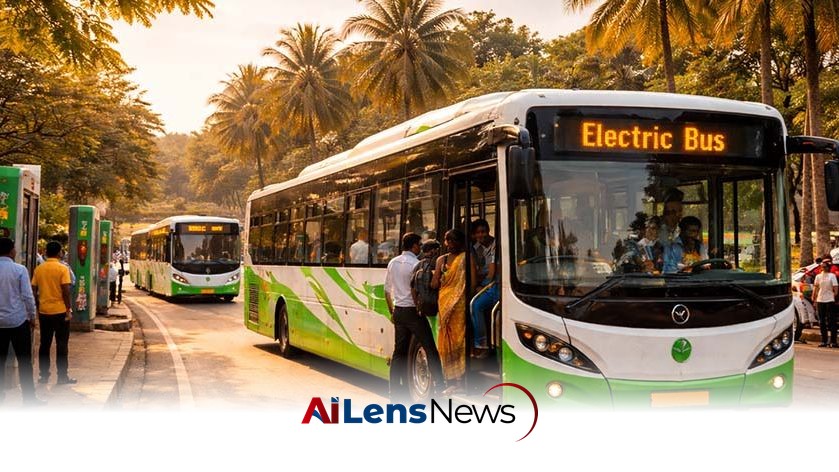


Private bus operators in Mangaluru are exploring electric buses to combat soaring diesel prices. A meeting is set to discuss feasibility and technology.
New Delhi, India Jul 25, 2026 ALN: Mangaluru: Private bus operators serving the Mangaluru-Kundapur-Byndoor and Mangaluru-Manipal corridors are exploring the possibility of introducing electric buses, hoping the transition could help offset rising diesel costs while modernising public transport along the coastal belt.
The Canara Bus Owners’ Association has scheduled a preliminary meeting on August 7 in Udupi, where a private mobility company will showcase electric bus models and discuss their technical and operational feasibility. This meeting marks a significant step towards exploring sustainable transport solutions in the region, reflecting a broader trend towards electrification in public transportation worldwide.
Association vice-president Sadanand Chatra stated that the initiative is currently at an exploratory stage. If the technology proves viable and the government provides adequate charging infrastructure, electric buses could eventually become part of the region’s private transport network. The potential adoption of electric buses is not just a response to rising fuel prices but also aligns with global efforts to reduce carbon emissions and combat climate change.
The move follows a recent visit by a delegation of bus operators to the Prawaas 5.0 Multimodal Passenger Transport Expo in Gujarat, where they examined the latest electric bus technologies. This expo serves as a pivotal platform for transport operators to explore innovations in mobility, and the insights gained there could significantly influence the decision-making process regarding the adoption of electric buses in Karnataka.
However, Chatra highlighted that the transition would require overcoming several challenges. Besides the high initial investment, the absence of a reliable charging network remains a major hurdle. The infrastructure for electric vehicles (EVs) is still in its nascent stages in many parts of India, and the lack of charging stations could deter operators from making the switch. He also pointed to Karnataka’s Comprehensive Area Scheme, under which new stage carriage permits are largely reserved for the Karnataka State Road Transport Corporation (KSRTC), making private operators cautious about investing heavily in new technology.
The financial landscape for private operators has been increasingly challenging. The implementation of the state’s Shakti Scheme, which aims to provide subsidized bus services to the public, has added pressure on private operators, who face competition from state-run services. Coupled with the continued fluctuations in diesel prices, these financial strains create a complex environment for private bus operators considering the transition to electric vehicles.
According to Chatra, electric buses currently offer a driving range of around 250 to 300 kilometres on a single charge. Since safety regulations do not permit charging while passengers are on board, fast-charging facilities at major terminals such as Mangaluru, Udupi, and Kundapur would be essential for smooth operations. The establishment of such infrastructure would require collaboration between transport operators and local authorities, emphasizing the need for a coordinated approach to the electrification of public transport.
Local bodies would have to support the initiative by providing space and power infrastructure at bus stands. This collaboration could pave the way for a more integrated public transport system that benefits both operators and commuters. The success of electric buses in urban settings often hinges on the availability of efficient charging solutions and the willingness of local governments to invest in necessary infrastructure.
Operators from districts including Shivamogga and Madikeri are also expected to attend the meeting, reflecting growing interest in electric mobility among private transport operators across Karnataka. The interest from operators in various districts indicates a shift in mindset towards more sustainable transport solutions, which could have far-reaching implications for public transport in the state.
If electric or air-conditioned buses are introduced in the future, operators are also considering launching select non-stop services to improve travel efficiency. Non-stop services could significantly reduce travel times and enhance the overall passenger experience, making public transport more appealing to commuters. The introduction of such services may also encourage more people to opt for public transport over private vehicles, contributing to reduced traffic congestion and lower emissions.
“If everything falls into place, we could initially introduce around 20 to 25 electric buses,” Chatra said. This initial rollout could serve as a pilot project, allowing operators to gather data on performance, operational costs, and passenger response, which would be critical for making informed decisions about future investments.
Another operator emphasized that the association would first assess whether electric buses perform better than diesel-powered vehicles under local operating conditions before taking any investment decisions. This cautious approach reflects the need for thorough evaluation and risk assessment in the context of significant technological shifts in public transport.
The Canara Bus Owners’ Association operates one of the largest private bus networks in coastal Karnataka, carrying thousands of passengers every day. Its Canara Combined Transport (CCT) prepaid card system alone is used by around 27,000 commuters daily, underscoring the significance of any future shift to electric mobility. The potential transition to electric buses could not only enhance the sustainability of the transport network but also improve operational efficiency and reduce long-term costs for operators.
As the conversation around electric mobility continues to evolve, the outcomes of the upcoming meeting and subsequent discussions will be pivotal in shaping the future of public transport in the Mangaluru-Udupi-Kundapur corridor. The implications of adopting electric buses extend beyond mere operational considerations; they encompass environmental sustainability, economic viability, and the overall enhancement of public transport services in the region.
To learn more about the latest developments in Crime & Law, stay updated with our exclusive reports and analyses on AiLensNews.

