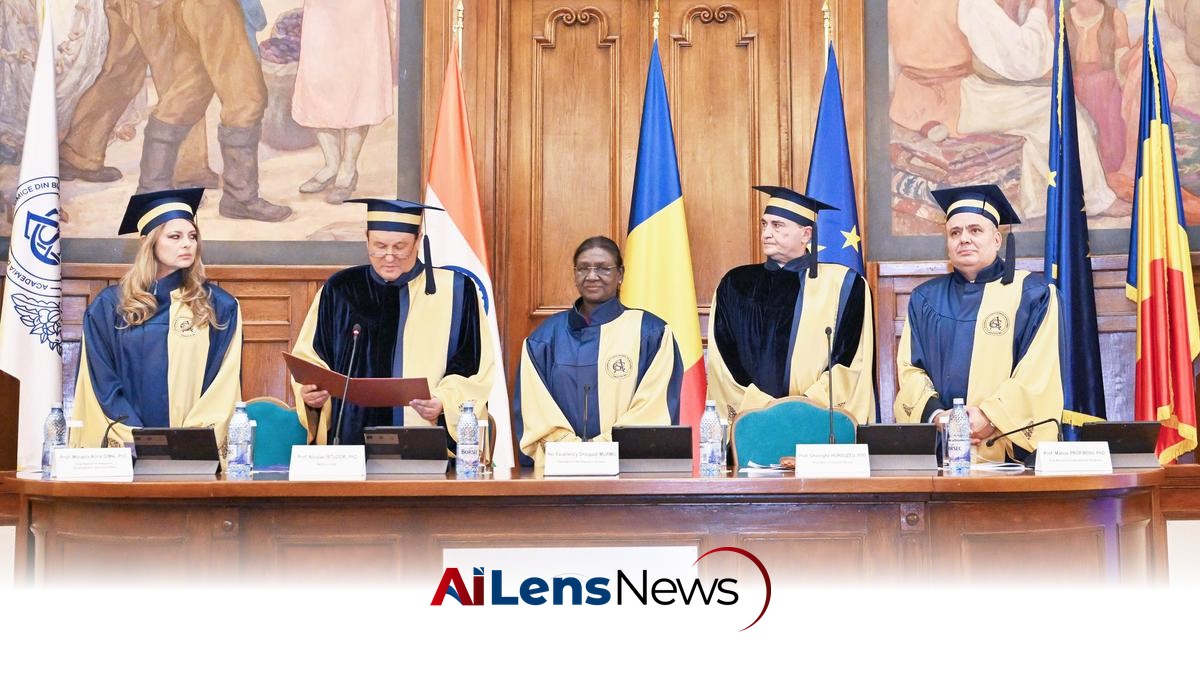


President Droupadi Murmu commends the Indian diaspora in Romania for their contributions to bilateral relations and cultural preservation during her state visit.
New Delhi, India Jul 25, 2026 ALN: President Droupadi Murmu's recent visit to Romania has underscored the importance of the Indian diaspora as vital cultural ambassadors and significant contributors to India's inter relations. Her remarks during a reception for the Indian community highlight not only the achievements of Indians living abroad but also the broader implications for India's global standing and diplomatic efforts.
The Indian diaspora in Romania, while not as large as in other countries, plays a crucial role in fostering bilateral ties between India and Romania. Historically, the relationship between these two nations has been characterized by mutual respect and cooperation, dating back to the establishment of diplomatic relations in 1948. Over the decades, this relationship has evolved, with both countries finding common ground in various sectors, including trade, culture, and education. The diplomatic ties were initially formed in the context of the post-World War II geopolitical landscape, where both nations sought to navigate their paths in a world marked by the Cold War and decolonization.
During her speech, President Murmu emphasized that the Indian diaspora acts as a bridge between the two nations. This connection is particularly significant given the historical context of Romania's political landscape, which has seen significant changes since the fall of communism in 1989. The subsequent opening up of Romania to the world has allowed for increased interaction and collaboration with countries like India, especially in the fields of technology and education. Romania's transition to a market economy has created new opportunities for foreign investment and collaboration, making it an attractive destination for Indian professionals seeking growth and development.
Ms. Murmu's acknowledgment of Indian professionals in Romania reflects a growing trend where skilled workers are migrating to countries that offer opportunities for professional growth. The influx of Indian IT engineers, healthcare professionals, and researchers into Romania aligns with the country's aspirations to position itself as a hub for technological innovation and development in Eastern Europe. This migration not only benefits the individuals and their families but also contributes to Romania's economy by filling gaps in the labor market and enhancing the country's global competitiveness. The presence of Indian professionals is particularly evident in Romania's burgeoning tech sector, where their expertise is instrumental in driving innovation and fostering collaboration with global tech companies.
Moreover, the President's visit marks a significant moment in diplomatic history, as it is the first state visit by an Indian Head of State to Romania in over three decades. This visit is not just symbolic; it represents a renewed commitment to strengthening ties between the two nations. The emphasis on cultural diplomacy is particularly noteworthy, as it highlights the importance of soft power in inter relations. By celebrating the contributions of the Indian diaspora, President Murmu is reinforcing the idea that cultural exchanges can lead to deeper understanding and cooperation. Soft power, which refers to the ability to attract and co-opt rather than coerce, plays a crucial role in how countries can influence each other positively and build lasting partnerships.
In her address, Ms. Murmu also touched upon the broader context of India-Romania relations, stating that both governments are collaborating on pressing global issues such as sustainable development, climate change, and counter-terrorism. This alignment on global challenges indicates a shared vision for a stable and prosperous future, not only for India and Romania but also for the inter community. The mention of the India-European Union Free Trade Agreement, concluded in January, further solidifies this partnership, promising to enhance economic ties and create new opportunities for trade and investment. The agreement is expected to facilitate smoother trade flows and reduce barriers, thus benefiting both economies significantly.
Economic cooperation is a key theme in President Murmu's speech. She pointed out the potential for collaboration in emerging sectors such as defense, renewable energy, and digital technology. These sectors are critical in the context of global trends towards sustainability and innovation. Romania's strategic position in Europe, combined with India's growing technological capabilities, presents a unique opportunity for both nations to leverage their strengths for mutual benefit. The defense sector, in particular, is poised for growth given Romania's focus on enhancing its military capabilities and India's expertise in defense manufacturing. Joint ventures and collaborations in this area could lead to significant advancements in technology and security.
Additionally, the cultural ties between India and Romania are deep-rooted, as evidenced by the appreciation of Indian art, music, and cuisine in Romania. President Murmu's acknowledgment of Romania's own rich cultural heritage, including its artists and philosophers, reflects a mutual respect that can further enhance bilateral relations. This cultural exchange can play a pivotal role in fostering goodwill and understanding between the two nations. Events showcasing Indian culture, such as festivals, art exhibitions, and culinary events, can serve as platforms for cultural diplomacy, allowing both countries to celebrate their unique identities while fostering a spirit of collaboration.
In her concluding remarks, President Murmu called upon the Indian diaspora to remain active partners in India's journey towards development. This call to action is significant as it encourages the diaspora to engage with their home country while also contributing to the societies they inhabit. The Indian government's commitment to the welfare of its diaspora is evident in various initiatives aimed at supporting Indians abroad, providing them with resources and assistance to thrive in their new environments. Programs that facilitate cultural integration and professional development for the diaspora can enhance their contributions both in Romania and back in India.
The implications of President Murmu's visit extend beyond immediate diplomatic engagements. By recognizing the contributions of the Indian diaspora, the Indian government is reinforcing its commitment to nurturing its global community. This approach not only strengthens bilateral relations but also enhances India's image as a country that values its citizens, regardless of where they reside. As the global landscape continues to evolve, the role of the diaspora in shaping India’s foreign policy and inter relations will likely become increasingly significant.
In conclusion, President Droupadi Murmu's visit to Romania and her celebration of the Indian diaspora highlight the importance of cultural diplomacy and economic cooperation in strengthening inter relations. As India continues to assert itself on the global stage, the contributions of its diaspora will remain a key factor in enhancing its influence and fostering partnerships around the world. The ongoing dialogue between India and Romania serves as a model for how nations can work together to address shared challenges while celebrating their unique cultural identities. The future of India-Romania relations appears promising, with both nations poised to explore new avenues for collaboration that can lead to mutual growth and development.
To learn more about the latest developments in Politics, stay updated with our exclusive reports and analyses on AiLensNews.

