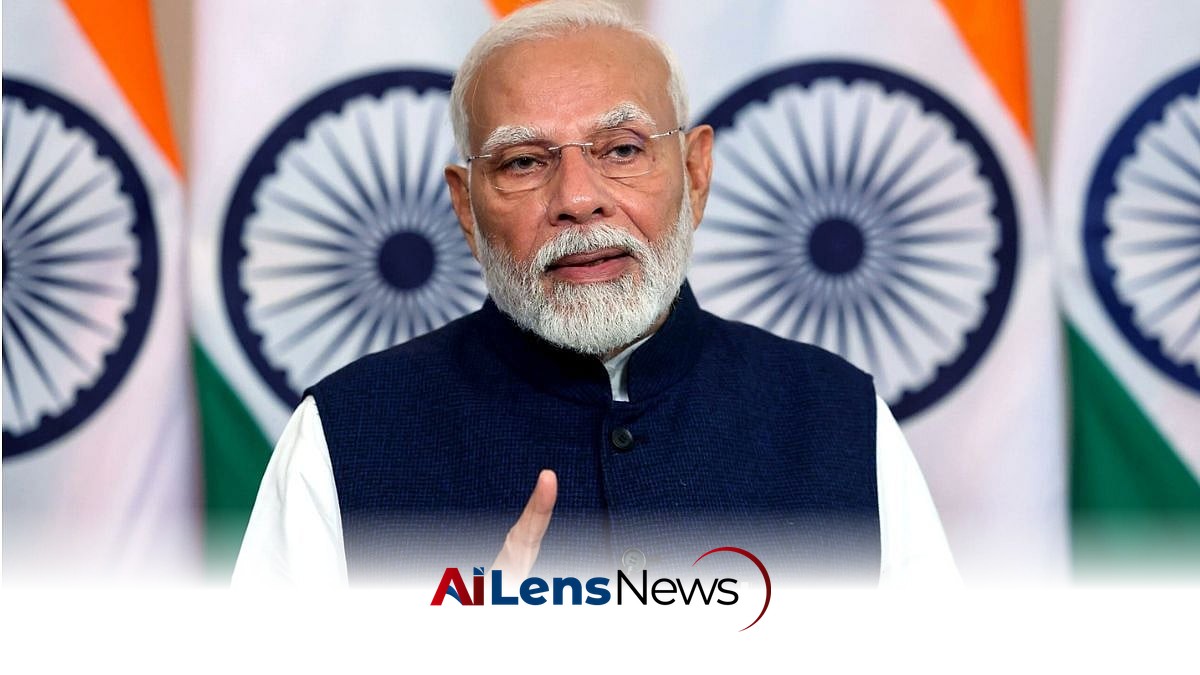


During the ongoing protests against the NEET paper leak, PM Modi has announced the establishment of fast-track courts to ensure swift justice for the culprits, emphasizing the importance of safeguarding the future of youth.
New Delhi, India Jul 23, 2026 ALN: On the fourth day of the monsoon session of Parliament, the Lok Sabha is preparing for a significant legislative debate scheduled for Thursday. The government is set to present the Supreme Court (Number of Judges) Amendment Bill, 2026, which aims to address the current structure and functioning of the Supreme Court in India. This bill is part of the government's broader push to enhance judicial efficiency and accessibility, a topic that has been under scrutiny for some time.
Amid this legislative activity, the political atmosphere is charged with tensions surrounding the recent NEET (National Eligibility cum Entrance Test) paper leak incident. Members of the National Democratic Alliance (NDA) are expected to gather at Makar Dwar of Parliament to stage a protest against the Congress party. This comes just two days after the Congress held a sit-in protest outside the Prime Minister's residence, demanding accountability and transparency regarding the NEET paper leak.
The NEET examination is a critical assessment for students seeking admission into medical colleges across India, and any irregularities in its conduct can have far-reaching implications on the future of countless aspiring medical professionals. The recent allegations of a paper leak have sparked outrage among students and parents alike, leading to widespread protests across various cities.
In response to these developments, Congress MP KC Venugopal has submitted an Adjournment Motion Notice in the Lok Sabha, focusing on the NEET UG paper leak and the police's violent response during protests at Jantar Mantar on July 20. This motion is a formal request to discuss urgent matters in the House, and it underscores the seriousness with which the opposition views the situation.
Public figures have also weighed in on the protests. Olympic champion Abhinav Bindra took to social media platform X to call for unity in strengthening India's education system. His message reflects a growing concern among various stakeholders about the integrity of educational assessments and the need for robust mechanisms to safeguard them.
Additionally, Bollywood actress Alia Bhatt expressed her support for the students protesting against the alleged NEET examination irregularities. She shared her thoughts on Instagram, emphasizing the dreams and sacrifices that each student represents. Her involvement highlights the intersection of celebrity influence and social issues, as public figures often play a pivotal role in shaping public discourse.
Amidst the protests, Abhijeet Dipke, a prominent figure in the movement, has communicated his health struggles, revealing that he has been ill but remains committed to the cause. His message on X indicates the personal sacrifices made by activists and the toll that prolonged protests can take on individuals.
In a separate development, Chief Justice of India (CJI) Surya Kant has indicated that the Supreme Court is prepared to intervene if the Supreme Court metro station is not reopened by the afternoon. This statement underscores the court's engagement with ongoing public issues and its role in ensuring that civic facilities remain accessible to the public, especially during times of heightened political activity.
Actress Ayesha Khan has also faced backlash for her support of the NEET protests, responding to a troll who suggested her career in Bollywood might suffer due to her stance. This incident illustrates the pressures public figures face when they take political positions, as they often become targets of criticism from opposing factions.
In a significant response to the NEET paper leak issue, Prime Minister Narendra Modi announced the establishment of fast-track courts aimed at expediting legal proceedings against those involved in the scandal. He emphasized the importance of protecting the future of the youth, stating, "Nothing is more important than the welfare and future of our youth!" This announcement has been met with mixed reactions, as some view it as a necessary step towards accountability, while others criticize it as insufficient in addressing the systemic issues within the education sector.
Delhi Chief Minister Rekha Gupta responded positively to PM Modi's announcement, asserting that safeguarding the interests of students is a top priority under his leadership. Her statement reflects a broader political narrative that seeks to align with student interests while navigating the complexities of governance in the education sector.
However, the announcement has also drawn criticism from opposition leaders. Rahul Gandhi, the Leader of Opposition in Lok Sabha and a Congress MP, has launched a scathing critique of the Prime Minister, accusing the government of failing to protect the educational interests of students and of contributing to the degradation of the education system in India. His remarks highlight the contentious nature of the political discourse surrounding educational reforms and accountability.
In the midst of these developments, popular singer Sonu Nigam was approached by reporters for his views on the ongoing student protests but chose to remain silent on the matter, indicating a reluctance to engage in the political discourse surrounding the issue. This reaction may reflect a broader trend among celebrities who navigate the complexities of public opinion and political engagement.
The Delhi Metro Rail Corporation has also announced that several metro stations will remain closed until further notice, a decision likely influenced by the ongoing protests and the heightened security measures in place to manage the situation. This closure impacts daily commuters and adds another layer of complexity to the protests, as public transport disruptions can amplify frustrations among the general populace.
As the situation continues to evolve, the implications of the NEET paper leak scandal and the government's response will likely resonate throughout the political landscape in India. The establishment of fast-track courts could serve as a model for addressing similar issues in the future, but it remains to be seen whether these measures will effectively restore public confidence in the integrity of the educational system. The ongoing protests reflect a deeper discontent among students and their families regarding the perceived failures of the education system, and the government's handling of this crisis may have long-lasting effects on its relationship with the youth and the electorate as a whole.
To learn more about the latest developments in Crime & Law, stay updated with our exclusive reports and analyses on AiLensNews.

