

More
Checking your session
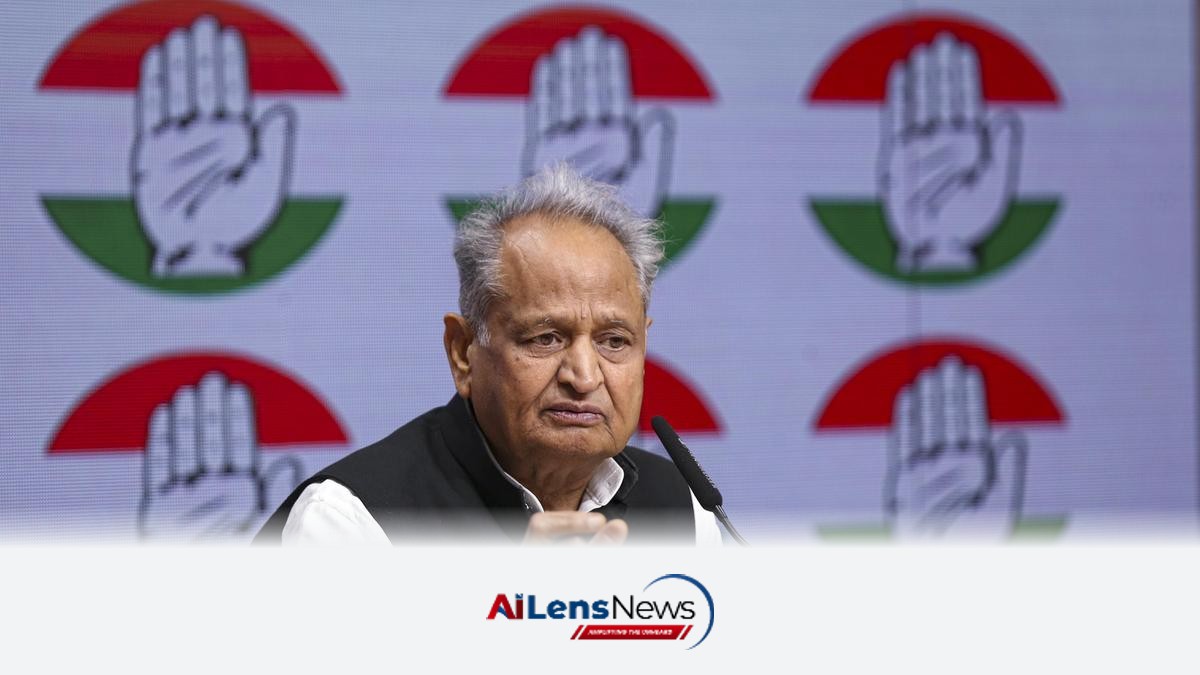



Congress leaders claim Penguin India has succumbed to external pressure to alter Sonia Gandhi's memoir, raising serious concerns about editorial independence.
New Delhi, India Aug 29, 2026 ALN: In a significant development that has sparked controversy within political and literary circles, Congress leaders have publicly accused Penguin Random House India of succumbing to external pressures regarding the publication of former Congress president Sonia Gandhi’s memoir, Belonging: A Journey of Love. This accusation surfaced on August 28, 2026, when senior Congress leader Ashok Gehlot claimed that the publisher was attempting to censor portions of the memoir that are critical of Prime Minister Narendra Modi, the Rashtriya Swayamsevak Sangh (RSS), and the contentious issue of Chinese territorial claims against India.
The backdrop to this controversy is the ongoing tension between the Congress party and the ruling Bharatiya Janata Party (BJP), which has been characterized by a polarized political environment. The Congress party, which has historically been one of India’s two major political parties, has been critical of the BJP's governance and policies, particularly regarding security and civil liberties. The memoir in question is anticipated to provide insights into Sonia Gandhi's personal and political journey, and its publication is seen as a significant event for both the Congress party and its supporters.
In response to the allegations, Penguin Random House India issued a statement asserting that the processes of fact-checking and editorial recommendations are standard practices in the publishing industry. However, this defense has not quelled the concerns raised by Congress leaders, who argue that the integrity of the memoir is at stake. Mr. Gehlot emphasized that while Penguin Worldwide is prepared to publish the memoir in its original form globally, the Indian arm of the publishing house appears to be imposing restrictions that compromise the book's content. He questioned the motivations behind these changes, suggesting that external pressures may be influencing editorial decisions.
Gehlot’s comments reflect a broader concern among opposition parties regarding the state of freedom of expression in India. The notion that a prominent political figure's memoir could be subject to censorship raises alarms about the health of democracy and the independence of publishing houses in the country. Gehlot characterized the situation as a "murder of freedom of expression," indicating that he believes the integrity of public discourse is under threat from political pressures.
Former Madhya Pradesh Chief Minister Kamal Nath also weighed in on the matter, expressing his dismay at the publisher's refusal to release the memoir in its intended form. Nath's remarks highlight a critical question: whether the decision to alter the memoir was made independently by Penguin Random House India or if it was influenced by external forces, possibly including the government. This inquiry into the autonomy of publishers is particularly pertinent in an era where media and publishing are increasingly scrutinized for their ties to political entities.
The allegations of censorship have prompted further commentary from various Congress leaders. Gaurav Gogoi, Congress's deputy leader in the Lok Sabha, criticized Penguin India's statement as inadequate, suggesting that it failed to address the serious implications of their editorial choices. He pointed out a perceived double standard, noting that the publisher has been willing to release works by Prime Minister Modi, such as Exam Warriors, as well as books that promote the RSS, while simultaneously seeking to alter Gandhi's memoir. This perception of bias has fueled accusations that the BJP government is attempting to suppress dissenting voices in literature and public discourse.
Congress Seva Dal chief B.V. Srinivas further escalated the rhetoric by accusing Penguin Random House India of compromising its editorial independence. His remarks, made in a post on social media, employed sharp language to critique the publisher's stance, suggesting that the company was prioritizing political alignment over journalistic integrity. This sentiment resonates with many who believe that the freedom of the press and the independence of publishers are essential components of a healthy democracy.
The implications of this controversy extend beyond the realm of publishing and literature. It raises critical questions about the state of freedom of expression in India, particularly in the context of political discourse. The perceived encroachment of government influence into cultural and literary domains could have chilling effects on authors and publishers, potentially discouraging them from tackling sensitive subjects or critiquing those in power. This situation is indicative of broader trends where political polarization can lead to self-censorship, as individuals and organizations weigh the risks associated with expressing dissenting views.
Moreover, the incident underscores the challenges faced by publishers in navigating the complex landscape of political sensitivities in India. As the country grapples with issues of ism, identity, and freedom of speech, the role of publishers becomes increasingly significant. They are tasked with balancing commercial interests, editorial integrity, and the potential repercussions of political backlash. The outcome of this particular controversy may set a precedent for how similar situations are handled in the future, influencing not only the publishing industry but also the broader cultural discourse in India.
As discussions continue, the fate of Sonia Gandhi’s memoir remains uncertain. The Congress party's strong condemnation of the publisher's actions highlights the ongoing tensions between political entities and the media, and it serves as a reminder of the vital importance of protecting freedom of expression in all its forms. The outcome of this situation will likely resonate beyond the immediate parties involved, affecting how future political narratives are shaped and shared in India.
To learn more about the latest developments in Politics, stay updated with our exclusive reports and analyses on AILensNews.

Lebanon president says agreement with Israel 'does not legitimise' occupation

As the midterm elections approach, Americans living in Europe face uncertainties…

KTR, accompanied by former ministers and party workers, attended the Nampally AC…

A US religious freedom panel has called for the revocation of Mohan Bhagwat's vi…
A probe is underway after Chief Minister V D Satheesan's convoy was halted by a …