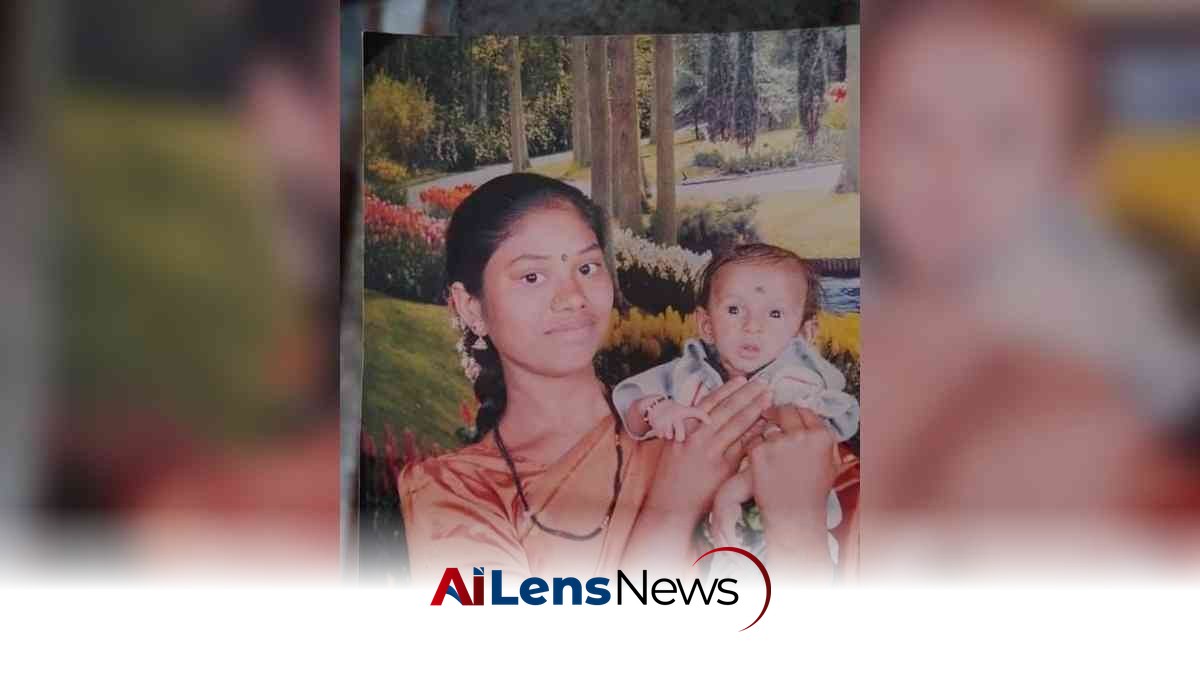


The parents of Mood Muralinaik, an Agniveer killed in action, are fighting for equal pension and benefits, highlighting disparities in military compensation.
New Delhi, India Jul 14, 2026 ALN: Jyothibai Naik has never been to Delhi. She has not even seen photographs of the iconic India Gate, which stands opposite the National War Memorial. So, when the Ministry of Defence inscribed the name of her late son, Mood Muralinaik, on one of the walls at the memorial last month, she did not quite know what to make of it.
To make matters worse, “nobody from Delhi” told them about the honour, she complained over a phone call from her village in Andhra Pradesh. “We heard about it from journalists here,” she said. Her husband, Shriramnaik, who was also on the call, asked: “Have they put up his photo too?”
Their 24-year-old son was killed in cross-border shelling on May 9, 2025, at the peak of the four-day war between India and Pakistan. Since then, the couple have been waging a battle of their own – against the government of India.
They want the Union government to extend to them the same benefits and protections that it provides to the families of other soldiers killed in military action. These include a lifelong pension, health insurance, and subsidies on travel as well as consumer goods. Jyothibai has even filed a petition in the Bombay High Court, asking for her demands to be fulfilled.
However, the government has so far pleaded helplessness in the case, citing the fact that Muralinaik was recruited to the Army under the Agnipath scheme. Soldiers engaged under the scheme are known as Agniveers. Unlike regular soldiers, Agniveers serve a short, four-year stint with the armed forces and are, therefore, ineligible for the same entitlements as them.
“If Agniveers have to be treated differently, why send them to war in the first place?” Muralinaik’s mother asked. “Only regular soldiers should be made to fight wars. Why did they send my child?”
While the Bombay High Court has yet to decide if it will admit the petition, the case has once again put the spotlight on the controversial recruitment scheme. The Opposition has repeatedly criticised the Agnipath scheme for allegedly dividing the armed forces. The military leadership, too, has reportedly sought changes in its design.
Muralinaik was part of the first batch of Agniveers recruited by the Army after the scheme was rolled out in 2022. “We did not think much about it at that time,” his mother, Jyothibai, recalled. “We were just happy that he was going to serve the country.”
The family belongs to the Sugali tribe, which is on the list of Scheduled Tribes in Andhra Pradesh. They live in the tribal hamlet of Pudagundlapalli Thanda in Sri Sathya Sai district.
Murali, the name by which his parents call him, was raised by his grandparents in the hamlet, while his parents worked in Mumbai.
Jyothibai worked as a domestic help in Ghatkopar, a suburban neighbourhood located in east Mumbai, while Shriramnaik used to ferry rice and grains door to door for a living.
“It was very laborious work,” Shriramnaik said, describing how he carried sacks of rice and grains on his back and walked through the streets of the city to sell them by the kilogram.
After Muralinaik joined the Army, his parents, now in their 40s, gradually cut down on work. “She [Jyothibai] suffers from allergic asthma,” his father said. “When Murali was alive, he used to take her to the hospital.”
In her petition before the Bombay High Court, Jyothibai has stated that Muralinaik was her only child and that she and her husband depended on his income. When asked the couple how they were making ends meet since his death, they said that they were using the money they had received from the government.
According to the Agnipath scheme, the family of an Agniveer killed in military action is entitled to receive an insurance cover of Rs 48 lakhs and a one-time payment of Rs 44 lakhs. In addition to that, the government is also required to pay them the Agniveer’s salary for the remaining, unserved part of their four-year engagement.
In court, the government has claimed to have paid Rs 1.2 crore to the parents. It also pointed to compensation announced by state governments for Muralinaik’s parents, which includes five acres of land.
Muralinaik’s father, however, said that they had received only about Rs 76 lakhs so far, adding that it was not enough. “How long will this money last?” he asked. “Will it help us get through the rest of our lives?”
Jyothibai even claimed that she was ready to work again if given a chance. “The government should give a job either to me or my husband,” she said. “If it cannot do that, it should give us a pension.”
The legal debate on the Agnipath scheme was settled in 2023, when the Delhi High Court upheld its constitutional validity.
Even at that time, the petitioners against the scheme had argued that it was discriminatory by design because it denied long-standing benefits to some recruits. But the court decided that the Agnipath scheme was in the national interest and said that the government was within its powers to decide how to recruit soldiers.
However, Sandesh More, one of Jyothibai’s lawyers, argued that the death of Muralinaik had created a legal opening for them to challenge the scheme afresh. No Agniveer had been killed in action when the 2023 judgement on the scheme was passed, he explained.
The petition, of which has seen a copy, asks the Bombay High Court to intervene in the matter in light of the “actual, irreparable loss” suffered by Muralinaik’s parents. It argues that the families of Agniveers who die in action must be treated at par with those of regular soldiers and given lifelong pension.
“Soldiers fighting shoulder-to-shoulder cannot be treated differently in death,” the petition states. The argument for pension rests primarily on Article 14 of the Constitution, which guarantees the right to equality before the law to all persons living in India.
Describing the government as a “model employer”, the petition contends that it has a greater obligation to ensure that its labour policies are “fair, reasonable and equitable”.
In response, the government has argued before the court that Agniveers are not the same as regular soldiers and there can be “no parity” between the two. Muralinaik, it added, knew of and accepted the difference between the two categories when he enrolled in the Army as an Agniveer.
“It is well settled that a person who voluntarily accepts the terms and conditions of service cannot subsequently challenge those very terms,” the government said in its court filing.
It also claimed that pension is not an “inherent or fundamental right”. Even the regular soldiers entitled to one, it argued, only become eligible for it after a minimum of 15 years in military service.
But Jyothibai’s lawyers have disputed this. “The liberalised pension scheme for martyred soldiers, which the government introduced in 2022, does not consider their duration of service,” Hitendra Gandhi, another lawyer working on the case, pointed out. He was hopeful that the court would take note of this and accede to their demand.
For defence journalist Ajai Shukla, the government’s stance is not surprising. He said officials in the Ministry of Defence thought their job was to save money for the government “rather than to ease the burden of sacrifice for parents of Agniveers who have laid down their lives” for the country.
This was in keeping with the recent trend of the Modi government trimming expenditure on the welfare of defence personnel even as it put them at the centre of its nationalistic claims. As Shukla reported in 2016, it cut down disability pensions for soldiers while the Army was carrying out “surgical strikes” in Pakistan-occupied Kashmir. The decision was rolled back after the report generated controversy.
A former soldier himself, Shukla argued that denying pension to Agniveers killed in action was “not just unconstitutional, it is unconscionable”. “It really is beyond disgraceful,” he said. “How can anyone justify something like this?”
The Army has maintained that it treated Muralinaik’s sacrifice with the honour that it deserved. Besides inscribing his name at the National War Memorial along with five other soldiers killed in action during Operation Sindoor, it posthumously awarded him with the Sena Medal.
For the lawyers representing his mother, though, these honours only underscored their legal arguments. As they state in the petition: “The State cannot confer the language of honour at the funeral and then deny the substance of that honour in pension, welfare and institutional treatment.”
When they travelled to Ahmedabad earlier this year to receive their son’s Sena Medal, Muralinaik’s parents even raised their concerns with an army officer. “He said he would talk to his seniors about it,” Jyothibai said. “But nothing happened.”
It is not as if they do not appreciate the honours conferred upon their son. Jyothibai said that they made her proud. Shriramnaik called them “big” achievements. But that did not take away from the feeling that the government had neglected them.
“Ministers talk so much about Operation Sindoor,” he said. “The authorities in Delhi must be feeling proud of themselves after putting up his name on the wall [at the memorial]. But they don’t think about the families of those who were killed.”
To learn more about the latest developments in Society & Social Issues, stay updated with our exclusive reports and analyses on AiLensNews.

