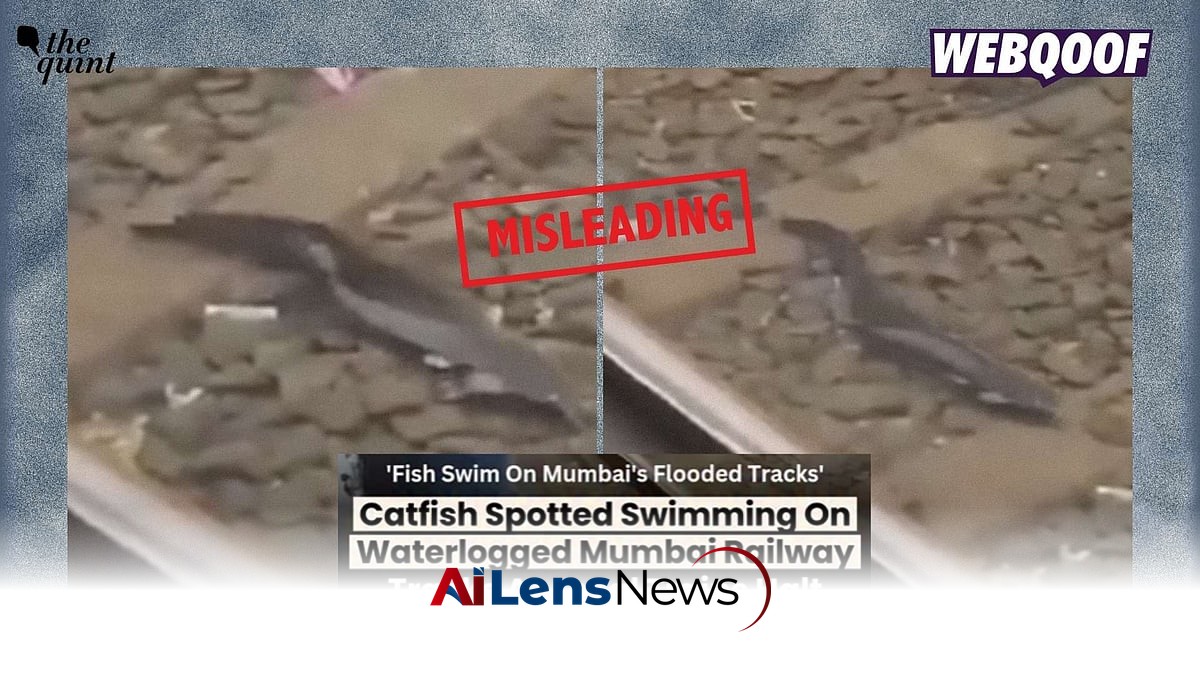


A viral video claiming to show fish swimming in flooded railway tracks in Mumbai is actually from 2024, not recent.
New Delhi, India Jul 27, 2026 ALN: A video has recently gone viral on social media platforms, claiming to depict fish swimming in the waterlogged railway tracks in Mumbai during a period of heavy monsoon rains. The visuals, which show fish navigating through the flooded tracks, have sparked significant attention and discussion, particularly regarding the impact of the monsoon season on the city's infrastructure.
One of the posts accompanying the video was captioned: "Mumbai's monsoon fury turned railway tracks into waterways this week. A viral video captured catfish swimming freely on flooded local train tracks, as heavy rains submerged large parts of the city's suburban rail network." Such statements resonate with the experiences of many Mumbaikars during the monsoon, where the city often grapples with severe flooding due to heavy rainfall. The monsoon season in Mumbai, which typically lasts from June to September, is marked by intense rainstorms that frequently overwhelm the city's drainage systems.
The video has been shared by various media outlets and social media users, including prominent platforms like NDTV India and The New Indian Express. The widespread sharing of such content underscores the public's interest in the effects of the monsoon on urban environments, particularly in a city like Mumbai, known for its vulnerability to flooding. The phenomenon of fish appearing in urban areas during heavy rains is not unusual; as floodwaters rise, aquatic life can be displaced from their natural habitats, leading to sightings in unexpected locations.
(Archived versions of more claims can be found here, here, and here.)
Upon investigation, it has been determined that the video is not recent. In fact, it dates back to at least July 2024. This revelation is crucial in understanding the context of the claims being made about the current state of Mumbai's railway tracks. The misrepresentation of this video as current highlights the challenges of navigating information in a digital age where content can easily be misconstrued or taken out of context.
To verify the authenticity of the video, a reverse image search was conducted using Google Lens. The findings revealed a report published on July 10, 2024, that shared the same visuals as the viral video. This report, from News18, detailed how heavy downpours in Mumbai resulted in waterlogged roads and railway tracks, a recurring issue during the monsoon season. This investigation underscores the importance of utilizing available technology to fact-check viral content before sharing it widely.
Furthermore, the report included an X post that showcased the same footage of fish swimming in the flooded railway tracks. This correlation between the video and established news reports from the past highlights the importance of fact-checking in the age of rapid information dissemination through social media. The ability to trace the origins of a video or image can significantly reduce the spread of misinformation, which can lead to public panic or misunderstanding.
Another article by Business Standard, published on July 8, 2024, also reported on the phenomenon of fish swimming in the flooded railway tracks, reinforcing the notion that this video is not a recent occurrence but rather an event that has been documented previously. This historical context is essential for understanding the recurring challenges faced by Mumbai during the monsoon season. The city’s infrastructure, particularly its drainage systems and railway networks, often struggles to cope with the volume of rainwater, leading to regular flooding incidents.
The implications of this misrepresentation are significant. Misinformation can easily spread in the digital age, leading to panic or misunderstanding among the public. The viral nature of such videos can create a sense of urgency or concern that may not accurately reflect the current situation. In the case of Mumbai, where the monsoon season is both a natural phenomenon and a source of infrastructural challenges, the misrepresentation of events can lead to unwarranted fear or confusion among residents and stakeholders. This is especially pertinent in a city where the monsoon is both anticipated and dreaded, as it brings both relief from the heat and challenges to daily life.
Moreover, the flooding of railway tracks is not a new issue for Mumbai. The city has long struggled with the consequences of heavy rainfall, which can lead to delays in train services, disruptions in daily commutes, and even accidents. Each year, the monsoon season brings with it a host of challenges, and the local government and rail authorities are often under pressure to implement effective measures to mitigate the impact of flooding. This includes investing in better drainage systems, improving the resilience of infrastructure, and enhancing emergency response protocols.
In light of this, it is crucial for media outlets, social media users, and the general public to approach viral content with a critical eye. Fact-checking and verifying the authenticity of videos and images before sharing can help curb the spread of misinformation. This responsibility is especially important in a diverse and densely populated city like Mumbai, where the implications of misinformation can be far-reaching. The rapid sharing of unverified information can lead to a misinformed public, which can affect community trust and response during actual emergencies.
In conclusion, the viral video claiming to show fish swimming in flooded railway tracks in Mumbai has been confirmed to be outdated, dating back to at least 2024. This incident serves as a reminder of the importance of accurate reporting and the need for individuals to verify information before sharing it widely. As Mumbai continues to navigate the challenges posed by the monsoon season, understanding the context and history of such events can foster a more informed and resilient community. The ability to discern between fact and fiction in the digital age is crucial for maintaining public trust and ensuring that residents are adequately prepared for the realities of monsoon life.
(Not convinced of a post or information you came across online and want it verified? Send us the details on WhatsApp at 9540511818, or e-mail it to us and we'll fact-check it for you. You can find all our fact-checked stories here.)
To learn more about the latest developments in Crime & Law, stay updated with our exclusive reports and analyses on AiLensNews.

