

More
Checking your session
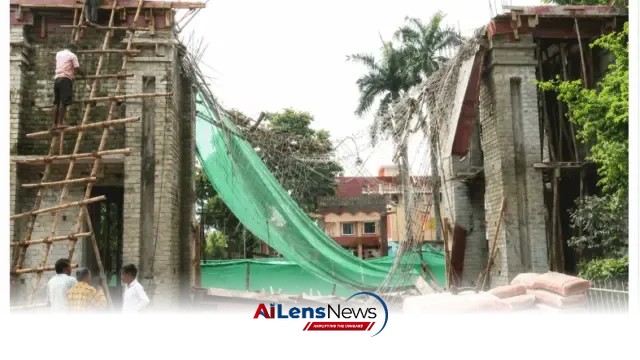



Three workers were injured when the roof of an under-construction gate collapsed at the Odisha University of Agriculture and Technology in Bhubaneswar.
Bhubaneswar, India Aug 21, 2026 ALN: Bhubaneswar: At least three workers were injured after the roof of an under-construction gate collapsed at the College of Agriculture under Odisha University of Agriculture and Technology (OUAT) in Bhubaneswar on Friday. This incident has sparked significant concern regarding the safety protocols and construction practices being employed at the site, raising questions about the oversight and regulatory frameworks governing such projects.
According to information, several workers were engaged in casting the roof of the main gate when the centring suddenly gave way. Cetring is a temporary structure that supports the weight of the concrete until it has set and can support itself. The failure of this critical component can lead to catastrophic consequences, as witnessed in this incident. The immediate aftermath saw three workers sustaining injuries, prompting swift action as they were rushed to a nearby hospital for treatment.
Sources reported that over ten workers were present at the site when the mishap occurred, indicating that the incident could have been far worse had more individuals been directly under the collapsed structure. The injured workers reportedly claimed that the collapse was due to improper installation of the centring, a crucial aspect of the construction process that ensures the stability of the structure being built. This assertion highlights a potential lapse in adherence to safety standards and construction best practices, which are designed to protect workers on site.
The incident has not only raised alarms among the workers and their families but has also drawn attention from local authorities and construction safety advocates. There is a growing demand for a thorough investigation into the circumstances leading up to the collapse. Such inquiries typically focus on whether proper safety protocols were in place, whether workers were adequately trained, and whether the construction company adhered to local regulations governing construction safety.
In the wake of this incident, authorities are expected to review the construction site and the practices employed by the contractors. The review process may include assessing the qualifications of the construction crew, the safety measures implemented, and the overall management of the project. Additionally, there may be calls for stricter enforcement of safety regulations across all construction sites in the region to prevent similar occurrences in the future.
This incident is not isolated; it reflects a broader issue within the construction industry, particularly in developing regions where rapid urbanization and infrastructure development often outpace regulatory oversight. Construction accidents can have devastating consequences, not just for the individuals involved but also for their families and the community at large. Injuries sustained on job sites can lead to long-term health issues, financial instability, and emotional distress for those affected.
Furthermore, the implications of such accidents extend beyond the immediate physical harm to workers. They can also impact public perception of the construction industry and the entities involved. When incidents of negligence or unsafe practices come to light, it can erode trust in construction companies and lead to calls for increased regulation and oversight. This can result in a more stringent regulatory environment, which, while aimed at improving safety, may also increase costs and extend project timelines.
In response to this incident, construction safety advocates may push for enhanced training programs for workers, focusing on safety protocols, proper installation techniques, and emergency response procedures. Such initiatives could help mitigate the risks associated with construction work, especially in high-stakes environments like the one where the roof collapse occurred.
Moreover, the role of regulatory bodies becomes critical in ensuring that construction companies comply with safety standards. These organizations are tasked with setting and enforcing safety regulations, conducting regular inspections, and responding to reported incidents. Strengthening the capacity and authority of these bodies could lead to better oversight and, ultimately, safer working conditions for construction workers.
As the investigation unfolds, it will be essential for all stakeholders, including construction companies, regulatory authorities, and worker advocacy groups, to collaborate in addressing the underlying issues that contribute to such accidents. By fostering a culture of safety and accountability within the construction industry, it is possible to reduce the likelihood of similar incidents occurring in the future.
In conclusion, the roof collapse at the OUAT construction site serves as a stark reminder of the inherent dangers associated with construction work and the critical importance of adhering to safety standards. As the injured workers receive medical care and the investigation into the incident begins, it is hoped that this tragedy will lead to meaningful changes in the way construction projects are managed and executed in Bhubaneswar and beyond.
To learn more about the latest developments in Local & Regional, stay updated with our exclusive reports and analyses on AILensNews.

Damburudhar Majhi, a veteran politician and former Odisha minister, has passed a…

Two rare marmoset monkeys have died at Nandankanan Zoological Park after being b…
A significant fire at Bhubaneswar's Unit-I market on Saturday morning destroyed …

Odisha's Housing Minister initiates a six-lane road project linking Guru Kelucha…

As Odisha faces fresh flooding, Chief Minister Mohan Majhi will visit Bhadrak an…