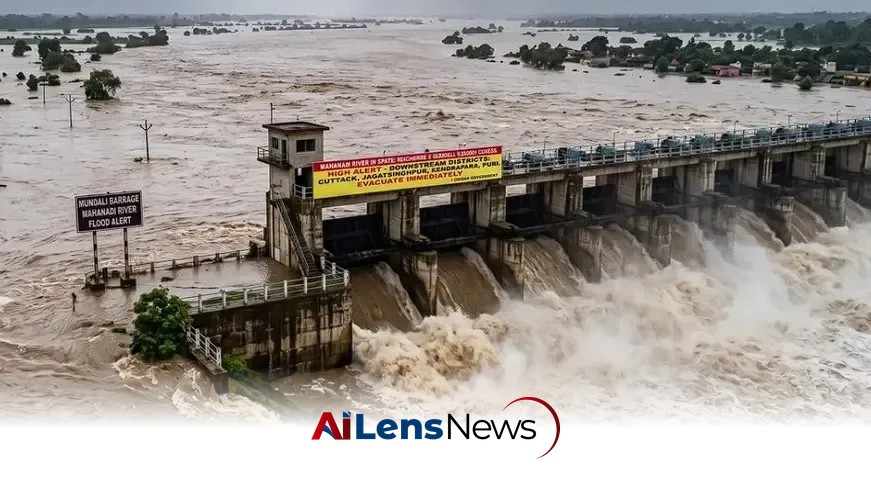


The flood situation in Odisha worsens as the Hirakud dam releases excess water, prompting high alert in five districts. CM Majhi to conduct aerial survey today.
Bhubaneswar, India Aug 1, 2026 ALN: Bhubaneswar: The flood situation in Odisha remained grim on Saturday as the flow in the Mahanadi River rose alarmingly following the release of excess water from the Hirakud dam through 22 sluice gates. This development is a significant concern for local authorities and residents alike, as the Mahanadi River is a major waterway that supports agriculture, transportation, and livelihoods in the region.
The Hirakud Dam, one of the longest earthen dams in the world, was constructed in the 1950s across the Mahanadi River. It serves multiple purposes, including irrigation, flood control, and hydroelectric power generation. However, its operation is closely tied to rainfall patterns and water levels in the surrounding catchment areas. The dam's capacity to manage water levels is crucial, especially during the monsoon season when inflow can surge dramatically.
The state government has put the collectors of Cuttack, Puri, Khordha, Jagatsinghpur, and Kendrapada districts on high alert after 22 gates of the Hirakud reservoir were opened on Friday. This precautionary measure indicates the seriousness of the situation, as these districts are prone to flooding due to their proximity to the river. The collectors are responsible for coordinating response efforts and ensuring that residents are informed and prepared for potential evacuations or emergency measures.
Officials said water levels in the Mahanadi are expected to rise at Naraj and Mundali in Cuttack district. The Hirakud authorities opened the gates in three phases by Friday evening following heavy inflow from the upper catchment areas, which had been experiencing significant rainfall. This operational strategy is designed to prevent overtopping of the dam and to manage downstream flooding risks.
According to the latest official data, the reservoir level (R.L.) stood at 625.47 feet and was showing an upward trend. This is against the Full Reservoir Level (FRL) of 630 feet. The close proximity to the FRL indicates that the dam is nearing its capacity, necessitating careful management of water releases to mitigate flood risks.
Inflow into the Hirakud Reservoir was recorded at 4,15,017 cusecs, while the average outflow stood at 3,89,603 cusecs. Of the outflow, the bulk — 3,54,002 cusecs — was being released through the spillway. Additional releases included 31,759 cusecs through the power channel, 247 cusecs for industrial use, and 3,595 cusecs through canals (primarily BMC, SMC, and SBP distributaries). The detailed breakdown of inflow and outflow data is crucial for understanding the dam's operational status and the potential impact on downstream areas.
The high inflow and corresponding gate operations are being managed to regulate water levels in the reservoir on the Mahanadi River. Downstream gauge stations were also reporting significant discharges, with authorities monitoring the situation closely. This continuous monitoring is essential for timely interventions and for informing residents about the changing conditions.
Dam officials continue to operate the gates based on real-time inflow, rainfall in the catchment areas, and downstream conditions. Residents in low-lying areas along the Mahanadi and its tributaries have been advised to remain alert. Such advisories are critical for ensuring public safety, especially in areas known for their vulnerability to flooding.
The Mahanadi was flowing above the danger level at Naraj, while the water level at Hirakud stood at 625.25 ft in the evening against its full reservoir level of 630 ft. The situation at Naraj is particularly concerning, as this area is a key monitoring point for flood conditions that can affect a broader region downstream.
According to Revenue and Disaster Management Minister Suresh Pujari, the situation is likely to improve after a day. He said the release of water from Hirakud is not likely to aggravate the flood situation downstream. This statement aims to provide some reassurance to the affected communities and indicates that the government is actively assessing the situation.
The current heavy flow at Mundali is caused by heavy rain and is expected to come down by the time the reservoir water reaches there, he said. The minister highlighted the importance of understanding the timing and effects of water releases, as they can significantly influence flood dynamics.
The minister said the absence of rainfall in Odisha and the upper catchment areas over the past 24 hours had brought some relief, though the state is keeping an eye on the Mahanadi river system. This reduction in rainfall can provide a temporary respite, but the situation remains fluid and requires ongoing vigilance.
Pujari said 8.36 lakh people across 15 districts have been affected by the floods. This figure underscores the widespread impact of the flooding and highlights the need for effective disaster management strategies to assist those affected.
Meanwhile, Chief Minister Mohan Charan Majhi will undertake an aerial survey of flood-affected areas in Jajpur, Bhadrak, Baleshwar, and Kendujhar districts in Odisha on Saturday. The aerial survey is a critical tool for assessing damage and coordinating relief efforts, as it allows officials to quickly gather information about the extent of flooding and its impact on infrastructure and communities.
Revenue and Disaster Management Minister Suresh Pujari and Special Relief Commissioner Rajesh Prabhakar Patil will accompany him on the inspection, after which the Chief Minister is expected to review ongoing rescue and relief operations. This high-level oversight reflects the government's commitment to addressing the crisis and ensuring that resources are mobilized effectively.
The Chief Minister had earlier directed the Chief Secretary, the Special Relief Commissioner (SRC), and other senior officials to closely monitor the flood situation and implement all necessary measures to address the crisis. He had also deputed three senior IAS officers to oversee flood management in Baleshwar, Bhadrak, and Jajpur districts. These measures are indicative of a proactive approach to disaster management, emphasizing the importance of coordination among various government agencies and departments.
The implications of the current flooding situation are significant not only for the immediate response efforts but also for long-term recovery and rebuilding in the affected areas. Flooding can lead to extensive damage to infrastructure, agriculture, and livelihoods, necessitating comprehensive recovery plans that include financial assistance, infrastructure repairs, and support for displaced communities.
In conclusion, while the immediate focus is on managing the current flood situation and ensuring public safety, the broader context of disaster preparedness and resilience is also critical. The government’s response will be closely scrutinized, and lessons learned from this event will likely inform future policies and strategies for flood management in Odisha. As the state continues to navigate this challenging situation, the resilience of its communities and the effectiveness of its disaster response will be tested.
To learn more about the latest developments in Health & Public Safety, stay updated with our exclusive reports and analyses on AiLensNews.

