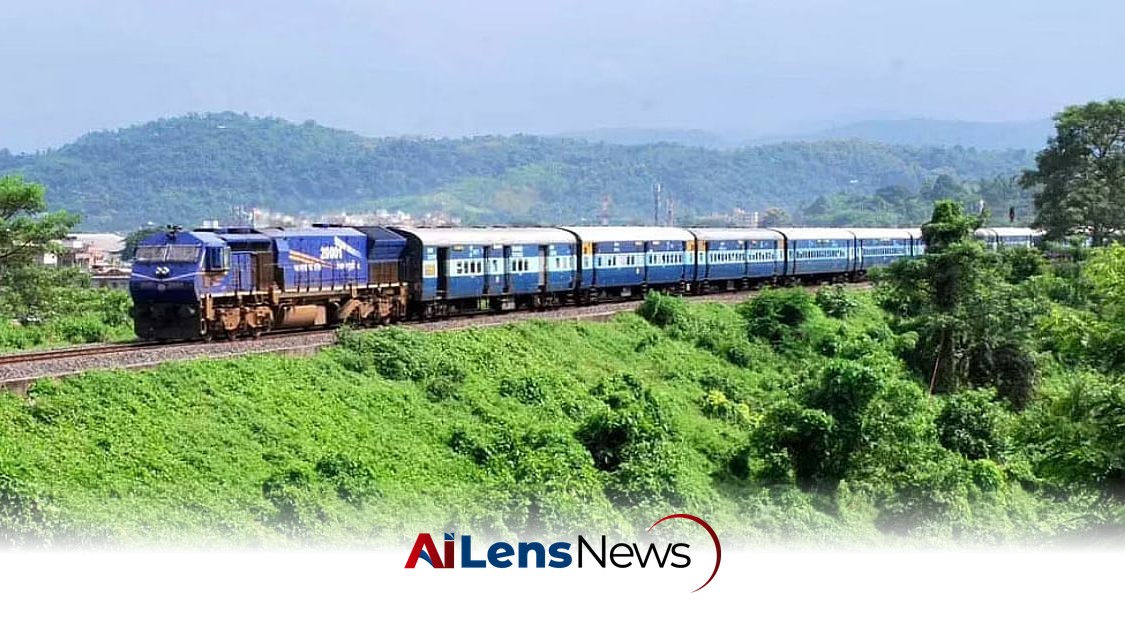


Northeast Frontier Railway has implemented cancellations and rescheduling of several train services due to ongoing restoration work near New Harangajao station.
New Delhi, India Aug 3, 2026 ALN: Northeast Frontier Railway (NFR) has announced fresh cancellations, rescheduling, and regulation of train services as restoration work continues near New Harangajao station following the settlement of railway tracks on Line-1 and Line-2. Train operations on the Lumding–Badarpur Hill Section are continuing through Line-3 with enhanced safety measures.
The recent adjustments to the train schedules have been made in response to significant track settlement issues that have arisen in the area. Track settlement can occur due to various factors, including soil erosion, heavy rainfall, or geological shifts, which can compromise the integrity of the railway infrastructure. The NFR is taking proactive measures to address these concerns to ensure the safety and reliability of train operations in the region.
NFR cancelled Train Nos. 15617 (Guwahati–Dullabcherra) and 15615 (Guwahati–Silchar) scheduled to commence on August 3, and Train Nos. 15618 (Dullabcherra–Guwahati) and 15616 (Silchar–Guwahati) scheduled to commence on August 4. The cancellations reflect the railway's commitment to prioritizing passenger safety over operational convenience. Passengers who had planned to travel on these routes are advised to check for alternative arrangements or reschedule their journeys accordingly.
In addition to the cancellations, several trains have also been rescheduled to accommodate the ongoing restoration work. These include key services such as the Narangi–Agartala Express, Agartala–Narangi Express, Guwahati–Sairang Express, Sairang–Guwahati Express, Rangiya–Silchar Express, Silchar–Rangiya Express, Agartala–Anand Vihar Terminal Tejas Express, and Silchar–New Delhi Poorvottar Sampark Kranti Express. The rescheduling of these trains is essential to ensure that services can continue safely while the restoration work is being conducted.
Furthermore, the Charlapalli–Silchar Express and Kolkata–Agartala Garib Rath Express will be regulated en route. This regulation means that these trains will experience delays or modified stops as they navigate through the affected areas. Passengers on these services are encouraged to remain informed about their travel plans and to remain patient as the NFR works to restore normal operations.
The NFR has emphasized that these changes, while inconvenient, are necessary to facilitate ongoing restoration work while ensuring safe train operations. The railway has committed to keeping passengers updated on the status of services and any further changes that may arise due to the ongoing situation.
The implications of these cancellations and rescheduling extend beyond just the immediate inconvenience to travelers. The Northeast region of India relies heavily on rail transport for both passenger and freight services. Disruptions in train services can have a cascading effect on local economies, tourism, and the daily lives of residents who depend on these connections for commuting and trade.
Moreover, the NFR's focus on safety and infrastructure integrity highlights the importance of maintaining and upgrading railway systems, particularly in regions prone to natural disturbances. The Lumding–Badarpur Hill Section, known for its scenic views and challenging terrain, is a vital link in the railway network, connecting various towns and cities across the northeastern states. Therefore, the restoration work being carried out is not only crucial for immediate safety but also for the long-term sustainability of rail travel in the region.
In recent years, the Indian Railways has made significant investments in modernizing its infrastructure, including the introduction of advanced technology for track monitoring and maintenance. This incident serves as a reminder of the ongoing challenges faced by railway authorities in maintaining service reliability amidst environmental factors. As climate change continues to impact weather patterns, the railway sector may need to adapt its strategies for infrastructure management to mitigate risks associated with extreme weather events.
As the NFR continues its restoration efforts, it is expected that they will implement further measures to enhance safety and reliability. This may include increased surveillance of track conditions, more frequent maintenance checks, and potential upgrades to the existing infrastructure to withstand future challenges. The cooperation of passengers during this period will be essential, as the NFR navigates these complexities in ensuring safe and efficient rail services.
In conclusion, while the recent cancellations and rescheduling of train services by the Northeast Frontier Railway may cause temporary disruptions, they are a necessary step towards ensuring the long-term safety and reliability of the railway network in the region. Passengers are encouraged to stay informed through official channels and to plan their journeys accordingly as the NFR works diligently to restore normal operations.
The NFR's commitment to passenger safety is underscored by its decision to prioritize the integrity of railway operations over mere convenience. The railway network in Northeast India is not just a mode of transport; it is a lifeline for many communities, facilitating trade, travel, and connectivity. As rail services are a primary means of transportation in this region, ensuring their reliability is critical.
In light of these recent developments, it is vital for passengers to understand the broader context of railway operations in India. The Indian Railways, one of the world's largest railway networks, has been undergoing significant changes to improve efficiency and safety. However, the challenges posed by the unique geography of Northeast India, characterized by hilly terrains and vulnerable ecosystems, require tailored approaches to infrastructure management.
In addition to immediate operational adjustments, the NFR may also consider long-term strategies to enhance resilience against environmental challenges. This could involve investing in more robust engineering solutions, such as improved drainage systems to prevent water accumulation and soil erosion, which are primary contributors to track settlement.
Furthermore, the railway authorities may explore collaborations with environmental experts to better understand the impacts of climate change on rail infrastructure. By integrating environmental assessments into their planning, the NFR can develop proactive measures to safeguard against future disruptions caused by natural phenomena.
As the restoration work progresses, the NFR's communication with the public will be crucial. Regular updates regarding train schedules, safety measures, and infrastructure improvements can help ease passenger concerns and foster trust in the railway system. Transparency about the challenges faced and the steps being taken to address them will not only inform travelers but also encourage a collaborative spirit among stakeholders.
In summary, while the current situation presents challenges for the Northeast Frontier Railway and its passengers, it also opens up opportunities for enhancing the resilience and reliability of the railway network. By prioritizing safety and investing in infrastructure improvements, the NFR can ensure that it continues to serve as a vital transportation link for the region, supporting economic growth and community connectivity.
As the railway authorities work through these issues, it is imperative for passengers to remain flexible and patient. The NFR is committed to restoring normalcy as swiftly as possible while ensuring that safety remains the top priority. Passengers are encouraged to stay informed about their travel plans and to utilize available resources for timely updates.
Ultimately, the ongoing efforts by the Northeast Frontier Railway to address track settlement and conduct necessary repairs reflect a broader commitment to maintaining high standards of safety and service within the Indian Railways. The railway sector's adaptability in the face of challenges will be key to its continued success and reliability in the years to come.
To learn more about the latest developments in Transport & Mobility, stay updated with our exclusive reports and analyses on AiLensNews.

