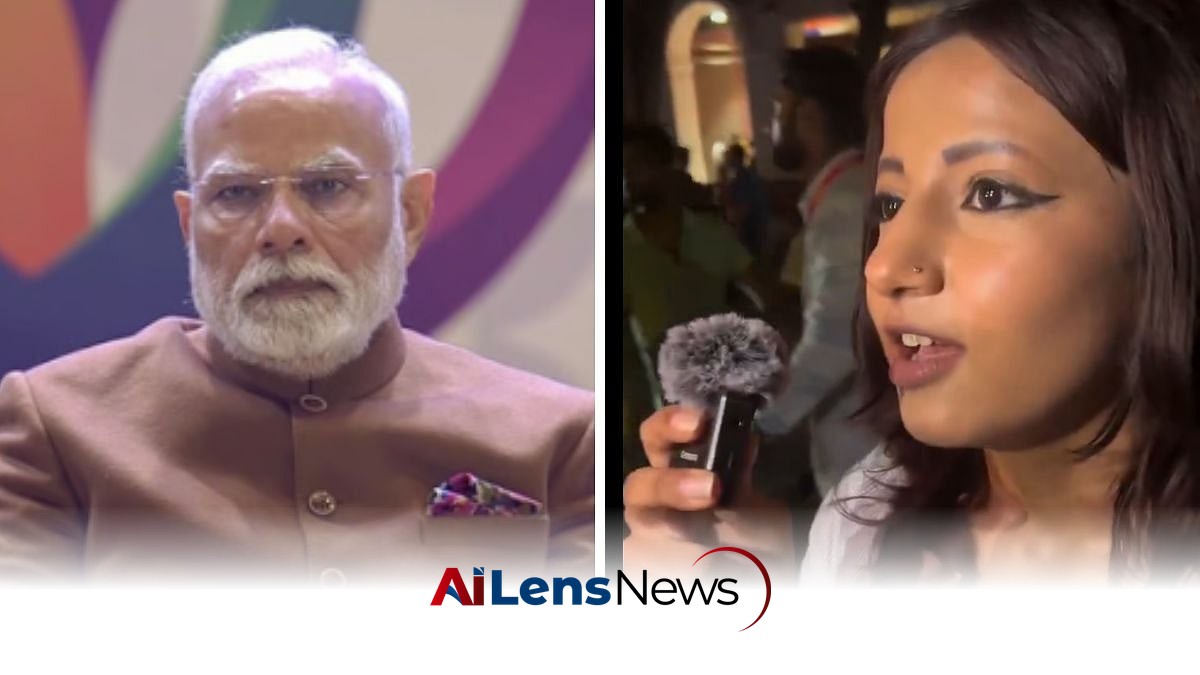


Noida Police have registered a zero FIR against Ruchika Singh for making abusive remarks against PM Modi during a NEET-UG protest. Singh is currently absconding.
New Delhi, India Jul 31, 2026 ALN: The Noida Police have registered a First Information Report (FIR) against 25-year-old Ruchika Singh for using abusive and indecent language against Prime Minister Narendra Modi during the NEET-UG protest held at Jantar Mantar in Delhi. This incident has raised significant attention not only due to the nature of the remarks but also because it reflects broader societal tensions surrounding political expression in India. The protest, which was part of a larger movement against the National Eligibility cum Entrance Test (NEET), has highlighted the grievances of many students and young adults who feel that their futures are being jeopardized by government policies.
The FIR was filed following a complaint that accused Singh of making objectionable remarks against the Prime Minister while participating in the protest. Such protests, often organized to voice concerns about educational policies or entrance examinations like NEET (National Eligibility cum Entrance Test), have become commonplace in India, particularly among students and young adults who feel their futures are being jeopardized by government decisions. The NEET-UG protest, which Singh was part of, was aimed at addressing various issues related to the medical entrance examination system, including the high-stakes nature of the test and its implications for students’ careers. The NEET exam has faced criticism for its perceived inequities, including the pressure it places on students and the limited number of available seats in medical colleges.
In this particular case, the complaint was lodged by Smriti Singh, a Supreme Court advocate and resident of Vasundhara in Ghaziabad. In her complaint, she mentioned that she encountered a video on July 23 that captured Ruchika Singh making abusive and objectionable remarks directed at the Prime Minister during the protest at Jantar Mantar. Smriti Singh's assertion that these comments undermined the dignity of a constitutional office and were intended to disturb public peace highlights the sensitivity surrounding political discourse in India, especially when it pertains to the highest offices in the land. The incident has sparked a debate about the limits of political expression and the role of language in public protests.
The police identified Ruchika Singh as a resident of the Lotus Zing Society in Sector 168, Noida. Following the complaint, a zero FIR was registered under Sections 352, 353(1), and 356(1) of the Bharatiya Nyaya Sanhita (BNS), which relates to offenses against public tranquility and the dignity of individuals in power. A zero FIR allows for the registration of a complaint in any police station, regardless of jurisdiction, and can be transferred to the appropriate police department for further investigation. In this case, the FIR has been transferred to the Delhi Police, who will now carry out the investigation into the matter. This procedural aspect underscores the legal framework within which such cases are managed in India, reflecting the complexities involved in addressing public grievances and the conduct of individuals during protests.
Since the incident, Ruchika Singh and her family have reportedly become untraceable, prompting police to intensify their search for her. This development raises questions about the potential ramifications of her remarks and the subsequent legal action. The fact that she is originally from Unchagaon in Faridabad, runs a beauty parlour, and had recently purchased a flat in Noida adds layers to her profile, suggesting that she is an individual trying to establish herself in a competitive urban environment. Her disappearance from the public eye may indicate the fear of repercussions that individuals face when engaging in political discourse, particularly when it involves criticism of powerful leaders. This situation highlights the precarious nature of political expression in India, where dissent can lead to significant legal and social consequences.
The video in which Singh reportedly made her remarks has circulated widely on social media platforms, inciting a wave of criticism. Many have questioned her conduct and public behavior, pointing to a perceived decline in decorum among certain segments of the younger generation, often referred to as Generation Z. This incident has sparked a debate about the boundaries of political expression and the responsibilities that come with it, particularly in the context of social media where comments can quickly go viral and attract widespread attention. The rapid spread of information in the digital age has transformed how political discourse occurs, making it essential for individuals to navigate their expressions carefully.
Critics of Singh's remarks argue that while freedom of speech is a fundamental right in India, it must be exercised with a sense of responsibility, especially when it comes to comments directed at public figures. This perspective emphasizes the need for a respectful political discourse that acknowledges the positions held by elected officials and the institutions they represent. The incident has prompted discussions about the role of youth in political discourse and the importance of maintaining a level of respect for democratic institutions and their representatives. On the other hand, supporters of Singh may argue that her comments reflect genuine frustrations felt by many young people regarding the current political climate, and that such expressions should be viewed as part of a larger dialogue about governance and accountability. This dichotomy illustrates the challenges faced by individuals trying to express their opinions while balancing the expectations of societal norms and legal frameworks.
Moreover, the legal implications of this case could set a precedent for how similar incidents are handled in the future. With increasing scrutiny on political speech in India, particularly in the context of protests and dissent, this case could influence how individuals express their opinions publicly, especially in politically charged environments. The balance between protecting free speech and ensuring respect for public officials is a delicate one, and this case may further complicate that balance. Legal experts have noted that the outcome of this case could impact future protests and the manner in which individuals engage in political expression, especially in a country where dissent is often met with legal challenges.
As the investigation unfolds, it will be essential to monitor the public's reaction and the potential consequences for Ruchika Singh. The case underscores the complex interplay between youth activism, political expression, and legal accountability in contemporary India. It serves as a reminder of the challenges faced by individuals who choose to voice their opinions in a society that is increasingly polarized along political lines. The reactions to this case may also reflect broader societal attitudes towards dissent and the expectations of political engagement among the youth.
In conclusion, the FIR against Ruchika Singh highlights significant issues surrounding political expression in India, particularly among the youth. It raises questions about the appropriateness of language used in political discourse, the responsibilities that come with free speech, and the potential repercussions for those who cross perceived lines. As this case progresses, it will undoubtedly continue to evoke strong opinions and discussions about the nature of political engagement in the world's largest democracy. The implications of this incident may resonate beyond this specific case, influencing how future protests are conducted and how individuals perceive their rights to free speech in a rapidly changing political landscape.
To learn more about the latest developments in Crime & Law, stay updated with our exclusive reports and analyses on AiLensNews.

