

More
Checking your session



The government has directed deputy commissioners to gather details of residents missing in Nepal following devastating flash floods, as requested by the NDMA.
New Delhi, India Aug 28, 2026 ALN: The government has taken decisive action in response to the devastating flash floods in Nepal by directing all deputy commissioners to compile information on residents from their districts who may have traveled to Nepal and are currently missing.
This initiative follows an urgent request from the National Disaster Management Authority (NDMA), which is seeking details of individuals who may have lost contact with their families in the aftermath of the disaster. An official notification confirmed the government's directive, emphasizing the need for timely and accurate information.
The deputy commissioners have been tasked with collecting and compiling the names and contact details of state residents who are unaccounted for in Nepal. This information is crucial for establishing contact with families and providing necessary assistance during this challenging time.
The consolidated data gathered by the deputy commissioners will be shared with relevant authorities for further action, as stated in an official communication from the Department of Disaster Management.
The flash floods, which were triggered by a significant collapse of ice, rock, and debris in the Himalayan region along the Nepal-Tibet border, have resulted in widespread devastation. Homes have been swept away, and critical infrastructure such as roads and bridges has suffered extensive damage. The rapid onset of the floods left little time for residents and tourists to evacuate, exacerbating the situation.
As of now, reports indicate that at least 357 people have lost their lives in Nepal due to the floods, with hundreds of others, including foreign tourists, still missing. The situation remains dire as rescue and recovery efforts continue in the affected areas. Emergency responders are working tirelessly to reach remote villages that have been cut off due to landslides and flooding, making the recovery process even more challenging.
In light of these tragic events, the government is urging families to report any missing persons to their local authorities to aid in the search and recovery efforts. The NDMA is coordinating with various agencies to ensure that assistance reaches those in need as quickly as possible. This includes not only search and rescue operations but also the provision of food, shelter, and medical care to those affected by the floods.
This disaster highlights the ongoing vulnerability of communities in the Himalayan region to natural calamities, prompting calls for improved disaster preparedness and response strategies to mitigate the impact of such events in the future. The Himalayan region, characterized by its rugged terrain and unpredictable weather patterns, has a history of natural disasters, including earthquakes and floods. These events have underscored the need for enhanced early warning systems and community training programs to better equip local populations to respond to emergencies.
Furthermore, the floods have raised questions about the environmental and climatic factors contributing to such disasters. Climate change is believed to be increasing the frequency and intensity of extreme weather events, including heavy rainfall and rapid snowmelt, which can lead to flash floods. Experts are calling for comprehensive studies to understand the relationship between climate change and disaster risk in the region, as well as the implementation of sustainable practices to reduce vulnerability.
In the aftermath of the floods, there is also a growing concern about the long-term economic impact on the affected communities. Agriculture, which forms the backbone of the local economy, has been severely disrupted, with many farmers losing their crops and livestock. The rebuilding process will require significant investment and support from both the government and non-governmental organizations to restore livelihoods and infrastructure.
As rescue operations continue, the international community has also expressed solidarity with Nepal, offering assistance and support. Various countries and humanitarian organizations are providing aid in the form of financial support, supplies, and personnel to help with the recovery efforts. This global response highlights the interconnectedness of nations in facing natural disasters and the importance of international cooperation in disaster relief efforts.
In summary, the government’s directive to gather information on missing residents is a critical step in addressing the aftermath of the Nepal floods. The ongoing efforts to locate missing persons and provide assistance to affected families reflect the urgency of the situation. As rescue and recovery operations unfold, the focus will also need to shift towards long-term strategies for disaster preparedness and environmental sustainability to better protect vulnerable communities in the future.
To learn more about the latest developments in World News & International Affairs, stay updated with our exclusive reports and analyses on AILensNews.
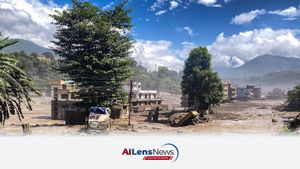
The death toll from Nepal's devastating floods has reached 616, with hundreds st…
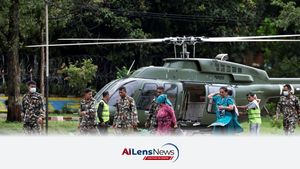
An 11-member team from India has arrived in Nepal to support relief operations f…
A Russian drone strike on a warehouse near Kyiv resulted in significant explosio…

In a significant policy shift, Nepal has agreed to accept limited foreign assist…
Niamey experiences sustained gunfire and explosions as attackers strike the inte…