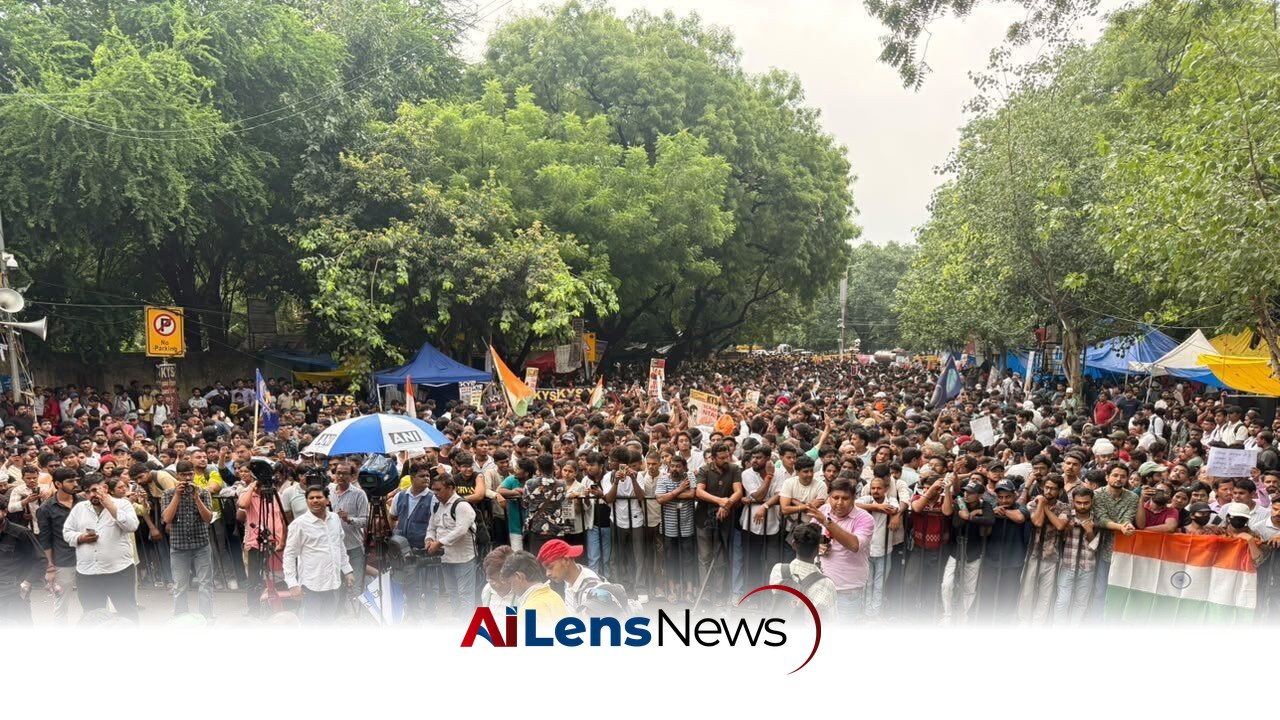


Union Health Minister J.P. Nadda extends an invitation for dialogue to the Cockroach Janata Party, which insists on a neutral venue for discussions.
New Delhi, India Jul 23, 2026 ALN: Union Health Minister J.P. Nadda, on Thursday, invited the Cockroach Janata Party (CJP) for talks, but its leaders reportedly turned down the proposal. This rejection highlights the ongoing tensions between the student organization and the government regarding the National Eligibility cum Entrance Test (NEET), which has been a focal point of controversy in recent months.
The CJP, a student-led political outfit, has been vocal in its demands for accountability over the alleged NEET paper leak, which they argue undermines the integrity of the examination process and affects students' futures. The NEET is a crucial examination for students aspiring to pursue medical education in India, and any allegations of malpractice can have significant implications for those involved.
The student outfit rejected the proposal, insisting that any dialogue must be held at a neutral venue instead of a minister's residence or office. This insistence on a neutral location reflects a broader sentiment among protestors who feel that traditional political venues may not provide the transparency and accountability they seek. The CJP has positioned itself as a representative of student interests, and their demands for a neutral setting underscore their desire for an open and honest dialogue with the government.
Responding to questions on the government's outreach, Nadda said, "Yes, we are ready. They can come to my residence or to my official office." This statement indicates the government's willingness to engage with the CJP, but it also reveals a potential disconnect between the government's approach and the expectations of the protestors. The insistence on meeting at a minister's residence may be seen by the CJP as a power move, reinforcing their stance that the government should meet them on their terms.
Echoing the government's position, Union Minister Jitendra Singh stated that four formal invitations had been sent to the CJP since Wednesday afternoon for discussions. "Since yesterday afternoon till today afternoon, four formal offers have been sent for discussions. This is a standing invitation to all our youth friends. The government is ready to discuss all issues at your convenience and at any time. The discussions can take place either at J.P. Nadda's office or residence. We do not stand on prestige," Singh said. This statement reveals the government's strategy to portray itself as open and accommodating, aiming to de-escalate tensions and resolve the ongoing standoff with the student group.
Singh further added that the government is committed to resolving the issues through dialogue. He emphasized that the government seeks to address the concerns raised by students and that discussions could pave the way for a solution. "Through discussions, we will gradually move towards a solution. This is part of the government's continuous efforts for the welfare of students. Prime Minister Narendra Modi attaches great importance to students' interests, which is why he decided that cases related to the alleged paper leak would be tried through fast-track courts," Singh added. This mention of fast-track courts indicates the government's recognition of the urgency surrounding the allegations and its intent to address them swiftly.
An invitation had also been extended to the CJP on Wednesday by Nadda, but its leaders reportedly refused to attend the meeting, saying it will hold talks with the government only at a neutral venue. This ongoing refusal to engage in traditional settings raises questions about the effectiveness of government outreach efforts and the potential for meaningful dialogue. It also points to a growing trend among protest movements, where activists seek to redefine the parameters of political engagement.
Addressing a press conference at Jantar Mantar on Wednesday, where the CJP has been staging a protest since last month demanding accountability over the alleged NEET paper leak and the resignation of Union Education Minister Dharmendra Pradhan, the outfit's chief spokesperson, Saurav Das, said police officials had conveyed Nadda's invitation. "We refused to go to anyone's house or office. The people's court is here. Ministers should come among the people. If they want to talk, it should be held at Jantar Mantar," Das said. This statement encapsulates the CJP's position that political leaders should engage with citizens in public spaces, reinforcing the idea that accountability should occur in the open rather than behind closed doors.
He, however, maintained that the CJP remains open to dialogue and would be willing to consider a neutral venue near the protest site if security concerns prevent ministers from visiting Jantar Mantar. This willingness to negotiate on the location of talks suggests that the CJP is not entirely opposed to dialogue but is seeking to ensure that the discussions take place in a manner that reflects their demands for transparency and accountability.
The situation surrounding the NEET protests is indicative of larger issues within the Indian education system, particularly concerning fairness and access to opportunities for students. The NEET exam has faced criticism in the past for its perceived inequities, and allegations of malpractice can exacerbate existing tensions among students from different backgrounds. The CJP's demands for accountability are not just about the current situation but also reflect broader concerns about the integrity of the educational system and the future of medical education in India.
As the government continues to reach out to the CJP, the implications of these protests extend beyond the immediate demands. They highlight the growing assertiveness of student organizations in India and their willingness to challenge the status quo. The outcomes of this standoff could set precedents for how the government engages with student groups in the future and may influence policy decisions related to educational governance and accountability.
In conclusion, the ongoing protest by the CJP against the NEET paper leak allegations serves as a critical reminder of the need for transparency and accountability in the educational system. The refusal of the CJP to engage in talks at traditional venues underscores a shift in how student organizations are positioning themselves in the political landscape, emphasizing the importance of dialogue that is both inclusive and accessible. As the government navigates this complex situation, the resolution of these protests may have far-reaching implications for the relationship between students and the state, as well as for the future of educational policy in India.
With inputs from agencies
To learn more about the latest developments in Crime & Law, stay updated with our exclusive reports and analyses on AiLensNews.

