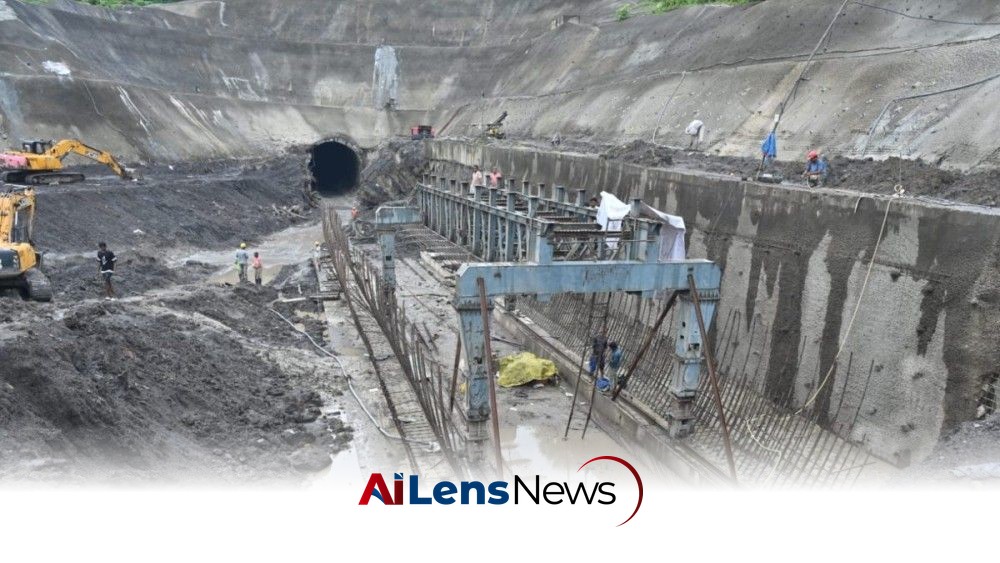


The Dimapur (Dhansiri)–Kohima (Zubza) railway line is set for completion by 2029, enhancing connectivity and socio-economic development in the region.
Kohima, India Jul 30, 2026 ALN: With the strategically significant Dimapur (Dhansiri)–Kohima (Zubza) railway line targeted for completion by 2029, General Manager of Northeast Frontier Railway (Construction) Ashish Bansal has reviewed progress of the project, directing officials to maintain construction momentum while ensuring quality and safety.
During a comprehensive inspection of the project, Bansal visited tunnels, major bridges, station yards, and other critical worksites, accompanied by senior Northeast Frontier Railway (NFR) officials. He also interacted with engineers and field officials and stressed the need for timely execution while maintaining "the highest standards of quality, safety, and engineering excellence," according to an NFR release.
The 78.42-km railway line, which will connect Kohima to the national railway network for the first time, is regarded as one of the region's most significant infrastructure projects. It traverses Karbi Anglong district in Assam and Chümoukedima and Kohima districts in . The establishment of this railway line is not just a matter of transportation; it represents a strategic initiative aimed at enhancing the overall connectivity of the northeastern region of India.
Historically, the northeastern states have faced challenges in terms of infrastructure development, often due to the difficult terrain and remoteness of the region. The Dimapur-Kohima line is expected to alleviate some of these issues by providing a reliable means of transportation for goods and passengers alike. The project has been in the pipeline for several years, reflecting the government's commitment to improving infrastructure in this strategically important area.
The project comprises eight stations—Dhansiri, Dhansiripar, Shokhuvi, Molvom, Pherima, Piphema, Menguzuma, and Zubza. Dhansiri, Shokhuvi, and Molvom stations have already been completed, marking significant milestones in the construction process. Each of these stations has been designed to accommodate the expected increase in passenger traffic and to serve as important hubs for local commerce and trade.
Construction has progressed in phases, with the 16.5-km Dhansiri–Shokhuvi section commissioned in October 2021, followed by the 14.64-km Shokhuvi–Molvom section in March 2025. Passenger train services currently operate from Shokhuvi to Guwahati and Naharlagun, while Molvom has become 's third major railway station. This connectivity is crucial as it allows for easier access to major urban centers, which can significantly impact the local economy.
NFR stated that the remaining works involve some of the most challenging engineering components of the project, including 20 tunnels spanning a combined 31,169 meters, 27 major bridges, and 149 minor bridges. The construction of tunnels and bridges in such a geographically challenging area requires advanced engineering techniques and meticulous planning. Despite difficult terrain and complex geological conditions, construction is continuing through multiple tunnel faces using modern engineering techniques and continuous monitoring. This approach not only ensures the integrity of the structures being built but also helps in adhering to timelines set for project completion.
During the inspection, Bansal commended the efforts of engineers and construction teams and called for "maintaining the pace of work, ensuring close coordination among all stakeholders and completing the project within the targeted timeframe while upholding the highest standards of safety and quality." This highlights the collaborative nature of such large-scale infrastructure projects, where multiple stakeholders, including government agencies, contractors, and local communities, must work in tandem to achieve common goals.
According to NFR, completion of the railway line by 2029 is expected to be a milestone for , improving connectivity, expanding access to education, healthcare, tourism, and markets, and driving socio-economic development across the state and the wider Northeast. The railway line is anticipated to facilitate better movement of goods, thereby reducing transportation costs and time, which can be particularly beneficial for local businesses and farmers looking to access larger markets.
The implications of this railway project extend beyond mere transportation. Improved railway connectivity can lead to enhanced tourism opportunities, allowing easier access for visitors to explore the rich cultural heritage and natural beauty of . The state is known for its diverse tribal cultures, festivals, and scenic landscapes, which can attract more tourists when connected effectively to the national railway network. This influx of tourism can create jobs and stimulate local economies, providing a much-needed boost to various sectors.
Furthermore, better access to education and healthcare services is crucial for the development of any region. The railway line is expected to provide easier access for students traveling to educational institutions and for residents seeking medical care, thus improving the overall quality of life for the local population. This aspect is particularly important in remote areas where transportation options have traditionally been limited. Students will benefit from reduced travel times, allowing them to pursue educational opportunities that were previously out of reach, while healthcare access will improve, leading to better health outcomes for the community.
In conclusion, the Dimapur-Kohima railway line represents a significant step towards enhancing infrastructure in and the broader northeastern region of India. As construction progresses towards the 2029 completion target, it is essential for all stakeholders to remain committed to maintaining high standards of quality and safety. The successful completion of this project could serve as a model for future infrastructure initiatives in the region, potentially paving the way for more comprehensive development strategies that address connectivity and accessibility in other parts of the Northeast. The railway line is not merely a transportation project but a catalyst for change, promoting economic growth, social development, and cultural exchange in a region that has long been underserved by infrastructure investments.
To learn more about the latest developments in Transport & Mobility, stay updated with our exclusive reports and analyses on AiLensNews.

