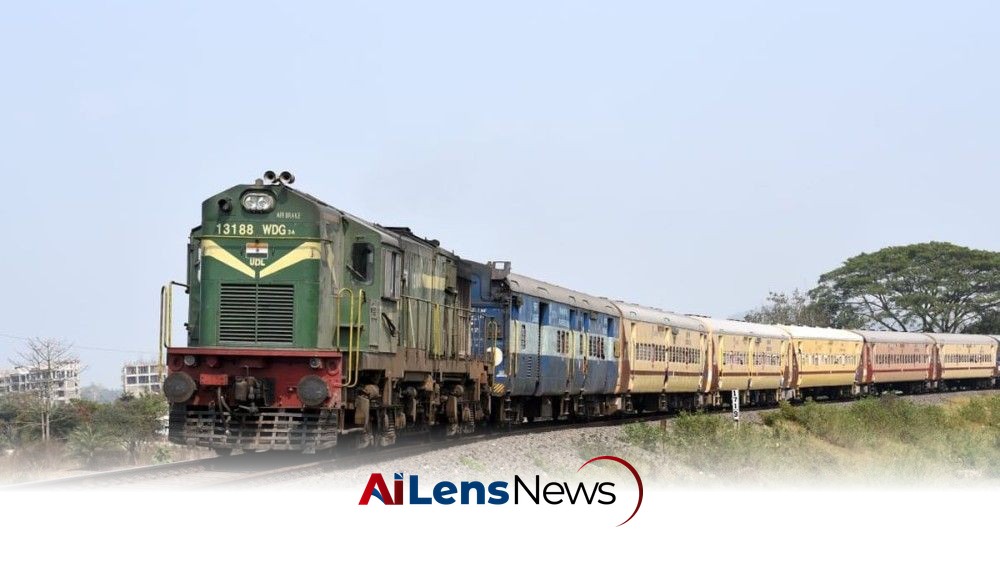


In response to severe flooding in Assam's Sivasagar district, the Northeast Frontier Railway has deployed special trains to assist affected passengers while restoration efforts are underway.
Kohima, India Jul 22, 2026 ALN: Northeast Frontier Railway (NFR) has introduced two additional pairs of special trains between Tinsukia-Bhojo and New Tinsukia-Moranhat to assist passengers affected by the suspension of train services following severe flooding in Assam's Sivasagar district. The flooding has caused significant disruptions not only to train services but also to daily life in the region, highlighting the vulnerability of infrastructure to extreme weather events.
Train services between the Simaluguri-Namtiali and Simaluguri-Selenghat sections under the Tinsukia Division have been suspended in the interest of passenger safety after floodwaters inundated railway tracks and infrastructure around Simaluguri town. This decision was made after careful consideration of the safety risks posed by the flooding, which has been exacerbated by the monsoon season that typically brings heavy rainfall to the region. The monsoon season in Assam, which usually lasts from June to September, is characterized by intense rainfall that can lead to rapid flooding, particularly in low-lying areas.
As a result, several long-distance trains to and from Dibrugarh and Tinsukia have been diverted via the Rangiya-Rangapara-Dibrugarh route, while some services have been short-terminated, short-originated or cancelled, the NFR said in a statement. Such diversions and cancellations are not uncommon during the monsoon season in Assam, where the combination of heavy rainfall and the region's topography can lead to rapid flooding. This situation emphasizes the need for a well-prepared transport network that can adapt to the climatic challenges faced by the region.
To facilitate passenger movement, Train No. 05911 (Tinsukia-Bhojo) Special will operate from July 22 to July 26, departing Tinsukia at 12 noon and reaching Bhojo at 2 pm. The return service, Train No. 05912 (Bhojo-New Tinsukia) Special, will leave Bhojo at 3 pm and arrive at New Tinsukia at 4.35 pm on the same day. This initiative aims to provide a reliable means of transportation for those stranded due to the flooding, ensuring that they can reach their destinations safely and efficiently. The introduction of these special trains is part of NFR's broader strategy to maintain connectivity during emergencies and demonstrates the railway's commitment to passenger welfare.
Another special service, Train No. 05913 (New Tinsukia-Moranhat), will run during the same period, departing New Tinsukia at 4.45 pm and reaching Moranhat at 7.30 pm. Its return service, Train No. 05914 (Moranhat-Tinsukia), will leave Moranhat at 8 pm and arrive in Tinsukia at 11 pm. The introduction of these special trains reflects the railway's commitment to addressing the immediate needs of passengers impacted by the flooding. The railway's proactive measures are crucial in alleviating the travel difficulties faced by many individuals, including those who may have urgent commitments or family obligations, thereby underscoring the importance of rail transport in the region.
The railway has also stated that it had already introduced three pairs of special trains between Lumding-Mariani Junction and Rangiya-Mariani Junction to assist stranded passengers on the affected route. These additional services are part of a comprehensive response to the flooding situation, which has affected not only train services but also the daily lives of residents in the region. The proactive measures taken by the NFR are crucial in alleviating the travel difficulties faced by many individuals, including those who may have urgent commitments or family obligations.
Meanwhile, restoration work is underway after floodwaters from the overflowing Dikhow River inundated Simaluguri railway station and adjoining areas, affecting the station yard, railway colony and sections of the railway track. The flooding has caused significant damage to the railway infrastructure, necessitating immediate and comprehensive restoration efforts to ensure the safety and reliability of train services in the region. The Dikhow River, which flows through the Sivasagar district, is known to cause flooding during the monsoon season, emphasizing the need for ongoing infrastructure improvements and flood management strategies.
The Tinsukia Division has launched round-the-clock restoration operations under the supervision of senior railway officials to restore normal train services at the earliest. This intensive restoration effort involves the coordinated efforts of various railway departments, which is essential for efficient recovery operations in the wake of such natural disasters. The railway has mobilized significant resources to address the challenges posed by the flooding, including the deployment of specialized teams trained in disaster response.
More than 200 workers, along with railway engineers and supervisors, have been deployed in the Selenghat-Amguri section, where track restoration, infrastructure strengthening and continuous inspections are being carried out. This large-scale mobilization of resources indicates the seriousness with which the railway authorities are approaching the restoration process, ensuring that all necessary measures are taken to restore services safely. The presence of engineers and supervisors on-site is critical for assessing damage and implementing effective repair strategies, as the safety of train operations relies heavily on the integrity of the railway infrastructure.
Railway personnel also made significant progress in restoration work in the Sivasagar Town-Simaluguri section on the previous day despite adverse weather conditions, the statement said. The challenges presented by ongoing rainfall and flooding complicate the restoration efforts, but the commitment of the railway staff to work under such circumstances highlights the dedication to passenger safety and service reliability. The resilience of the railway workforce in the face of such challenges is commendable and reflects a broader ethos of public service in times of crisis.
Senior NFR officials are closely monitoring the restoration efforts, with all departments working in coordination to minimize disruption and restore normal train operations as quickly as possible. This high level of oversight is crucial for ensuring that the restoration process is efficient and that any potential issues are addressed promptly. The railway's commitment to transparency and communication with passengers during this process is also vital, as it helps to manage expectations and keep the public informed about service availability.
The railway reiterated that passenger safety remains its top priority and thanked passengers for their cooperation during the unprecedented flooding. The cooperation of passengers is vital during such emergencies, as it helps facilitate smoother operations and ensures that everyone remains informed about changes to services. The railway's communication strategy during this crisis includes regular updates through various channels to keep passengers informed about the status of train services and restoration efforts.
In conclusion, the introduction of special trains and the ongoing restoration efforts by the NFR underscore the importance of resilience in the face of natural disasters. The situation in Sivasagar serves as a reminder of the challenges posed by climate change and the need for robust infrastructure capable of withstanding extreme weather events. As Assam continues to grapple with the impacts of flooding, the response from the railways and local authorities will be critical in ensuring the safety and well-being of the affected communities. The railway's ability to adapt and respond to such emergencies will play a significant role in shaping public confidence in the transport infrastructure, which is essential for the region's economic stability and growth.
To learn more about the latest developments in Transport & Mobility, stay updated with our exclusive reports and analyses on AiLensNews.

