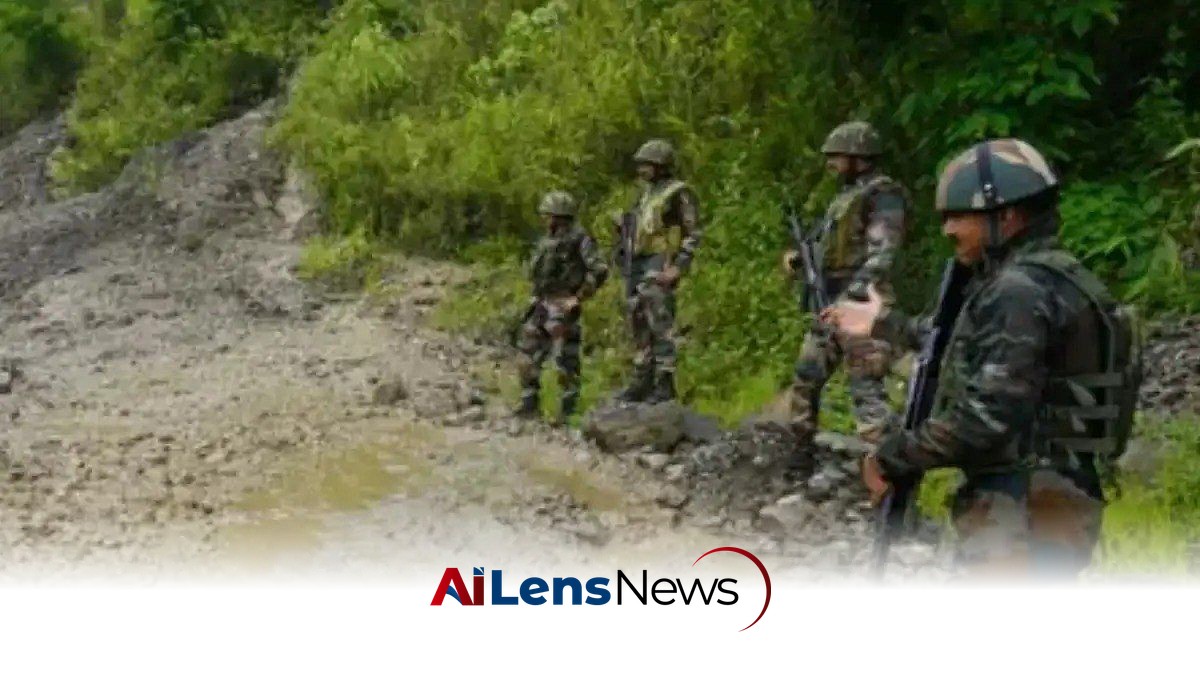


The Nagaland Police have announced a Rs 50,000 reward for information leading to the identification of those responsible for a deadly IED attack on Assam Rifles personnel.
Kohima, India Jul 18, 2026 ALN: Guwahati: The Nagaland Police have announced a cash reward of Rs 50,000 for information leading to the identification, arrest or detection of those responsible for the deadly Improvised Explosive Device (IED) attack on Assam Rifles personnel in Chumoukedima district. This announcement comes in the wake of increasing concerns regarding security in the region, where insurgent activities have persisted despite various peace initiatives and dialogues over the years.
The Assam Rifles, a paramilitary force under the Ministry of Home Affairs, plays a crucial role in maintaining peace and order in the northeastern states of India, particularly in areas affected by insurgency. Formed in 1835, this force has a long history of service in the region, often being the first responders in conflict situations. Their presence is vital for counter-insurgency operations, and attacks on their personnel are taken very seriously by law enforcement agencies. The Assam Rifles have a dual role of maintaining internal security and assisting civil authorities in times of need, which places them at the forefront of India's efforts to stabilize the northeastern states.
In a public notice issued by the Office of the Commissioner of Police, Dimapur, the police said an intensive investigation is underway to identify and apprehend all individuals involved in planning, executing, facilitating, or supporting the attack. The police have emphasized that this reward is not only aimed at apprehending the culprits but also at dismantling the networks that support such violent acts. This proactive approach is crucial in a region where insurgent groups often rely on local support and logistics to carry out their operations.
The reward will be offered for information that helps investigators identify or arrest the perpetrators and their associates, trace individuals involved in planning, financing, harbouring, transporting or facilitating the attack, recover explosives, weapons, communication devices, vehicles or other evidence linked to the case, and locate hideouts, safe houses or logistical networks connected to the offenders. The broad scope of this appeal indicates the seriousness with which the authorities are treating this incident, recognizing the potential for further violence if the responsible parties are not swiftly dealt with. The police's strategy reflects an understanding that community involvement is essential in countering insurgency, as local populations often have critical insights into the movements and activities of insurgent groups.
Police have appealed to members of the public with any relevant information to contact the investigation team on 085055003 or 7085055011. The police said WhatsApp platforms are also available and assured informants that their identities would be kept strictly confidential. Anonymous information may also be shared. This approach aims to encourage community involvement in security matters, which is essential in areas where local populations may have insights into insurgent activities. The use of technology and social media in law enforcement is increasingly common, allowing for quicker communication and response times in emergencies.
The suspected IED attack took place on 13th July along the Chumoukedima 'A' Village–Shokhuvi road in Nagaland. As per officials, an Assam Rifles Mahindra Bolero Camper deployed on operational duty was struck by a powerful roadside explosion at around 2 pm. This incident highlights the ongoing risks faced by security forces operating in volatile regions, where insurgents often employ guerrilla tactics to disrupt peace and stability. The use of IEDs has become a common method of attack, reflecting a shift in insurgent tactics towards more sophisticated and deadly means of engagement.
The blast claimed the life of Havildar Mohammed Iqbal, the driver of the vehicle, who hailed from Poonch district in Jammu and Kashmir and was posted at the Assam Rifles Training Centre and School in Sukhovi. His death marks a significant loss for the Assam Rifles, which has seen numerous personnel sacrifice their lives in the line of duty. The personal stories of these soldiers often resonate deeply with their communities, emphasizing the human cost of ongoing conflict. Each casualty not only represents a loss to the military but also impacts families and communities that rely on these individuals for support and stability.
Four other Assam Rifles personnel sustained critical injuries in the attack, while a civilian suffered minor injuries. The explosion also caused extensive damage, destroying a nearby auto-rickshaw, severely damaging the security vehicle, and affecting several nearby shops and houses. The collateral damage from such attacks often extends beyond the immediate victims, impacting local businesses and the livelihoods of ordinary citizens. This incident serves as a stark reminder of the broader implications of violence in the region, where civilians often bear the brunt of conflict.
Investigators suspect that the explosive device had been concealed inside the auto-rickshaw and was detonated remotely. This method of attack underscores the evolving tactics used by insurgents, who are increasingly employing sophisticated methods to target security forces. The use of remote detonation also raises concerns about the potential for similar attacks in the future, as it allows perpetrators to strike from a distance, complicating law enforcement efforts to prevent such incidents. The adaptation of insurgent tactics poses a continuous challenge for security forces, necessitating constant vigilance and innovation in counter-insurgency strategies.
Commissioner of Police Aotula T. Imchen urged residents to remain vigilant and cooperate with the investigation, stating that every piece of information could help security agencies identify those behind the attack. He added that all information received would be handled promptly, discreetly and in the interest of public safety and national security. This call for vigilance is particularly important in a region where community cooperation can be pivotal in counterinsurgency efforts. The role of the community in providing intelligence and support to security forces is crucial, especially in areas where insurgent groups may have deep-rooted connections.
As the investigation unfolds, the implications of this attack extend beyond immediate security concerns. It reflects the ongoing challenges faced by the Indian government in addressing insurgency in the northeast, where various ethnic and separatist groups have long sought greater autonomy or independence. The Assam Rifles and other security forces are often caught in the crossfire of these complex socio-political dynamics, making their role both critical and perilous. The historical context of insurgency in the region is marked by a multitude of factors, including ethnic tensions, historical grievances, and demands for greater political representation.
Moreover, the attack has the potential to exacerbate tensions in the region, prompting calls for increased military presence or harsher measures against suspected insurgents. Such responses can lead to further unrest, as communities may react negatively to perceived heavy-handedness by security forces. Therefore, balancing security needs with community relations is an ongoing challenge for authorities in Nagaland and the broader northeastern region. The government must navigate the delicate balance between ensuring public safety and maintaining trust within the community, which is essential for long-term peace and stability.
In conclusion, the IED attack on Assam Rifles personnel in Nagaland is a stark reminder of the persistent threat posed by insurgent groups in the region. The response from law enforcement, including the announcement of a reward for information, underscores the urgency of addressing this issue. As the investigation continues, the need for community cooperation and a nuanced approach to security will be critical in preventing further violence and fostering a stable environment in Nagaland and beyond.
To learn more about the latest developments in Crime & Law, stay updated with our exclusive reports and analyses on AiLensNews.

