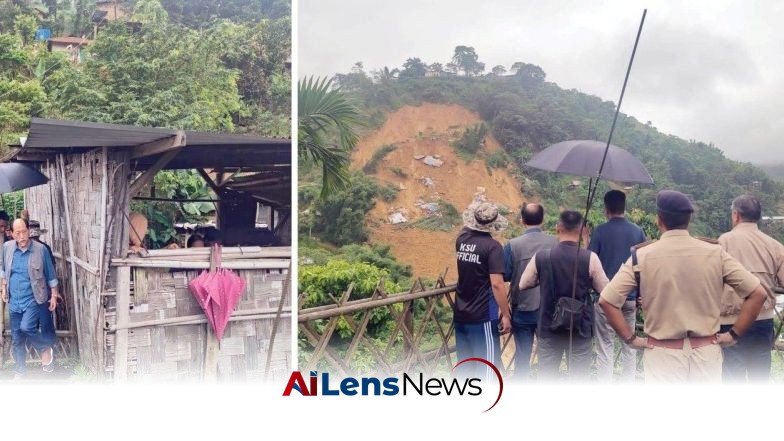


Chief Minister Dr. Neiphiu Rio visited the landslide site in Mon Town, announcing immediate relief measures including ₹10 lakh for emergency support.
Kohima, India Jul 20, 2026 ALN: Mon, July 20 (MExN): Chief Minister Dr. Neiphiu Rio visited the landslide-affected area at Defence Colony, Walo Ward, Mon Town and announced immediate relief measures on July 20. The landslide, which occurred due to heavy rainfall, has caused significant damage to the region, leading to the displacement of families and destruction of property.
As per the report from the Department of Information and Public Relations (DIPR), Dr. Rio, accompanied by his team, visited the landslide-affected site to assess the damage and meet the affected families. Describing the incident as “uncertain and unfortunate,” he conveyed his condolences to the bereaved families, acknowledging the emotional toll such disasters have on communities. This personal engagement by the Chief Minister underscores the importance of government presence during crises, providing not only logistical support but also emotional solidarity to those affected.
The Chief Minister commended the coordinated efforts of volunteers, civil society organizations, the State Disaster Response Force (SDRF), the District Emergency Force (DEF), and the district administration for their rescue work. He urged these groups to continue their support, emphasizing the importance of community solidarity during times of crisis. The response efforts have been crucial in providing immediate assistance to those in need, including search and rescue operations, medical aid, and shelter for displaced families. This collaborative approach reflects a growing recognition of the need for integrated disaster management strategies that leverage the strengths of various stakeholders.
Highlighting the broader challenge of climate change, the Chief Minister noted that Mon, like other regions, is now experiencing visible impacts. This serves as a reminder of the increasing frequency and intensity of natural disasters attributed to climate change. The region's geographical characteristics, combined with erratic weather patterns, have made it particularly vulnerable to landslides and flooding. Dr. Rio stressed the need for strict adherence to building by-laws and safety regulations while undertaking construction in vulnerable zones, pointing out that sustainable development practices are vital to mitigate future risks. This perspective aligns with global discussions on climate resilience and the necessity of adapting infrastructure and urban planning to withstand extreme weather events.
As an immediate relief measure, he handed over ₹10 lakh to the Konyak Union, the apex civil society body, for emergency use. This financial assistance is intended to provide immediate relief to affected families, helping them to cover basic needs such as food, clothing, and temporary shelter. The Chief Minister assured that the government would take necessary steps to address the situation in the longer term, indicating plans for infrastructure improvements and disaster preparedness initiatives to better equip the region against future incidents. This financial support is crucial as it allows local organizations to mobilize resources quickly and address the urgent needs of the community.
Mon town remains completely cut off from the rest of the state due to road blockades along key lifelines, including Tizit, Naganimora, Sonari, Wakching, and Aboi. The isolation of the town presents significant challenges for rescue and relief operations, as access to essential supplies and services is severely hindered. An investigation team from the Konyak Union conducted a video presentation on the extent of the damage, providing critical information to authorities and the public about the situation on the ground. This initiative by the Konyak Union demonstrates the proactive role that local organizations can play in disaster response, ensuring that information flows to both the government and the affected communities.
Speaking on behalf of the Konyak Legislative Members, Advisor W. Chingang Konyak also expressed sympathy to the affected families. He emphasized the need for a coordinated response from all levels of government and civil society to address the immediate needs of those impacted by the landslide. The solidarity shown by local leaders and organizations is vital in fostering community resilience in the face of such disasters. This highlights a critical aspect of disaster management: the need for multi-level governance and collaboration to ensure that responses are efficient and effective.
Deputy Commissioner of Mon, Wennyei Konyak, thanked the Chief Minister and his team for their visit, highlighting the importance of government support during crises. The presence of state officials can provide reassurance to affected communities and help to facilitate the delivery of aid. Konyak Union President Yamao Konyak appreciated the state government’s swift response and support to the affected communities, noting that timely assistance can make a significant difference in recovery efforts. This acknowledgment points to a growing understanding of the role that timely intervention plays in disaster recovery, particularly in preventing further hardship among vulnerable populations.
The landslide incident in Mon is a stark reminder of the vulnerability of many regions to natural disasters, particularly in the context of changing climate conditions. As communities begin to recover from the immediate impacts, there will be a pressing need for comprehensive disaster management strategies that not only address the aftermath of such events but also focus on prevention and preparedness. This includes investment in infrastructure, community education on safety practices, and the development of early warning systems to alert residents to impending dangers. Such measures are essential for enhancing community resilience and minimizing the long-term impacts of disasters.
In addition to the immediate relief efforts, there is also a broader conversation to be had about the role of government and civil society in disaster risk reduction. Collaboration between local authorities, non-governmental organizations, and community groups is essential to create a robust framework for managing risks associated with natural disasters. This includes engaging with local populations to understand their needs and vulnerabilities, as well as empowering them to take an active role in disaster preparedness and response. The involvement of communities in the planning and execution of disaster management strategies is crucial for ensuring that these initiatives are relevant and effective.
As the situation in Mon continues to evolve, ongoing assessments will be critical to understanding the full extent of the damage and the needs of affected families. The government’s commitment to providing support and resources will be essential in the recovery process, ensuring that communities can rebuild and strengthen their resilience against future disasters. This commitment will likely involve not only immediate financial assistance but also longer-term investments in infrastructure and community capacity building, which are vital for fostering sustainable development in the region.
In conclusion, the landslide in Mon serves as a crucial reminder of the increasing risks posed by climate change and the importance of proactive disaster management strategies. As the community begins to heal from this tragedy, it is imperative that lessons are learned and integrated into future planning efforts. The collaboration between government, civil society, and local communities will be essential in building a resilient future for Mon and similar regions facing the threats of natural disasters.
To learn more about the latest developments in Crime & Law, stay updated with our exclusive reports and analyses on AiLensNews.

