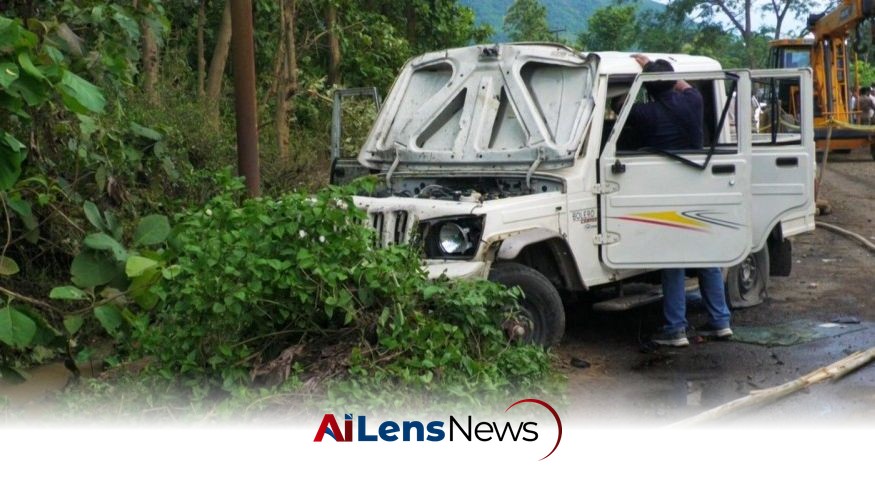


The government has decided to hand over the investigation of the July 13 Khovanalla blast to the National Investigation Agency (NIA) following a deadly IED explosion.
Kohima, India Jul 18, 2026 ALN: The government is set to transfer the investigation of the July 13 Khovanalla blast to the National Investigation Agency (NIA). This announcement was made by Deputy Chief Minister Y Patton on July 18, in response to media inquiries regarding the technological capabilities required for handling such cases. The NIA is a specialized agency of the Government of India that is primarily responsible for investigating terrorism-related cases and other national security threats. Its involvement is often seen as a means to ensure that investigations are conducted with the highest standards of forensic and investigative practices, given its extensive resources and expertise in dealing with complex criminal activities.
The blast, attributed to a suspected Improvised Explosive Device (IED), occurred in Chümoukedima district, resulting in the death of one Assam Rifles soldier and injuring four others. The Assam Rifles is a paramilitary force that plays a crucial role in maintaining law and order in the northeastern states of India, which have been historically affected by insurgency and violence. The loss of a soldier not only highlights the risks faced by security personnel in the region but also raises alarms about the ongoing security situation. In light of the incident, the Dimapur Police Commissionerate has announced a cash reward for information leading to the identification and arrest of those responsible, underscoring the urgency and seriousness with which the authorities are treating this case.
To aid in the investigation, the state government has also enlisted the expertise of the National Security Guard (NSG). An NSG post-blast investigation unit conducted a thorough examination of the blast site on July 15, gathering crucial forensic evidence. The NSG is an elite counter-terrorism unit in India, established to respond to high-profile terrorist incidents and to provide assistance in investigations involving explosives. Their involvement indicates the complexity of the case and the potential for further threats in the region, as the use of IEDs has become a concerning trend in various parts of India, particularly in areas with a history of insurgency.
Deputy Chief Minister Patton confirmed, "The state government has decided to hand the case over to the NIA," shortly after arriving at the Dimapur airport from Delhi. The decision to transfer the investigation to the NIA is significant, as it reflects the government's commitment to addressing the serious security concerns raised by the recent blast. The NIA's resources and expertise in dealing with terrorism-related cases may enhance the chances of uncovering the perpetrators and preventing future incidents. This transfer also signals a recognition that local law enforcement may require additional support in tackling sophisticated and potentially organized criminal activities.
In addition to the blast investigation, Patton addressed questions regarding the Frontier Territorial Authority (FNTA) issue. He revealed that a team of Cabinet Ministers, led by Chief Minister Neiphiu Rio, had discussions with the Union Home Minister concerning the devolution of legislative powers to the FNTA. The FNTA was established to address the unique governance challenges faced by the tribal communities in the region, and the discussions with the Union Home Minister signal the state government's efforts to empower local governance structures. Patton stated, "The proposals discussed and finalized by the state government have already been shared with the Union Home Minister and his officers regarding the devolution of legislative powers to the FNTA." He added that the Union Home Minister has requested the state government to wait for a week or two for a decision on the matter, indicating that the central government is considering the proposals seriously.
Furthermore, regarding the Tripartite Memorandum of Understanding signed on June 11 between New Delhi, Assam, and for the exploration and extraction of petroleum in the Disputed Area Belt, Patton mentioned that the state government will engage with civil society organizations to discuss the issue. The exploration of natural resources in disputed areas often leads to tensions among local communities and can exacerbate existing grievances. By involving civil society organizations, the state government aims to foster dialogue and address concerns that may arise from the extraction activities. This approach demonstrates a commitment to transparency and community involvement, which are crucial in mitigating conflicts over resource management in a region marked by historical disputes.
This transfer of investigation to the NIA marks a significant step in addressing the serious security concerns raised by the recent blast and aims to ensure a thorough and effective investigation. The implications of this decision extend beyond the immediate context of the blast; it reflects the broader security landscape in the region, where incidents of violence can have far-reaching consequences for governance and community stability. The involvement of national-level agencies like the NIA and NSG also signifies the government's recognition of the challenges posed by militancy and terrorism in the northeastern states of India, where local insurgent groups have historically operated with varying degrees of sophistication.
The Khovanalla blast and its aftermath will likely prompt discussions about the adequacy of existing security measures in the region. As the NIA takes over the investigation, there may be increased scrutiny on the effectiveness of local law enforcement agencies and their ability to handle such incidents. Additionally, the response to the blast could influence public perception of safety and security in the region, which is critical for both local communities and the broader context of national security. The government’s proactive approach in seeking assistance from specialized agencies may also set a precedent for how similar cases are handled in the future, potentially reshaping the investigative landscape in the region.
In conclusion, the decision to transfer the investigation of the Khovanalla blast to the NIA is a pivotal moment for the state government as it grapples with the challenges of ensuring security and stability in a region marked by historical tensions and violence. The outcomes of this investigation, alongside ongoing discussions about governance and resource management, will play a crucial role in shaping the future of the region and its communities. The Khovanalla blast not only serves as a reminder of the persistent threats faced by security forces but also highlights the need for comprehensive strategies that address the underlying issues contributing to unrest in the northeastern states. As the investigation unfolds, it will be essential for the government to maintain transparency and engage with local stakeholders to foster trust and collaboration in addressing these complex challenges.
To learn more about the latest developments in Crime & Law, stay updated with our exclusive reports and analyses on AiLensNews.

