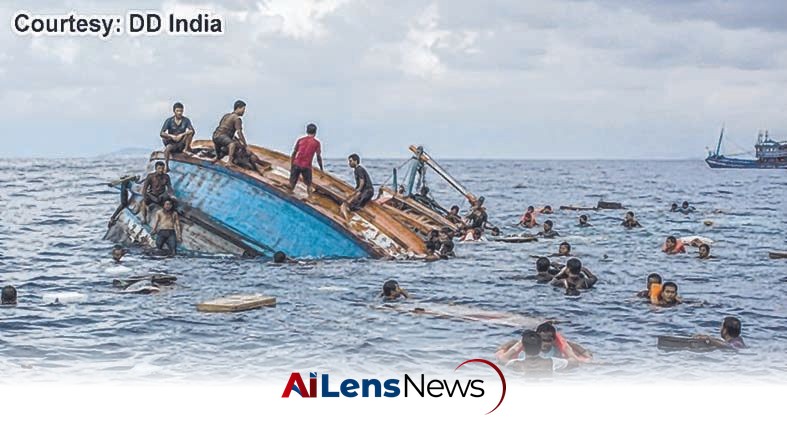


Recent maritime disasters off Myanmar's coast have left over 500 people, primarily Rohingya refugees, feared dead as they seek safety and better lives.
New Delhi, India Jul 17, 2026 ALN: In a devastating maritime tragedy, more than 500 individuals are feared dead after two boats capsized off the coast of Myanmar. This incident highlights the perilous journeys undertaken by refugees fleeing conflict and seeking safety in neighboring countries. The loss of life in this incident not only underscores the immediate dangers faced by those attempting to escape dire circumstances but also raises significant questions about the effectiveness of international responses to ongoing humanitarian crises.
According to reports from United Nations agencies, the boats were carrying refugees, predominantly from the Rohingya community, who have been escaping violence and persecution in Myanmar. These desperate attempts to reach safety often lead to dangerous sea voyages, with many risking their lives on overcrowded and unseaworthy vessels. The circumstances leading to this tragedy are rooted in a complex history of ethnic conflict, political instability, and systemic discrimination against the Rohingya people.
Myanmar has a long history of ethnic tensions, particularly involving the Rohingya, a Muslim minority group that has faced discrimination and violence for decades. The situation escalated dramatically in 2017 when a military crackdown, described by many human rights organizations as ethnic cleansing, forced hundreds of thousands of Rohingya to flee their homes. Many sought refuge in neighboring Bangladesh, where they currently reside in overcrowded refugee camps, often living in dire conditions without adequate access to food, clean water, or medical care.
The Rohingya people have faced systemic discrimination and violence in Myanmar for decades. Following the military crackdown in 2017, hundreds of thousands fled to neighboring Bangladesh, where they currently reside in overcrowded refugee camps. The camps, while providing some level of safety, are severely lacking in resources and infrastructure, leading many to feel that they cannot wait indefinitely for a resolution to their plight. As a result, many continue to seek better opportunities abroad, often turning to treacherous maritime routes.
The journey across the sea is fraught with danger, as smugglers often pack boats well beyond their capacity, and the vessels themselves may be poorly maintained. The desperation of the refugees often leads them to take these risks, as the alternative—staying in the camps—can feel equally perilous due to the lack of prospects and ongoing discrimination. Reports indicate that many refugees have lost their lives in similar incidents in recent years, illustrating the ongoing risks associated with such journeys.
The UN has expressed deep concern over the increasing number of maritime incidents involving refugees. They have called for immediate action to ensure the safety of those fleeing conflict and for the international community to provide support to countries hosting large numbers of refugees. The UN's response has included appeals for countries to uphold their obligations under international law, particularly regarding the treatment of refugees and asylum seekers.
In the wake of this tragedy, the UN has reiterated the need for a coordinated international response to address the root causes of the Rohingya crisis. This includes advocating for the rights of the Rohingya within Myanmar, as well as ensuring that the international community provides sufficient humanitarian aid to those in refugee camps. The UN has also called for the establishment of safe and legal pathways for refugees to seek asylum, reducing the reliance on dangerous sea routes.
The international community must take urgent measures to address the root causes of the Rohingya crisis and provide humanitarian assistance to those affected. Ensuring safe and legal pathways for refugees is crucial to prevent further tragedies at sea. This includes not only providing immediate assistance to those in refugee camps but also working towards long-term solutions that address the underlying issues of discrimination and violence in Myanmar.
Furthermore, countries that are transit points for refugees must also play a role in ensuring the safety of those who are fleeing. This could involve enhancing search and rescue operations, providing support to NGOs working in the region, and creating humane policies that allow for the safe processing of asylum claims. The international community's commitment to protecting the rights of refugees and ensuring their dignity is essential in mitigating the risks associated with forced migration.
This recent tragedy serves as a stark reminder of the ongoing plight of the Rohingya people and the urgent need for comprehensive solutions to the refugee crisis. As the world watches, it is imperative that action is taken to prevent such devastating incidents in the future. The responsibility lies not only with Myanmar to address the grievances of the Rohingya but also with the global community to ensure that no one is forced to risk their life at sea in search of safety and dignity.
In the aftermath of this tragedy, it is essential for nations to come together in solidarity and compassion, recognizing the shared humanity of those fleeing violence and persecution. The time for action is now, as every moment lost is another opportunity for preventable tragedies to occur. The international community must work collaboratively to foster an environment where refugees can find safety and rebuild their lives, free from the fear of violence and discrimination. The Rohingya crisis is not just a regional issue; it is a global challenge that requires a unified response and a commitment to humanitarian principles.
To learn more about the latest developments in World News & International Affairs, stay updated with our exclusive reports and analyses on AiLensNews.

