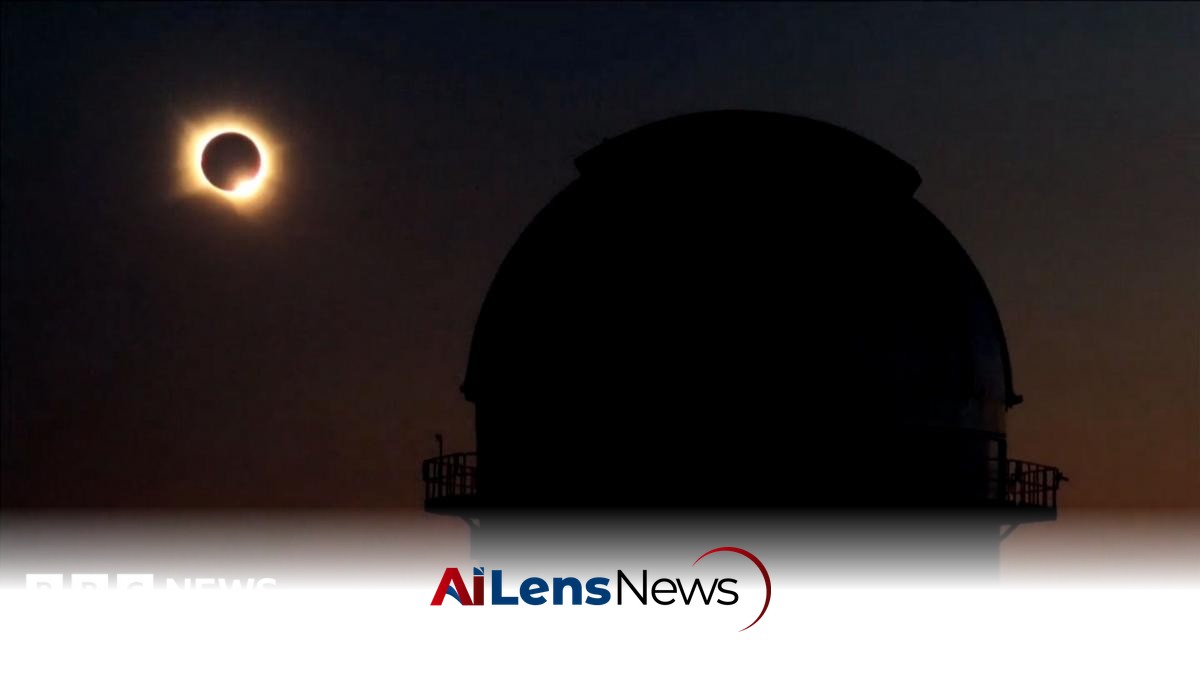



A significant solar eclipse captivated millions in the UK and Europe, with over 90% of the Sun obscured in the UK and a total eclipse visible in parts of Spain and Iceland.
New Delhi, India Aug 13, 2026 ALN: On Wednesday, millions of people across Europe and the UK witnessed the most significant solar eclipse since 1999. This astronomical event drew considerable attention as it provided a rare opportunity for viewers to experience a celestial phenomenon that has captivated humanity for centuries. Solar eclipses have been a source of both wonder and fear throughout history, often seen as omens or signs from the gods in various cultures.
A solar eclipse occurs when the Moon passes between the Earth and the Sun, blocking all or a portion of the Sun's light. This alignment of celestial bodies can create stunning visual effects, such as the Sun's corona becoming visible, and has been a focal point for scientific study and public fascination. The last solar eclipse of such magnitude was in 1999, making this event particularly special for those who remember the previous occurrence, as well as for new generations who had never witnessed such a phenomenon before.
In the UK, more than 90% of the Sun was covered by the Moon, creating a surreal atmosphere for those who gathered to watch. This partial eclipse was a stunning sight, with the sky darkening slightly and temperatures dropping as the Sun's light was obscured. Observers reported a noticeable change in the behavior of wildlife, with birds becoming quieter and some animals exhibiting unusual behavior as the light faded. Meanwhile, in parts of Europe, including Spain and Iceland, observers were treated to a full total eclipse, enhancing the spectacle and allowing viewers to experience the full effect of the Moon completely covering the Sun. This totality, lasting for several minutes, created a dramatic change in the environment, plunging areas into darkness and allowing the stars to become visible in the daytime sky.
BBC science correspondent Pallab Ghosh, who was stationed in Burgos, Spain, described the experience as breathtaking, stating he felt goosebumps from the sight. "It was a moment that reminded us of the beauty and power of nature," he remarked. Such sentiments echoed across social media platforms, where users shared their awe-inspiring experiences and images of the eclipse. The event became a trending topic on various social media platforms, with hashtags dedicated to the eclipse allowing people to connect and share their experiences in real time.
The excitement surrounding the eclipse was palpable, with many sharing their experiences on social media. Platforms such as Twitter and Instagram were flooded with images and videos, showcasing the awe-inspiring views captured by amateur and professional astronomers alike. The event not only provided a visual spectacle but also fostered a sense of community among those who shared the experience. The spike in online engagement around the eclipse highlighted the role of social media in modern astronomical events, as people sought to connect and celebrate the moment together.
Local communities organized events, and schools incorporated the eclipse into their science curricula, encouraging students to learn about the science behind eclipses. Educational institutions took advantage of this rare occurrence to engage students in discussions about astronomy, the mechanics of solar and lunar eclipses, and the historical significance of such events. Many families seized the opportunity to bond over this rare event, creating lasting memories and instilling a sense of wonder about the universe in younger generations. Teachers reported increased enthusiasm among students when discussing topics related to space and celestial events, suggesting that such experiences can have a lasting impact on education.
The eclipse also reignited interest in astronomy and space science among the public. Many individuals who may not have previously engaged with such topics found themselves captivated by the event, leading to increased interest in local astronomy clubs and observatories. This surge in public interest can have long-term benefits for science education and outreach, as more people seek to learn about and understand the universe around them. Astronomy clubs reported a significant increase in membership inquiries and participation in events following the eclipse, indicating a renewed enthusiasm for stargazing and scientific exploration.
In addition to educational initiatives, various organizations and local governments set up safe viewing stations equipped with solar viewing glasses and telescopes, ensuring that everyone could safely enjoy the event. This accessibility was crucial, as it allowed individuals of all ages and backgrounds to partake in the experience, further enriching the communal atmosphere that surrounded the eclipse. Safety measures were emphasized, with public health campaigns reminding viewers of the dangers of looking directly at the Sun without proper protection.
As the excitement of this solar eclipse settles, scientists and enthusiasts are already looking forward to future celestial events. The next total solar eclipse visible in parts of Europe is anticipated in the coming years, promising another opportunity for awe and wonder. In the United States, a total solar eclipse is expected to cross the country in 2024, which has already generated significant excitement and anticipation. This ongoing interest in celestial phenomena highlights the importance of astronomy in fostering curiosity and appreciation for science among the general public.
Moreover, solar eclipses serve as a reminder of the intricate and dynamic nature of our solar system. They encourage discussions about the science of light, the motion of celestial bodies, and the history of humanity's relationship with the cosmos. As we advance in our understanding of space and technology, it is likely that future eclipses will continue to inspire and educate, drawing attention to the vastness of the universe and our place within it. The scientific community continues to advocate for public engagement in astronomy, emphasizing the importance of understanding our solar system's mechanics and the events that shape it.
In conclusion, the solar eclipse on Wednesday was not just a scientific event but a cultural phenomenon that united millions in appreciation of the wonders of our universe. The shared experience of witnessing such a remarkable event has the potential to inspire future generations to explore, learn, and engage with the sciences, ensuring that the legacy of curiosity and wonder continues long after the eclipse has passed. The event served as a reminder of the beauty of our universe and the importance of coming together to celebrate the natural wonders that surround us.
To learn more about the latest developments in Science & Environment, stay updated with our exclusive reports and analyses on AILensNews.

