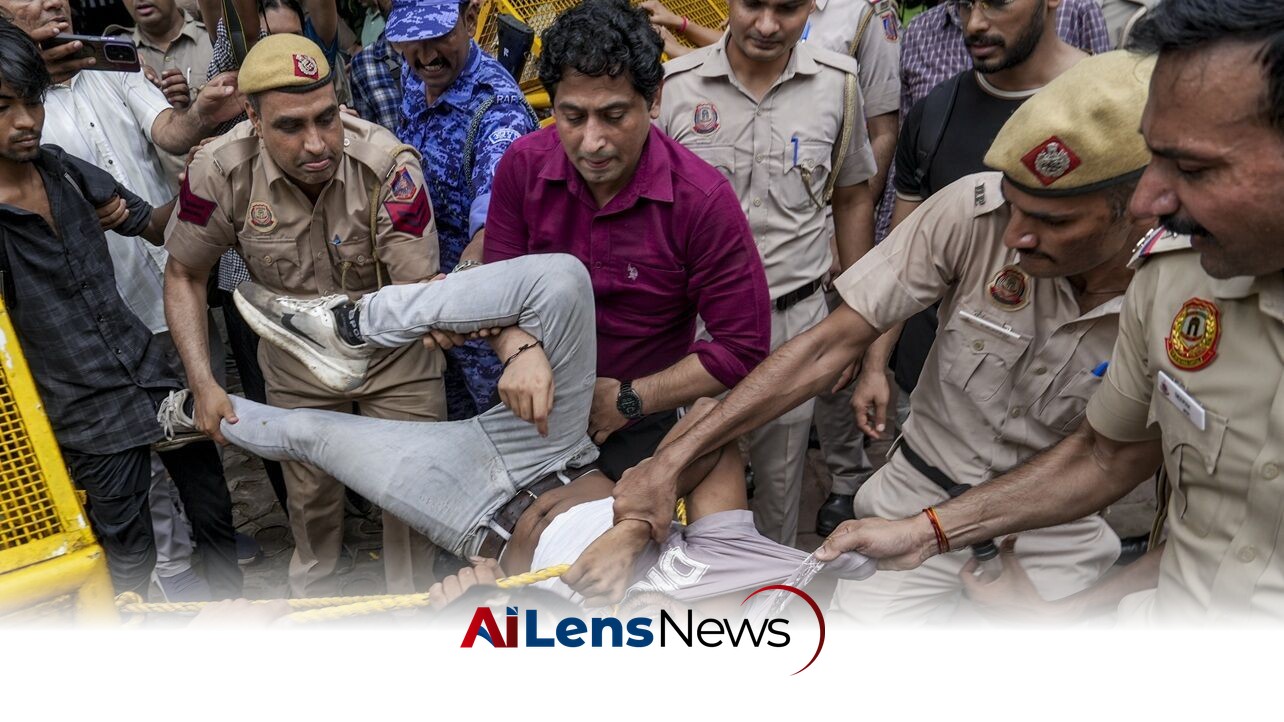


The Supreme Court emphasizes the right to peaceful protest while addressing police excesses during NEET demonstrations, urging for a uniform protocol nationwide.
Shillong, India Jul 27, 2026 ALN: The Supreme Court, on Monday, affirmed that the right to peaceful protest is constitutionally guaranteed, stating that police excesses cannot be justified merely due to public agitation. This ruling comes at a crucial time as the nation grapples with rising tensions surrounding the National Eligibility cum Entrance Test (NEET) controversy, which has sparked widespread protests among students across various states.
A Bench comprising Chief Justice Surya Kant and Justices Joymalya Bagchi and V Mohana agreed to hear the pleas on Tuesday, reflecting the urgency of the matter. The court's decision to consider a separate plea filed by family members of police personnel who were allegedly attacked during the protests underscores the complex dynamics at play in these situations, where both the rights of protesters and the safety of law enforcement officials must be carefully balanced.
The Chief Justice emphasized, "The right to peaceful protest is absolutely guaranteed. That cannot be denied. Merely because there is agitation cannot justify police excesses." This statement highlights the judiciary's role in upholding democratic rights while also indicating a recognition of the challenges faced by law enforcement in managing public order during times of unrest.
As protests erupted, particularly in response to allegations regarding the NEET paper leak and other examination irregularities, the situation escalated with reports of violence. When a lawyer representing the police mentioned that several personnel were assaulted during the demonstrations, the Bench responded with a call for comprehensive protection measures for all individuals involved. "Life of every individual irrespective of who they are is important," the Bench stated, marking a significant acknowledgment of the need for mutual respect and safety in conflict situations.
The Supreme Court's ruling also pointed to the necessity for a uniform protocol governing public protests across the country. The court aims to strike a balance between citizens' democratic rights to assemble and protest and the imperative of maintaining law and order. "There should be a protocol in place. There should be proper space and no restriction. But if there are some anti-social elements, that can be managed. This is not just a question of Delhi. Uniformity of protocol is needed," the Bench remarked, indicating that a standardized approach could help mitigate the risks associated with large-scale protests.
Additionally, the court asserted that the mere existence of an agitation could not justify the use of force by law enforcement. The Chief Justice noted, "Just because there is agitation, it does not mean there should be lathi charge," emphasizing the need for restraint and appropriate measures by the police. The call for "self-evolved discipline" reflects a broader understanding that the handling of protests must align with democratic principles and respect for civil liberties.
The Bench urged all parties involved to assist the court in an "inadversarial manner," indicating a desire for cooperative dialogue rather than conflict. Solicitor General Tushar Mehta, representing the Centre, assured the court of his dispassionate assistance, suggesting that the government is open to exploring solutions that respect both the rule of law and the rights of citizens.
The petitions being considered arise from allegations of police excesses during nationwide student protests regarding the alleged NEET paper leak and other examination irregularities. The NEET examination, conducted annually for aspiring medical students, has faced scrutiny over its transparency and fairness, with students alleging that systemic flaws have compromised the integrity of the examination process.
Students had organized demonstrations across several states, demanding accountability and action over the controversy. These protests have been characterized by a sense of urgency and frustration among students, many of whom feel that their futures are at stake due to perceived injustices in the examination system.
Among the incidents cited was the July 20 march in Delhi led by the Cockroach Janta Party, during which clashes erupted between protesters and security personnel. The protests were marked by heightened emotions, with students expressing their discontent over the handling of the NEET examination and calling for immediate reforms. Police allegedly employed lathis and tear gas shells to disperse demonstrators attempting to march towards Parliament, illustrating the tensions that can arise when public dissent meets law enforcement response.
The protesters demanded the resignation of then Union Education Minister Dharmendra Pradhan over the NEET paper leak controversy, reflecting a broader call for accountability from government officials. This incident has not only reignited discussions about the NEET examination's integrity but has also raised questions about the government's responsiveness to student grievances and the mechanisms in place for addressing such concerns.
The Supreme Court had previously agreed to hear the petitions on Monday before scheduling further consideration for Tuesday. As the situation develops, it remains to be seen how the court's ruling will influence the ongoing protests and the broader discourse surrounding educational reforms in India. The implications of this case extend beyond the immediate context of the NEET controversy, touching on fundamental issues of civil rights, the role of law enforcement, and the responsibilities of government officials in addressing public concerns.
In conclusion, the Supreme Court's intervention highlights the delicate balance between maintaining public order and protecting the right to peaceful assembly. As protests continue, the call for a uniform protocol governing public demonstrations may pave the way for more structured and respectful interactions between law enforcement and citizens, fostering a climate where grievances can be expressed without fear of excessive force or repression.
To learn more about the latest developments in Crime & Law, stay updated with our exclusive reports and analyses on AiLensNews.

