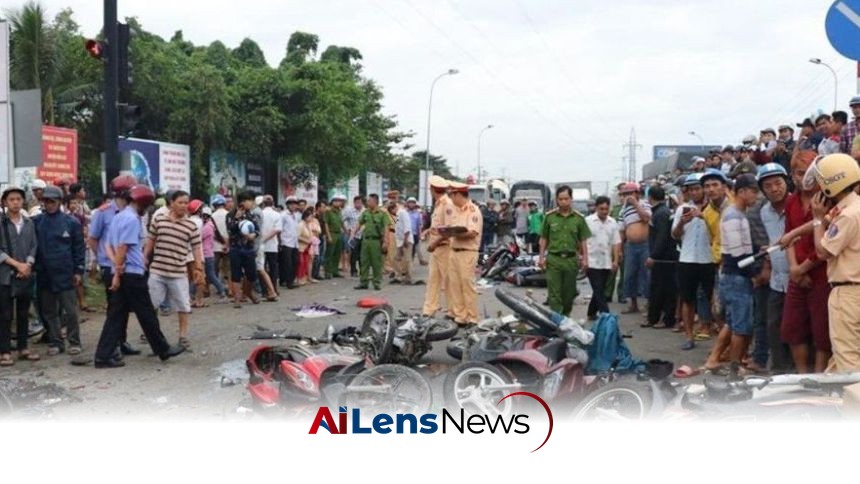


India's road accidents rose by 5.3% in 2025, with over 1,83,000 fatalities reported. The Centre highlights ongoing road safety challenges.
Shillong, India Jul 30, 2026 ALN: Road accidents in India increased by 5.3% in 2025, with more than 5.13 lakh crashes claiming 1,83,382 lives, an average of 21 deaths every hour, the Centre informed the Lok Sabha on Thursday.
In a written reply, Union Road Transport and Highways Minister Nitin Gadkari said police departments across states and Union Territories reported 5,13,563 road accidents during the calendar year. This alarming statistic highlights the persistent issue of road safety in India, a country that has long grappled with high rates of traffic-related fatalities and injuries.
Road safety has been a significant concern for Indian authorities, particularly given the rapid growth of vehicular traffic and the increasing number of road users. The rise in road accidents is not just a statistic; it represents a profound human tragedy affecting families and communities across the nation. The government has recognized that addressing this crisis requires a multifaceted approach that involves improving infrastructure, enforcing traffic laws, and educating the public about safe driving practices.
According to Gadkari, over-speeding remained a major cause of accidents, accounting for 82,124 crashes, or around 16 percent of the total reported in 2025. This statistic underscores the need for stricter enforcement of speed limits and more effective public awareness campaigns about the dangers of speeding. Speeding not only increases the likelihood of accidents but also exacerbates the severity of injuries sustained in collisions.
Among the states, Tamil Nadu recorded the highest number of road accidents at 71,387, while Uttar Pradesh reported the highest number of fatalities at 27,550. These figures raise questions about regional traffic management and the effectiveness of local enforcement measures. It suggests that states with higher accident rates may need to adopt more rigorous road safety initiatives, including better signage, improved road conditions, and enhanced law enforcement practices.
According to the data tabled in Parliament, various factors contributed to the rise in accidents. Driving on the wrong side and lane indiscipline led to 4,089 accidents. Jumping red lights caused 276 accidents, while the use of mobile phones while driving was linked to 136 crashes. These behaviors indicate a lack of adherence to fundamental traffic rules, emphasizing the need for ongoing education and enforcement efforts to cultivate responsible driving habits among the populace.
Gadkari also informed the House that 2,85,770 road accidents had already been reported across the country during the first six months of 2026, indicating that road safety continues to remain a major challenge. The data suggests that despite previous efforts to improve road safety, the situation remains precarious, necessitating immediate and sustained action from both the government and the public.
Responding to a separate question, the minister said the adoption of electric vehicles (EVs) has grown steadily due to their lower operating costs and zero tailpipe emissions compared with internal combustion engine (ICE) vehicles. The transition to EVs is seen as a crucial step in reducing pollution and enhancing road safety, as electric vehicles are often equipped with advanced safety features and technologies that can mitigate accident risks.
Citing VAHAN data, Gadkari said EV penetration increased from 0.71% in 2019-20 to 8.26% in 2025-26. As of July 26, 2026, India had over 1 crore registered electric vehicles across all categories, taking the total EV count to 1,00,23,396. This significant increase in EV adoption reflects a growing awareness of environmental issues and a shift towards more sustainable transportation options, which could also contribute to improved road safety by reducing the number of traditional vehicles on the road.
On highway infrastructure, Gadkari said the government has monetized road assets worth Rs 1,72,898 crore through Toll-Operate-Transfer (TOT), Infrastructure Investment Trust (InvIT), and project-based financing models. Investment in infrastructure is critical for enhancing road safety, as better roads can reduce the likelihood of accidents and improve overall traffic flow.
He added that 317 highway projects covering 11,711.81 km, with a total capital cost of Rs 4,57,547.46 crore, were awarded under the Hybrid Annuity Model (HAM) and Build-Operate-Transfer (BOT) modes between 2021-22 and 2025-26. These projects are expected to improve road conditions and safety standards significantly, addressing some of the underlying causes of road accidents.
The minister said the development and maintenance of National Highways (NHs) was an ongoing process. Around 11,500 km of damaged or poor-condition highways reported over the last three years and the current year had been taken up for immediate maintenance. The maintenance of highways is essential to ensure that they meet safety standards and can accommodate the increasing volume of traffic.
Of India's 1.46 lakh-km National Highway network, around 36,000 km is currently under development, 58,000 km is under the defect liability or concession period, and 41,000 km is under maintenance through short-term and performance-based maintenance contracts. Another 4,000 km is being maintained departmentally by the Border Roads Organisation (BRO). This comprehensive approach to highway management is vital for maintaining safety and efficiency on the nation's roadways.
Gadkari said the government plans to undertake maintenance work on 20,000 km of National Highways during 2026-27 as part of its target of bringing the entire NH network under regular maintenance. This proactive approach is essential for preventing accidents caused by poor road conditions, which can create hazardous driving situations.
He also informed the House that 21 concessionaires and contractors had been blacklisted or penalized over the past two years for poor-quality work execution and other tender-related violations. This action reflects the government's commitment to ensuring accountability in infrastructure projects and maintaining high standards of safety and quality in road construction and maintenance.
The statistics and measures outlined by Gadkari paint a complex picture of road safety in India. While there are significant challenges to be addressed, including the alarming rise in accidents, the government's ongoing initiatives to improve infrastructure and promote electric vehicles represent a step in the right direction. The implications of these developments are far-reaching, as improved road safety can lead to reduced fatalities, lower healthcare costs, and enhanced quality of life for millions of Indians. Furthermore, addressing these issues is essential for fostering a culture of safety on the roads, which can ultimately save lives and prevent injuries.
In conclusion, the rise in road accidents in India is a pressing issue that requires immediate attention and action from all stakeholders, including government authorities, law enforcement, and the public. The data presented by the government serves as a wake-up call to prioritize road safety and implement effective measures to reduce accidents and fatalities. As the country continues to grow and modernize its transportation infrastructure, ensuring the safety of all road users must remain a top priority.
To learn more about the latest developments in Crime & Law, stay updated with our exclusive reports and analyses on AiLensNews.

