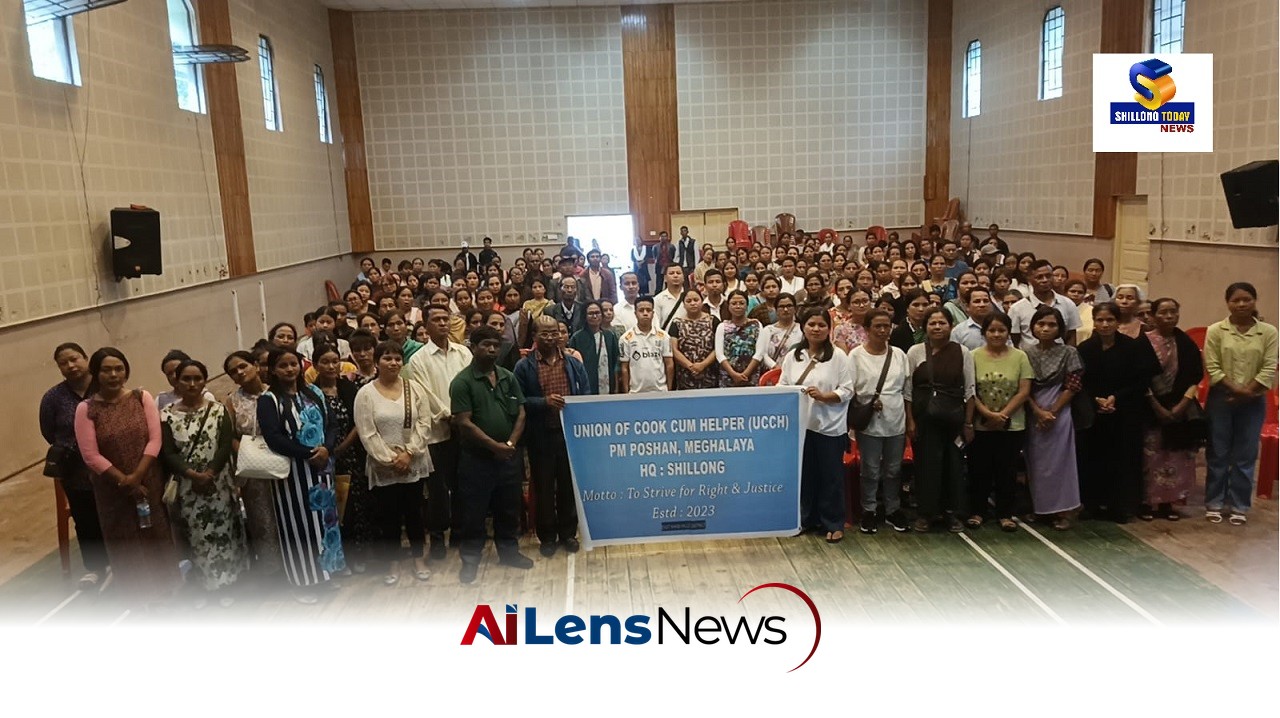


The PM POSHAN Cook-cum-Helpers’ Union is urging the Central Government to raise their monthly honorarium from ₹900 to ₹9,000, citing inadequate compensation and delayed payments.
Shillong, India Jul 14, 2026 ALN: The PM POSHAN (Mid-Day Meal) Cook-cum-Helpers’ Union has made a significant demand for the Central Government to raise the monthly honorarium of Cook-cum-Helpers from the existing ₹900 to ₹9,000. This demand was articulated during a meeting of the Union’s office-bearers at the Wahingdoh Community Hall, Shillong, which was presided over by Adviser Bah Khroo L. Pariat and President Kong Gina Nengnong.
The PM POSHAN scheme, formerly known as the Mid-Day Meal Scheme, was launched by the Government of India in 1995 with the aim of enhancing the nutritional status of school-age children. It provides free lunches on working days for children in primary and upper primary classes in government schools and government-aided schools. The program has been recognized for its role in improving enrollment, attendance, and retention rates in schools, particularly in rural areas. However, the individuals responsible for preparing these meals, the Cook-cum-Helpers, often remain in the shadows despite their essential contributions.
During the meeting, Bah Khroo L. Pariat highlighted the ongoing Monsoon Session of Parliament, asserting that this is a crucial time for the Union to voice its concerns. He pointed out that Cook-cum-Helpers have been serving under the PM POSHAN Scheme for many years, preparing nutritious meals for millions of schoolchildren across the country. Despite their dedication and the vital role they play in the educational ecosystem, the honorarium they receive remains inadequate, making it challenging for many to support their families.
The Union’s demand for an increase in the monthly honorarium to ₹9,000 reflects not only the rising cost of living but also the labor-intensive nature of their work. Cook-cum-Helpers are responsible for meal preparation, cooking, and sometimes even the distribution of meals to children, which requires significant effort and time. The current remuneration of ₹900 is viewed as insufficient, especially when considering the economic pressures faced by many families in India.
In addition to the honorarium increase, the Union is advocating for better welfare measures, including social security benefits, retirement assistance, and insurance coverage. These demands are aimed at ensuring that Cook-cum-Helpers receive recognition and support for their contributions, which are often overlooked. The call for these measures is not just about financial compensation; it reflects a broader need for systemic change in how those working in essential services are treated and supported.
The Union has also raised concerns regarding the delays in the disbursement of honorariums, noting that payments for the months of April, May, and June have not been released. This delay has placed many workers and their families in a precarious financial situation, unable to meet their basic needs. The lack of timely payments can lead to increased stress and hardship for these workers, who often rely on these funds to support their households.
Union President Kong Gina Nengnong expressed frustration over the lack of satisfactory responses from the authorities, despite several representations being submitted. She made a heartfelt appeal to both the Central and State Governments to not only release the pending honorariums immediately but also to seriously consider the long-standing demand for a substantial increase in wages. This is viewed as a necessary step to ensure that Cook-cum-Helpers can continue their important work without the burden of financial instability.
During the meeting, Cook-cum-Helpers were reminded of their responsibilities to ensure that the rice and other food items supplied under the PM POSHAN Scheme are of good quality. They were encouraged to report any deficiencies in food supplies to the relevant authorities promptly. This aspect of their role underscores the importance of accountability and quality assurance in the implementation of the PM POSHAN scheme, which directly impacts the health and nutrition of schoolchildren.
The Union reaffirmed its commitment to continue advocating for its demands until the Government of India takes concrete steps to provide fair wages, timely payment of honorariums, and proper recognition for the vital role played by Cook-cum-Helpers. The ongoing dialogue surrounding these issues is critical, as it not only affects the livelihoods of those directly involved but also has broader implications for the education and health of children across the country.
The implications of these demands extend beyond just the financial aspects. By improving the conditions and remuneration for Cook-cum-Helpers, the government can enhance the overall effectiveness of the PM POSHAN scheme, ensuring that children receive not only nutritious meals but also that the individuals preparing these meals are treated with dignity and respect. This could lead to better job satisfaction among Cook-cum-Helpers, potentially resulting in improved meal quality and service delivery.
Furthermore, the recognition of Cook-cum-Helpers as essential workers is vital, particularly in the context of the ongoing discussions about labor rights and social security in India. As the country continues to grapple with economic challenges exacerbated by the COVID-19 pandemic, addressing the needs of these workers becomes even more pressing. Their role in supporting the nutrition and education of children positions them as key players in the nation’s future, making it imperative that their voices are heard and their contributions acknowledged.
In conclusion, the demands put forth by the PM POSHAN Cook-cum-Helpers’ Union highlight critical issues related to labor rights, social security, and the recognition of essential workers. As the Central Government and Members of Parliament consider these demands, it is essential to understand the broader context of the PM POSHAN scheme and its significance in the lives of millions of schoolchildren and their families across India. The outcome of this advocacy could set a precedent for how similar workers in the country are treated and compensated in the future.
To learn more about the latest developments in Health & Public Safety, stay updated with our exclusive reports and analyses on AiLensNews.

