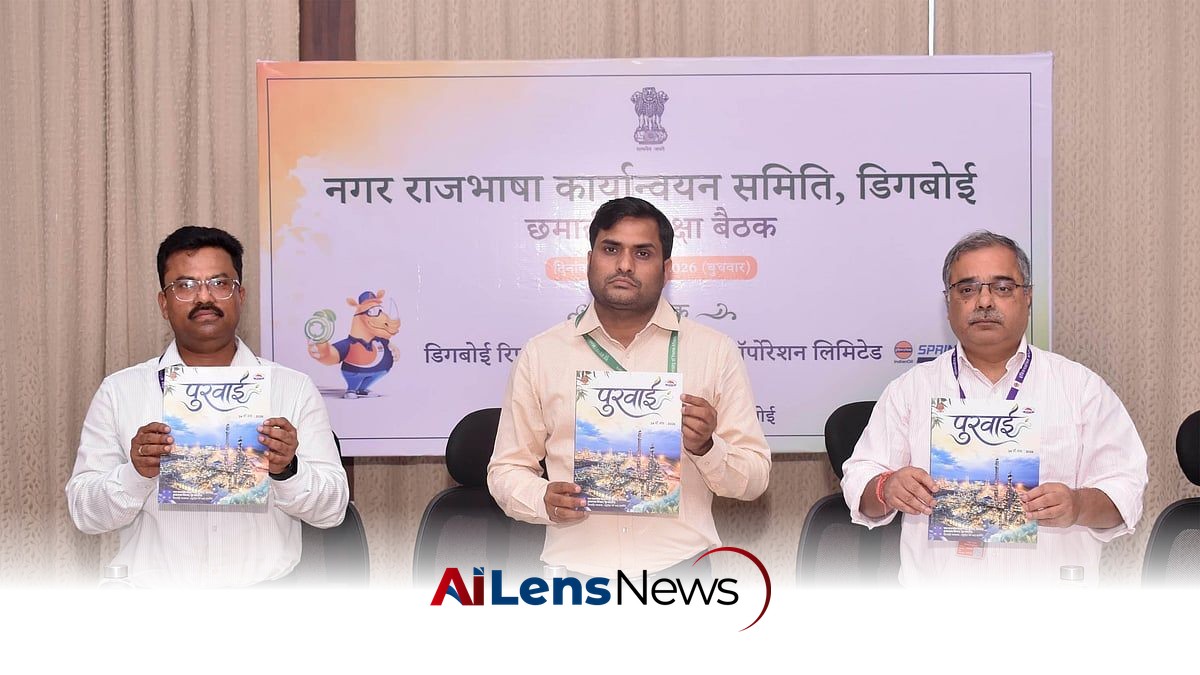


The NARAKAS meeting in Digboi emphasizes the integration of Hindi in India's digital transformation, urging linguistic empowerment alongside technological progress.
Shillong, India Jul 30, 2026 ALN: OUR CORRESPONDENT
DIGBOI: Reinforcing the need to align India's rapid technological transformation with the promotion of its official language, the Town Official Language Implementation Committee (NARAKAS), Digboi, on Wednesday stressed the wider adoption of Hindi in digital governance and emerging technologies, asserting that linguistic empowerment must go hand in hand with the nation's digital progress.
The half-yearly meeting of NARAKAS Digboi was held at the CTA Conference Hall of Digboi Refinery under the chairmanship of Rahul Prashant, Executive Director and Refinery Head, Digboi Refinery. This meeting is part of a broader initiative to ensure that the use of Hindi, as one of India's official languages, is not only promoted in traditional settings but also adapted to modern technological environments.
Hindi, as one of the two official languages of the Indian government, plays a crucial role in uniting the diverse linguistic landscape of the country. With over 500 million speakers, Hindi serves as a vital medium for communication across various sectors. The push for its increased usage in digital governance is seen as a necessary step to ensure that the benefits of technological advancements are accessible to a larger segment of the population, particularly in rural and semi-urban areas where Hindi is predominantly spoken.
The programme commenced with an introductory session, following which member organisations presented comprehensive reports on the progress achieved during the last six months in implementing the Official Language Policy. This policy aims to promote the use of Hindi in official communications, thereby fostering a sense of identity and belonging among Hindi speakers. The presentations highlighted innovative initiatives, such as the development of Hindi language software and applications that facilitate communication and administrative functions in Hindi.
Administrative functioning in Hindi is particularly important in a country where a significant portion of the population may not be proficient in . By promoting Hindi within governmental and administrative frameworks, NARAKAS aims to eliminate language barriers that can hinder effective communication and service delivery. Capacity-building programmes were also discussed, which focus on training government employees to use Hindi proficiently in their official duties.
Best practices adopted by individual offices to strengthen the use of the official language were showcased, demonstrating the potential for Hindi to be integrated into various aspects of governance. These practices include the use of Hindi in e-governance platforms, where citizens can access services and information in their native language, thereby enhancing user experience and satisfaction.
Delivering the presidential address, Rahul Prashant described the effective implementation of Hindi as a shared institutional responsibility. He emphasized that the promotion of Hindi should not be viewed merely as a bureaucratic obligation but as a vital component of India's socio-economic development. The call for intensified efforts under the Government's '12 Pra' campaign—an initiative aimed at promoting Hindi in various sectors—highlights the urgency of this mission.
In his address, Prashant referred to India's emergence as one of the world's leading economies, noting that the country is rapidly advancing in fields such as Artificial Intelligence (AI), Machine Learning (ML), Digital Governance, Data Analytics, and e-Office systems. He asserted that it is imperative that technological progress is not restricted to but becomes accessible through Indian languages, particularly Hindi. This sentiment reflects a growing recognition of the need for inclusivity in the digital age, where language should not be a barrier to accessing information and services.
He observed, "Digital India will attain its true strength only when its language is also Indian." This statement encapsulates the essence of the meeting's discussions, which revolved around the idea that the digital transformation of India should be reflective of its cultural and linguistic diversity. By ensuring that Hindi is integrated into digital platforms, the government can foster greater engagement from citizens who may feel alienated by the predominance of in technological advancements.
One of the major highlights of the meeting was the formal release of the 14th edition of NARAKAS Digboi's house journal, Purwai. This publication serves as a testament to the literary and administrative contributions of member organisations towards the promotion of the Official Language. The journal not only showcases articles and research related to Hindi but also provides a platform for dialogue on the challenges and opportunities in implementing the Official Language Policy.
The release of Purwai is significant as it reflects the ongoing efforts to document and share knowledge about the use of Hindi in various sectors. Such publications can play a crucial role in educating stakeholders about the importance of language in governance and the benefits of promoting Hindi as a medium of communication.
The implications of NARAKAS's advocacy for Hindi in digital governance extend beyond mere language promotion. By fostering an environment where Hindi is used in digital platforms, the government can enhance transparency, accountability, and citizen engagement. Furthermore, it can empower individuals in rural and semi-urban areas, allowing them to access government services and information without the hindrance of language barriers.
As India continues to embrace digital transformation, the integration of Hindi into governance and technology will be essential in ensuring that the benefits of this transformation are equitably distributed. The discussions at the NARAKAS meeting underscore the importance of linguistic inclusivity in a rapidly evolving digital landscape and highlight the need for collaborative efforts among government, industry, and civil society to promote Hindi effectively.
In conclusion, the advocacy for Hindi in digital governance by NARAKAS Digboi represents a critical step towards ensuring that India's technological advancements are accessible to all citizens. As the country navigates its path towards becoming a global leader in technology, the promotion of its official languages, particularly Hindi, will play a vital role in fostering national unity and inclusivity in the digital age.
To learn more about the latest developments in Politics, stay updated with our exclusive reports and analyses on AiLensNews.

