

More
Checking your session
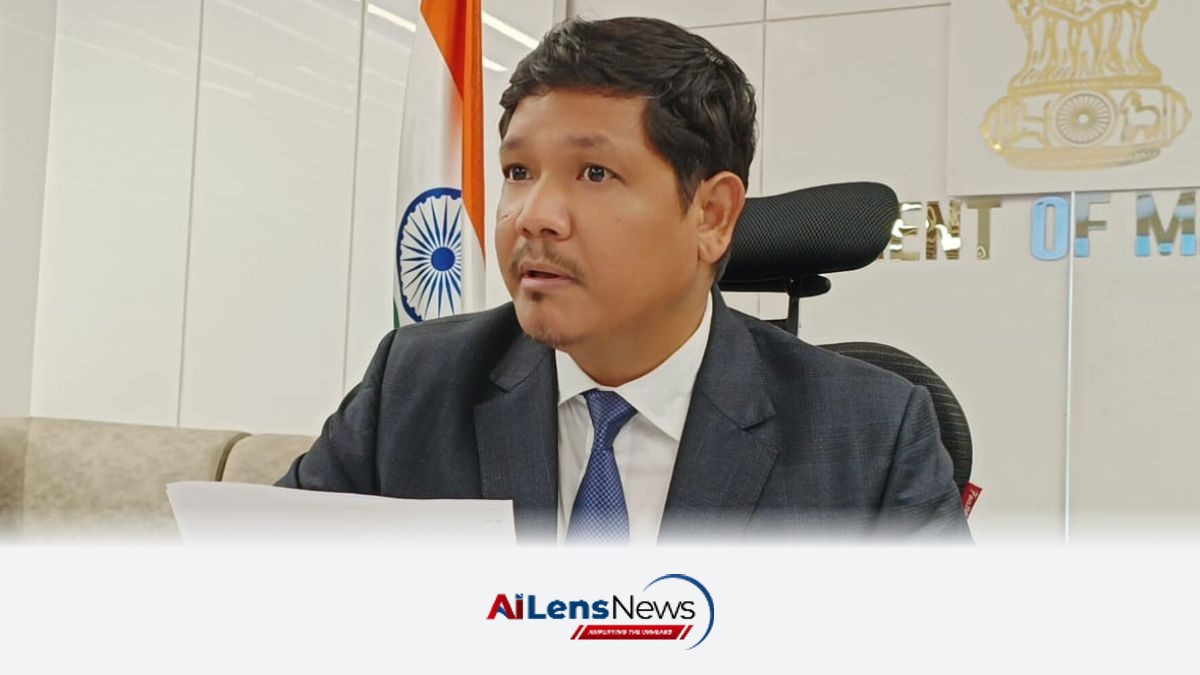



Chief Minister Conrad K Sangma clarifies that families of the Lapalang incident victims received ex-gratia assistance from the Chief Minister's Special Grant, not the State Disaster Management Fund.
Shillong, India Aug 27, 2026 ALN: Shillong: Chief Minister Conrad K Sangma on Thursday announced that the families of the five individuals who tragically died in the Lapalang well asphyxiation incident have been provided with ex-gratia assistance. He clarified that this payment was made from the Chief Minister’s Special Grant (CMSG) rather than the State Disaster Management Fund (SDMF).
The Lapalang incident, which involved the unfortunate deaths of five workers due to asphyxiation in a well, has raised significant concerns regarding workplace safety and the responsibilities of employers in ensuring the safety of their employees. As such incidents highlight the vulnerabilities faced by laborers, especially in hazardous work environments, they often prompt discussions about the adequacy of existing safety regulations and the need for stricter enforcement of labor laws.
The clarification from Chief Minister Sangma followed concerns raised by VPP chief and Nongkrem MLA Ardent Miller Basaiawmoit in the Assembly, who questioned the government's alleged failure to provide timely assistance to the victims’ families. The incident has sparked outrage and grief within the community, as the loss of five lives in a workplace accident could leave their families without primary breadwinners, severely impacting their livelihoods.
Basaiawmoit emphasized that the issue transcended mere compensation; it was about ensuring fair treatment for families affected by such tragedies. He pointed out that the psychological and financial repercussions of such accidents can be profound, often leading to long-term difficulties for the families left behind. The MLA's comments reflect a broader concern in society regarding how victims of workplace accidents are treated and the support systems in place for their families.
In his address, Basaiawmoit further questioned the government regarding the criteria for withholding ex-gratia assistance and referenced payments made in other incidents, including a coal mine blast in East Jaintia Hills and pipeline-related accidents in West Bengal. This comparison serves to highlight perceived inconsistencies in the government's approach to providing assistance, raising questions about the fairness and transparency of the decision-making process.
Basaiawmoit sought clarity on the government's policy for ex-gratia assistance, inquiring if there were standardized guidelines governing such payments. This inquiry is particularly relevant in the context of previous incidents where families received varying levels of support, leading to public confusion and dissatisfaction with the government's response to tragedies.
In response, Sangma asserted that the claim of no assistance being provided was incorrect. He explained that the government had indeed sanctioned support for the five families under the CMSG, which operates independently from the SDMF. This distinction is crucial, as it underscores the different frameworks under which assistance is provided, depending on the nature of the incident.
Sangma elaborated that the SDMF is governed by specific provisions applicable to natural disasters covered by the State Disaster Response Fund. Since the Lapalang incident was classified as an accident rather than a disaster, assistance from the SDMF was not applicable. This classification raises important questions about how incidents are categorized by the government and the implications of such classifications for the victims and their families.
He noted that the CMSG allows for assistance in cases that do not fit the SDMF criteria. However, unlike the SDMF, the CMSG does not have fixed guidelines for ex-gratia amounts; decisions are made based on the unique circumstances of each case. This flexibility can be beneficial in addressing the specific needs of affected families, but it also opens the door to potential inconsistencies in how similar cases are treated.
Sangma emphasized the need for caution when extending such assistance, as providing ex-gratia for one incident could set a precedent, leading to demands for similar support in every accident. This concern reflects a broader issue in disaster and crisis management, where the balance between compassion and practicality must be carefully navigated by policymakers.
“We have to balance the circumstances,” he stated, adding that CMSG assistance cannot be extended in every accident. In the Lapalang case, the government considered both the incident's context and the affected families' situations before deciding to provide financial assistance. The deliberation process highlights the importance of evaluating each incident on its own merits, which can be a challenging task for government officials.
He mentioned that the assistance was given without any public announcement, stating, “The government’s actions are more important than making news out of the assistance.” This lack of publicity may have contributed to the misunderstanding regarding the assistance, which was not known to the media or legislators. The decision to keep the assistance under wraps raises questions about transparency and communication strategies employed by the government, especially in times of crisis.
Sangma assured the Assembly that the government would continue to extend support wherever feasible, while reiterating that CMSG assistance would be evaluated on a case-by-case basis to avoid setting precedents for future incidents. This approach indicates a commitment to providing support while also being mindful of the broader implications of such decisions on public policy and resource allocation.
In conclusion, the Lapalang incident serves as a reminder of the vulnerabilities faced by workers in hazardous environments and the critical importance of effective safety regulations. It also highlights the need for clear and transparent policies regarding assistance for victims' families, ensuring that support is both fair and responsive to the unique circumstances of each case. As discussions continue around workplace safety and the government's role in providing assistance, it is essential for policymakers to engage with communities and stakeholders to foster trust and ensure that the needs of affected families are met.
To learn more about the latest developments in Local & Regional, stay updated with our exclusive reports and analyses on AILensNews.

Eight members of the Khasi Students' Union are summoned by police as part of an …

Eight members of the Khasi Students’ Union were denied entry at Sadar Police Sta…
Chief Minister Conrad K. Sangma assures the Legislative Assembly that a resoluti…

The Khasi Students’ Union has temporarily suspended its agitation after a satisf…
The Government and the Khasi Students’ Union have agreed to establish a fact-fin…