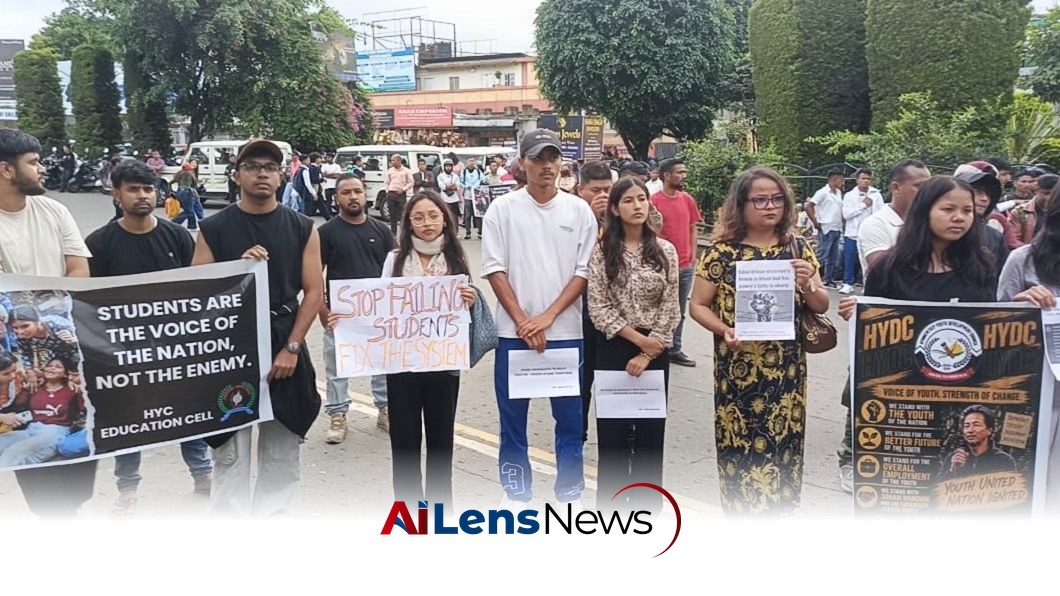


HYC President Roy Kupar Synrem expressed disappointment over the low turnout of Khasi youth at a rally supporting students protesting against the NEET exam paper leak.
Shillong, India Jul 23, 2026 ALN: Hynñiewtrep Youth Council (HYC) president Roy Kupar Synrem on Thursday expressed disappointment over the low participation of Khasi youth in the organisation’s solidarity rally held in Shillong in support of students protesting against the alleged NEET examination paper leak.
The National Eligibility cum Entrance Test (NEET) is a highly competitive examination in India, serving as a gateway for aspiring medical students to secure admissions into various medical colleges across the country. The integrity of this examination is of paramount importance, as it directly impacts the future of countless students who have invested significant time and resources in preparing for this crucial test. In recent times, allegations of examination malpractices, including paper leaks, have raised serious concerns about the fairness and transparency of the examination process. These developments have led to widespread protests among students and civil society organizations, demanding accountability and reform.
Addressing the gathering at Khyndailad, Synrem emphasized that the rally was not a political programme but a movement to defend fairness, transparency, and public trust in India’s examination system. He pointed out that the integrity of competitive examinations is essential not only for individual students but also for the overall health of the educational system in India. When students perceive that the examination system is compromised, it breeds distrust and cynicism, which can have long-lasting effects on their motivation and aspirations.
Synrem articulated that any compromise in the integrity of competitive examinations would have serious consequences for lakhs of deserving students who rely on merit to secure admissions and employment opportunities. The NEET examination, in particular, is a critical determinant of a student’s career trajectory. Given the high stakes involved, it is imperative that the examination process remains untainted by any form of malpractice or corruption.
Expressing concern over the turnout, Synrem lamented the unfortunate reality that only a small number of indigenous Khasi youth joined the protest despite the issue having far-reaching implications for students across the country. This lack of participation raises questions about the level of awareness and engagement among the youth regarding critical issues that affect their future. It also highlights the need for more effective communication and outreach efforts to mobilize young people around issues that matter to them.
Interestingly, Synrem noted that many non-local residents living and working in Shillong had participated in the rally to express solidarity, while a large section of Khasi youth remained absent. This observation underscores a potential disconnect between the local youth and broader socio-political issues that transcend regional boundaries. It suggests that while there is a sense of solidarity among various communities, there may be underlying barriers preventing Khasi youth from engaging in collective action.
Stressing the importance of education as the foundation of a progressive society, Synrem reiterated that an examination system tainted by malpractice denies deserving students equal opportunities and undermines public confidence. Education is often viewed as a great equalizer, offering individuals the chance to improve their circumstances and contribute meaningfully to society. When the examination process is perceived as flawed, it can erode the very foundations upon which educational aspirations are built.
In his address, Synrem urged people not to view the issue through regional, ethnic, or political lenses, saying the fight against examination malpractice is a collective effort to safeguard the future of the younger generation. This call for unity is particularly significant in a diverse country like India, where regional and ethnic identities can sometimes create divisions. By framing the issue as one that concerns all students, regardless of their background, Synrem is advocating for a more inclusive approach to addressing educational injustices.
Concluding his address, the HYC president appealed to Khasi youth, civil society organizations, and the general public to remain vigilant and actively participate in issues concerning education and justice. He cautioned that silence in the face of such challenges could weaken the integrity of institutions. This statement serves as a reminder that civic engagement is crucial for maintaining accountability and transparency in governance and public institutions.
Moreover, protecting students’ future is a shared responsibility of society. It calls for a concerted effort from all stakeholders, including educational institutions, government bodies, parents, and the community at large, to ensure that the examination system remains fair and just. This collective responsibility is essential for fostering a culture of integrity and trust within the educational framework.
The implications of the rally and the concerns raised by Synrem extend beyond the immediate context of the NEET examination. They reflect broader issues related to educational reform, the need for systemic changes in how examinations are conducted, and the importance of safeguarding the rights of students. As the country grapples with various challenges in the education sector, the voices of youth and civil society will play a crucial role in shaping the future of educational policies and practices.
In conclusion, the call to action by HYC president Roy Kupar Synrem serves as a vital reminder of the importance of civic engagement and collective action in addressing issues that impact the youth. The integrity of the examination process is not merely a concern for students but a matter of public interest that affects the credibility of educational institutions and the future of the nation. As the protests continue, it remains to be seen how the government and relevant authorities will respond to these concerns and what measures will be implemented to restore public trust in the examination system.
To learn more about the latest developments in Crime & Law, stay updated with our exclusive reports and analyses on AiLensNews.

