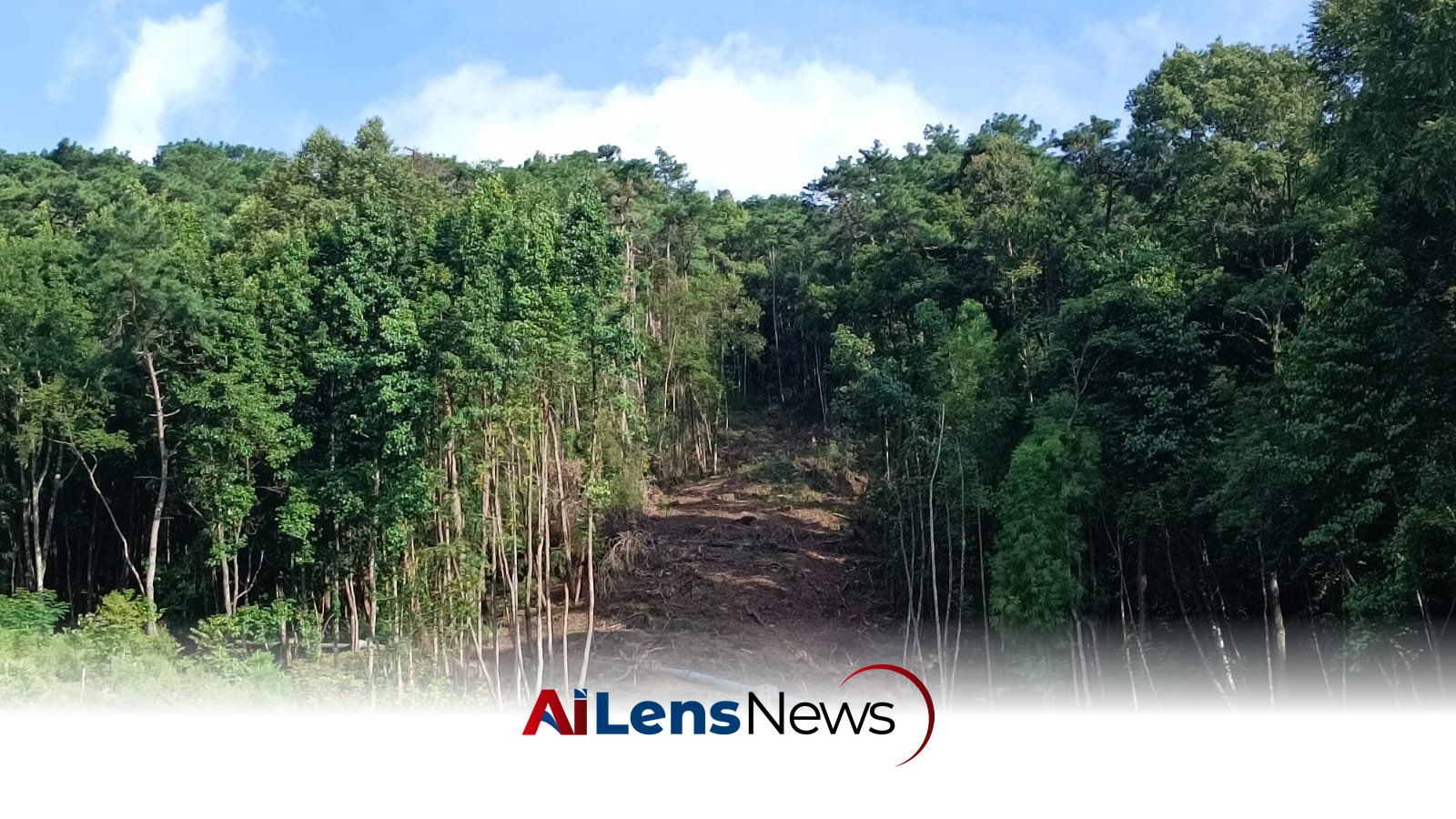


The government defends the Shillong Peak Ropeway project despite local fears over environmental impacts, including deforestation and water shortages.
Shillong, India Jul 29, 2026 ALN: The government today attempted to defend the planned Shillong Peak Ropeway project without actually answering the chief environmental concerns put forth by locals.
A group of citizens had yesterday expressed grave fears for the environment after hundreds of trees were chopped down in the Lawsohtun area close to Shillong Peak for the project. They feared that this would lead to a water shortage, affect rainfall patterns and threaten native flora and fauna. The concerns raised by the local community reflect a broader trend seen across various regions in India, where development projects often clash with environmental preservation efforts.
In a press statement today, the Ropeway Development Authority (MRDA) asserted that the project is being implemented in full compliance with all statutory requirements while taking environmental, social, and community concerns into account. However, the MRDA's assurances did little to quell the apprehensions of residents who feel their voices have not been adequately heard in the decision-making process.
The ropeway, which will be 896 meters long, is touted by the MRDA as a means to help reduce greenhouse gas emissions by replacing road-based travel. This claim is part of a larger narrative that positions infrastructure projects as eco-friendly alternatives to traditional transportation methods, although such claims often require careful scrutiny in light of the environmental costs associated with construction.
The authority also stated that all mandatory approvals and permissions had been secured before work commenced. These include forest clearance from the Union Ministry of Environment, Forest and Climate Change for the diversion of 2.3257 hectares of forest land, compliance with the Forest Rights Act, public consultations with community members, and multiple stakeholder meetings. However, it is noteworthy that environmental clearance was not required under the Environmental Impact Assessment (EIA) Notification 2006, raising questions about the adequacy of the assessments conducted prior to the project's approval.
Yesterday, the residents complained that there had been no public consultation. This highlights a significant gap in the engagement process, as local communities often bear the brunt of environmental changes while being sidelined in discussions about development projects. The lack of meaningful consultation can lead to mistrust between the government and the community, complicating future collaborations and initiatives.
According to the press release, permission had been obtained to fell 544 trees, and compensatory afforestation will be carried out. However, in a Public Interest Litigation (PIL) before the High Court last year, the court was informed that the afforestation would take place in another district, which would not assuage the residents’ fears for the local environment. This situation underscores the complexities involved in compensatory afforestation efforts, which often fail to replicate the ecological integrity of the original forested areas.
Land covering 7,416.95 square meters was leased to the state government by the Riat Laban Dorbar Pyllun in January 2023 for the project. The involvement of local governance structures, such as the Dorbar, illustrates the layered decision-making processes in India, where traditional governance systems intersect with state authorities. However, the efficacy of these arrangements often hinges on the transparency and inclusiveness of the discussions surrounding land use and development.
The ropeway, to be constructed at an estimated cost of Rs 151 crore, is being funded by the New Development Bank (NDB) and the Union Ministry of Development of North Eastern Region (DoNER) under the Prime Minister’s Development Initiative for North Eastern Region (PM-DevINE) scheme. Of the total project cost, Rs 80.89 crore is being funded by the NDB, while the remaining Rs 70.11 crore is being provided by the DoNER Ministry. Construction began on October 15, 2025. The financial backing from these institutions indicates a significant investment in the region's infrastructure, but it also raises questions about the prioritization of development over ecological sustainability.
According to the MRDA, the ropeway will feature lower and upper terminals and 13 cabins designed to European (CEN) standards. Once completed, it is expected to be among the country’s world-class passenger ropeway systems. The focus on international standards is indicative of the ambition to position Shillong as a key tourist destination, which aligns with broader governmental goals of enhancing tourism in the Northeast region.
The authority stated that the project is expected to enhance the commuting experience for tourists while generating employment and livelihood opportunities for local residents. However, the promise of job creation must be weighed against the potential long-term environmental impacts that could affect the livelihoods of the very same residents who are being promised employment. The balance between development and environmental sustainability remains a contentious issue that requires ongoing dialogue and careful management.
In conclusion, while the Shillong Peak Ropeway project holds the potential for economic benefits and improved transportation, it simultaneously raises serious environmental concerns that must be addressed. The government’s defense of the project, while highlighting compliance with statutory requirements, fails to fully engage with the local community's fears and the ecological implications of deforestation. As infrastructure development continues to unfold in ecologically sensitive areas, it is imperative for authorities to foster genuine dialogue with communities, ensuring their concerns are not only heard but actively incorporated into planning and execution processes. The outcome of this project may set a precedent for how similar initiatives are approached in the future, making it crucial for all stakeholders to navigate these complex issues with care and consideration.
To learn more about the latest developments in Crime & Law, stay updated with our exclusive reports and analyses on AiLensNews.

