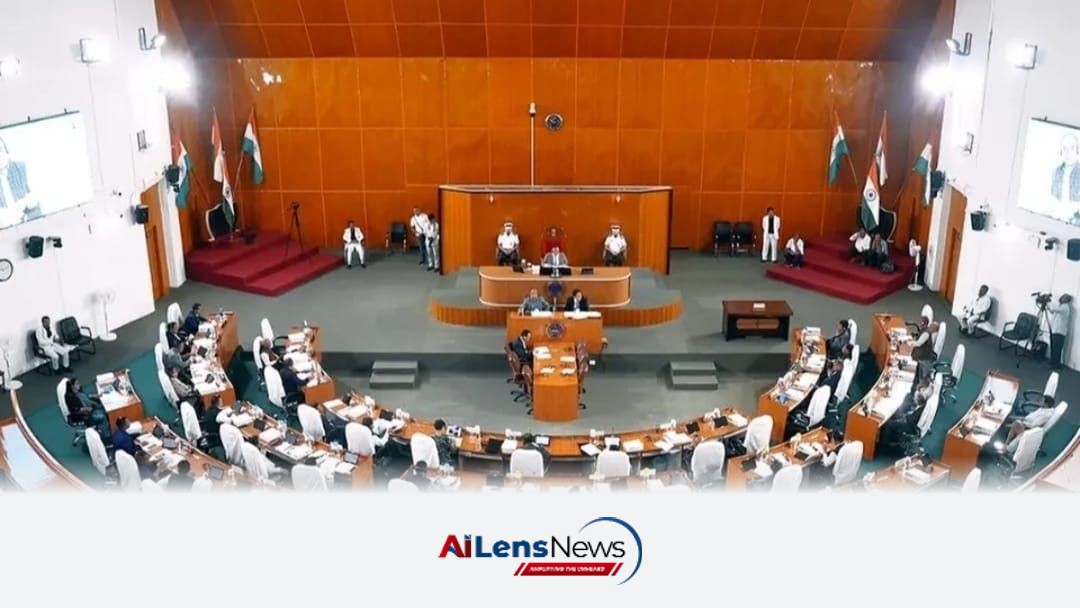



The Autumn Session of the Legislative Assembly begins today, featuring key bills and government business over five days.
Shillong, India Aug 24, 2026 ALN: The Autumn Session of the Legislative Assembly will begin on Monday, marking a significant period in the political calendar of the state. This session, which spans five days and concludes on August 28, is structured to address both government business and issues raised by private members. Specifically, three days are designated for government business, while the remaining two days are reserved for discussions and initiatives put forth by private members of the assembly.
The agenda for the first day is particularly noteworthy, as it includes the introduction of several important legislative bills. Among these is the Forest Authority (Amendment) Bill 2026, which aims to modify existing regulations concerning forest management and conservation. This amendment is expected to address various challenges related to deforestation, biodiversity loss, and the rights of indigenous communities who depend on forest resources for their livelihoods.
Another significant piece of legislation slated for introduction is the Money Lenders and Accredited Loan Providers’ Bill 2026. This bill is anticipated to regulate the activities of money lenders and ensure that accredited loan providers operate within a framework that protects consumers from predatory lending practices. The bill seeks to establish fair lending practices, promote transparency, and safeguard the financial interests of borrowers, particularly in rural and underserved areas where access to formal banking services may be limited.
Additionally, the Right to Public Services (Amendment) Bill 2026 will be introduced, which is likely to enhance the accountability and efficiency of public service delivery mechanisms. This amendment aims to streamline processes and ensure that citizens receive timely services from government departments, thereby reinforcing the government's commitment to improving public administration.
The Official Language Bill 2026 is also on the agenda, reflecting the state's ongoing efforts to address linguistic diversity and promote inclusivity. This bill may propose measures to recognize and support multiple languages spoken within the state, thereby fostering a sense of belonging among various linguistic communities.
In addition to these government bills, several legislative proposals concerning private universities will be presented. This includes bills for the International Open University, Khasi Jaintia Presbyterian University, Sister Nivedita University, Mahatma Gandhi University, Martin Luther Christian University, and Maharashtra Institute of Technology University. The introduction of these bills indicates a focus on higher education and the need for regulatory frameworks that support the growth and development of private educational institutions in the state. This is particularly relevant in the context of increasing demand for higher education and the need for quality educational opportunities for the youth.
The Chief Minister, who also holds the Finance portfolio, will play a pivotal role in this session by presenting the Supplementary Demands for Grants and Supplementary Appropriation for 2026-2027. This presentation is crucial as it outlines the government's financial requirements for the remainder of the fiscal year, detailing how funds will be allocated to various departments and initiatives. The supplementary budget is often a reflection of the government's priorities and its response to emerging challenges within the state.
The Autumn Session of the Legislative Assembly is not just a routine gathering; it serves as a platform for the government to engage with pressing issues that affect the constituents. The decisions made during this session can have far-reaching implications for governance, public policy, and the socio-economic landscape of the state. Stakeholders, including civil society organizations, educational institutions, and the general public, will be closely monitoring the proceedings, as the outcomes of these discussions will shape the future direction of state policies.
Moreover, the session provides an opportunity for private members to voice concerns and propose solutions on matters that may not be on the government's immediate agenda. This aspect of the assembly is vital for fostering a democratic dialogue and ensuring that the voices of diverse communities are heard in the legislative process.
As the session unfolds, it will be essential to observe how the government addresses the various bills and issues raised, as well as the responses from opposition parties and independent members. The dynamics of debate within the assembly could influence public opinion and shape the political landscape in the lead-up to future elections.
In conclusion, the Autumn Session of the Legislative Assembly represents a critical juncture for governance in the state, with a diverse range of bills and issues on the table. The outcomes of this session will be instrumental in determining the legislative agenda and policy directions for the coming months, making it a focal point for political engagement and civic participation.
To learn more about the latest developments in Local & Regional, stay updated with our exclusive reports and analyses on AILensNews.

