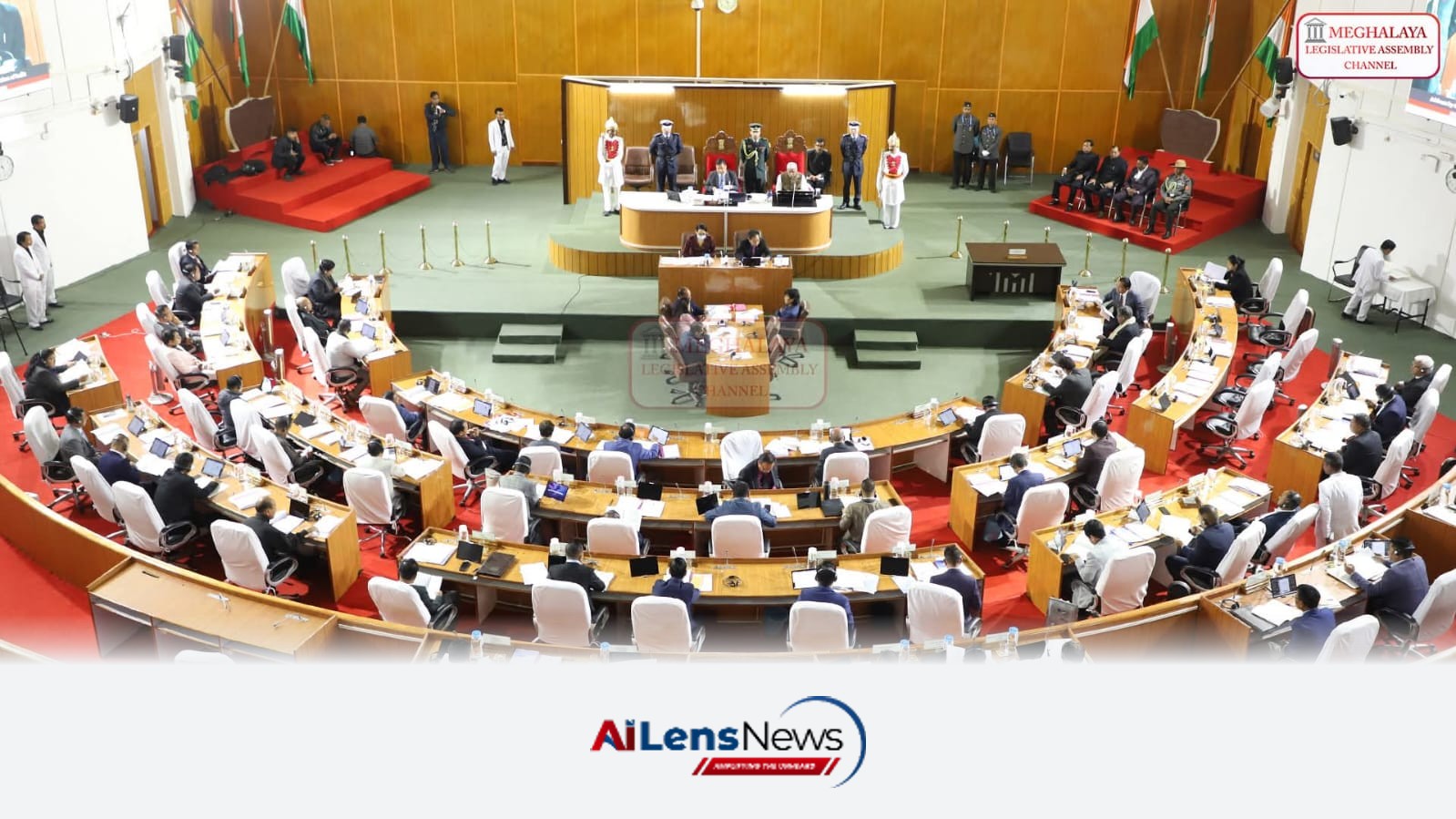



The Legislative Assembly has introduced several significant bills during its Autumn Session, addressing forest management, public services, and higher education.
Shillong, India Aug 25, 2026 ALN: Shillong: The Legislative Assembly convened on Monday to introduce a series of government bills on the first day of the Autumn Session. These bills cover crucial areas such as forest administration, money lending, public services, official languages, and higher education, highlighting the government's commitment to address pressing issues and enhance the legislative framework within the state.
The Chief Minister, Conrad K Sangma, who oversees the Forests and Environment portfolio, presented the Forest Authority (Amendment) Bill, 2026. This proposed amendment aims to operationalize the Forest Authority Act of 1991, which was initially established to manage and conserve forest resources effectively. The amendment seeks to establish a dedicated Forest Authority Fund, which would provide the necessary financial resources to support various forest conservation initiatives and programs. Additionally, it aims to facilitate grants from the state government, ensuring that the Forest Authority has the means to implement its strategies effectively. This move is particularly significant given the increasing concerns over deforestation and environmental degradation in the region, which have raised alarms about biodiversity loss and the impacts of climate change.
In line with financial regulation, Sangma also introduced the Money Lenders and Accredited Loan Providers’ Bill, 2026. This bill seeks to replace the existing Money Lender Act, which has been criticized for its inadequacies in protecting consumers from exploitative lending practices. The new legislation is modeled after the Assam Money Lenders Act of 1934 and is a response to recommendations from a technical group set up by the Reserve Bank of India. This group emphasized the need for a comprehensive review of current money-lending laws within the state to ensure that they are more consumer-friendly and transparent. The proposed changes are expected to bring greater accountability among money lenders and provide better protection for borrowers, particularly in rural areas where access to formal banking services is limited.
Another significant introduction was the Right to Public Services (Amendment) Bill, 2026. This bill proposes an automatic appeal mechanism for applications submitted through designated electronic systems, which aims to enhance the efficiency of public service delivery. The mechanism ensures that if no decision is made within the specified timeframe, appeals can be automatically generated and electronically transmitted, thereby reducing delays in service provision. However, the government clarified that this mechanism will not equate to deemed approval and will not alter existing statutory rights or responsibilities. This is an important clarification, as it seeks to balance the need for efficiency with the protection of individual rights, ensuring that the amendment does not inadvertently undermine the rule of law.
Furthermore, the Chief Minister introduced the Official Language Bill, 2026, which aims to replace the Official Language Ordinance issued by the Governor on April 27, 2026. This legislation seeks to recognize Khasi and Garo as official languages, moving beyond their current status as associate official languages. This recognition is pivotal in promoting linguistic diversity and cultural heritage within the state, as both Khasi and Garo are integral to the identity of their respective communities. By elevating these languages to official status, the government aims to foster inclusivity and ensure that governmental processes are accessible to speakers of these languages, thereby strengthening democratic engagement.
On the education front, Education Minister Lahkmen Rymbui introduced several bills pertaining to private universities in the state. Among these was the International Open University (Repealing) Bill, 2026, which seeks to repeal the International Open University Act of 2011. This decision comes in light of the lack of progress in establishing the university and ongoing disputes among sponsors and trustees, which have hindered its development. The repeal of this act reflects the government's commitment to ensuring that educational institutions operate effectively and meet the needs of students in the region.
Rymbui also presented the Khasi Jaintia Presbyterian University Bill, 2026, and the Sister Nivedita University Bill, 2026. The latter aims to establish a university that offers programs across various disciplines, including science, engineering, technology, and medicine. This initiative is part of a broader effort to enhance higher education opportunities in the state, catering to the growing demand for skilled professionals in various sectors. The establishment of new universities is expected to contribute to the local economy by attracting students and creating jobs within the education sector.
Additionally, the Mahatma Gandhi University Bill, 2026, and the Martin Luther Christian University (Amendment) Bill, 2026, were introduced. The latter proposes to relocate the university’s headquarters from Mawphlang to Umphyrnai and make the Dean of Academics the Secretary of the Academic Council. This amendment is aimed at improving the administrative efficiency of the university and ensuring that academic governance aligns with contemporary educational standards.
The Assembly also reviewed the Maharashtra Institute of Technology University of (Amendment) Bill, 2026, which seeks to align the governance structure of the university with other private institutions in the state. This alignment is crucial for standardizing educational governance and ensuring that institutions can operate effectively in a competitive educational landscape.
The introduction of these bills marks a significant step in addressing various legislative needs within the state, with the Assembly granting leave to the concerned ministers to present the proposed legislation. The government's proactive approach in introducing these bills highlights its responsiveness to the evolving needs of society, particularly in areas that directly impact the lives of citizens. As these bills progress through the legislative process, they will be subject to scrutiny and debate, which will be essential in refining the proposals to best serve the interests of the public.
Overall, the introduction of these key bills reflects a comprehensive strategy to address pressing issues in forest management, financial regulation, public service delivery, language rights, and higher education. The successful passage of these bills could lead to substantial improvements in the quality of life for residents of the state, fostering a more equitable and sustainable future.
To learn more about the latest developments in Local & Regional, stay updated with our exclusive reports and analyses on AILensNews.

