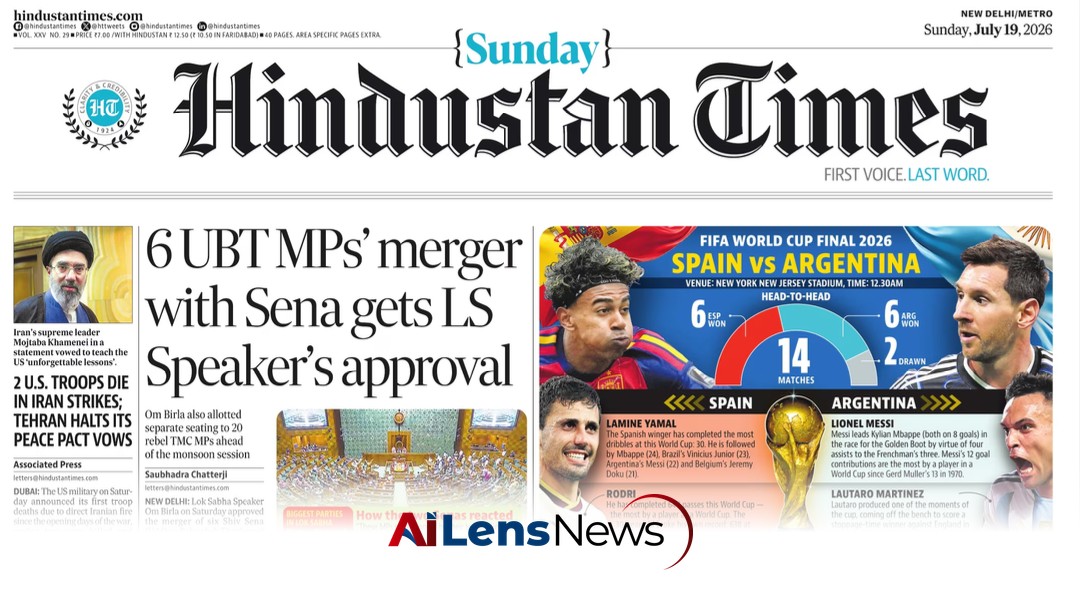


Following the police's intervention at Sonam Wangchuk's hunger strike, media outlets varied in their coverage, with some downplaying the incident while others highlighted it prominently.
New Delhi, India Jul 19, 2026 ALN: The recent police action against activist Sonam Wangchuk has sparked significant media attention and public discourse, particularly regarding the implications of state intervention in protests and the treatment of activists in India. Wangchuk, a prominent figure known for his advocacy on environmental issues and educational reforms, was forcibly removed from his hunger strike site at Delhi’s Jantar Mantar on a Saturday morning, a move that has been met with both support and criticism from various quarters.
Wangchuk's hunger strike commenced on June 28 and is part of a broader protest led by the Cockroach Janta Party, which has been vocal about the alleged mismanagement of competitive examinations by the Union Education Minister Dharmendra Pradhan. This protest highlights significant grievances among students and aspirants who feel that the current examination system is failing to provide fair opportunities, leading to widespread frustration and calls for accountability from the government. The examination system in India has long been a contentious issue, with many arguing that it is riddled with inefficiencies and inequities that disproportionately affect underprivileged students.
The Delhi High Court's involvement in this situation adds a layer of complexity to the narrative. On Thursday, prior to Wangchuk's removal, the court ordered that the health and medical condition of the activist be monitored on a daily basis, emphasizing that any necessary medical interventions should be conducted by government authorities. This judicial directive underscores the legal framework within which the police operated, as they cited compliance with the court's order when justifying their actions on Saturday. The court's order reflects a growing recognition of the need to balance state interests with the rights of individuals, particularly in cases involving non-violent protests and hunger strikes, which are often seen as a last resort for activists to draw attention to their causes.
Media coverage of the incident varied significantly across different publications, reflecting not only the editorial priorities of these outlets but also the broader political landscape in which they operate. Major newspapers such as The Indian Express and The Hindu placed the story prominently, framing it as a significant development in the ongoing protest movement. The Indian Express emphasized the timing of the police action, noting that it occurred shortly after Anurag Kumar assumed his role as the new commissioner of the Delhi Police and just days before a planned march to Parliament as the Monsoon Session was set to commence. This timing raises questions about the police's motivations and the potential political implications of their actions, suggesting that the government may be taking a more aggressive stance against dissent ahead of critical legislative sessions.
In contrast, Hindustan Times and Amar Ujala offered less prominent coverage, with the former relegating the story to the bottom half of the front page and focusing primarily on the responses from opposition parties. This disparity in coverage may reflect editorial choices influenced by the perceived significance of the protest or the political affiliations of the newspapers involved. Such differences in reporting can shape public perception and discourse surrounding the event, highlighting the critical role of media in framing political narratives. The editorial choices made by these outlets can also indicate broader trends in media consumption and how different demographics engage with political issues.
The police's characterization of their actions as necessary for health reasons has been met with skepticism by some observers, who argue that the forcible removal of Wangchuk from the protest site raises serious concerns about the limits of state power in managing dissent. The use of force in such contexts, particularly against individuals engaged in non-violent protest, can be seen as an infringement on democratic rights and freedoms. This incident has prompted discussions about the broader implications for civil liberties in India, especially as protests related to educational policies and governance continue to gain momentum. The treatment of activists like Wangchuk can set a precedent for how future protests are handled, potentially leading to increased tensions between the state and civil society.
Following Wangchuk's removal, there was a notable reaction from the political opposition, with leaders and parties expressing solidarity with the activist and condemning the police's actions. The Cockroach Janta Party, which Wangchuk is associated with, has vowed to continue its protest, with its founder Abhijeet Dipke announcing a hunger strike in response to Wangchuk's treatment. This escalation of protests indicates a growing mobilization among student groups and activists, reflecting a collective frustration over perceived governmental inaction on critical issues affecting youth and education. The involvement of political parties and other activists can amplify the protest's visibility and may lead to broader coalitions forming around shared grievances, potentially increasing pressure on the government to address these concerns.
The media's varying responses also highlight the potential for bias in reporting, as different outlets choose to emphasize different aspects of the story. For instance, while some publications focused on the police's claims and the legal framework surrounding the intervention, others chose to spotlight the implications for civil rights and the broader protest movement. This variation in coverage can influence public understanding and sentiment regarding the events, as well as the actions of the government and law enforcement. The framing of the narrative can also affect how the public perceives the legitimacy of the protests and the motivations behind them, which is critical in a democratic society where public opinion can sway political decisions.
As the situation develops, it is essential to consider the implications of state responses to activism and the role of the judiciary in mediating such conflicts. The Delhi High Court's order for monitoring Wangchuk's health suggests an acknowledgment of the potential risks associated with hunger strikes and the need for humane treatment of activists. However, the effectiveness of such judicial interventions in protecting the rights of protesters remains to be seen, particularly in a climate where dissent is increasingly met with state resistance. The judiciary's role in upholding civil liberties will be crucial in determining how future protests are handled and whether activists can operate without fear of retribution.
In conclusion, the police action against Sonam Wangchuk has not only drawn media attention but has also ignited discussions about the nature of protest, state power, and civil liberties in India. As the protest movement continues to evolve, the responses from both the government and the public will likely shape the future landscape of activism and policy discourse in the country. The media's role in this process is crucial, as it influences public perception and can either amplify or diminish the voices of those advocating for change. The ongoing situation serves as a reminder of the delicate balance between maintaining public order and respecting the rights of individuals to express dissent, a cornerstone of any democratic society.
To learn more about the latest developments in Politics, stay updated with our exclusive reports and analyses on AiLensNews.

