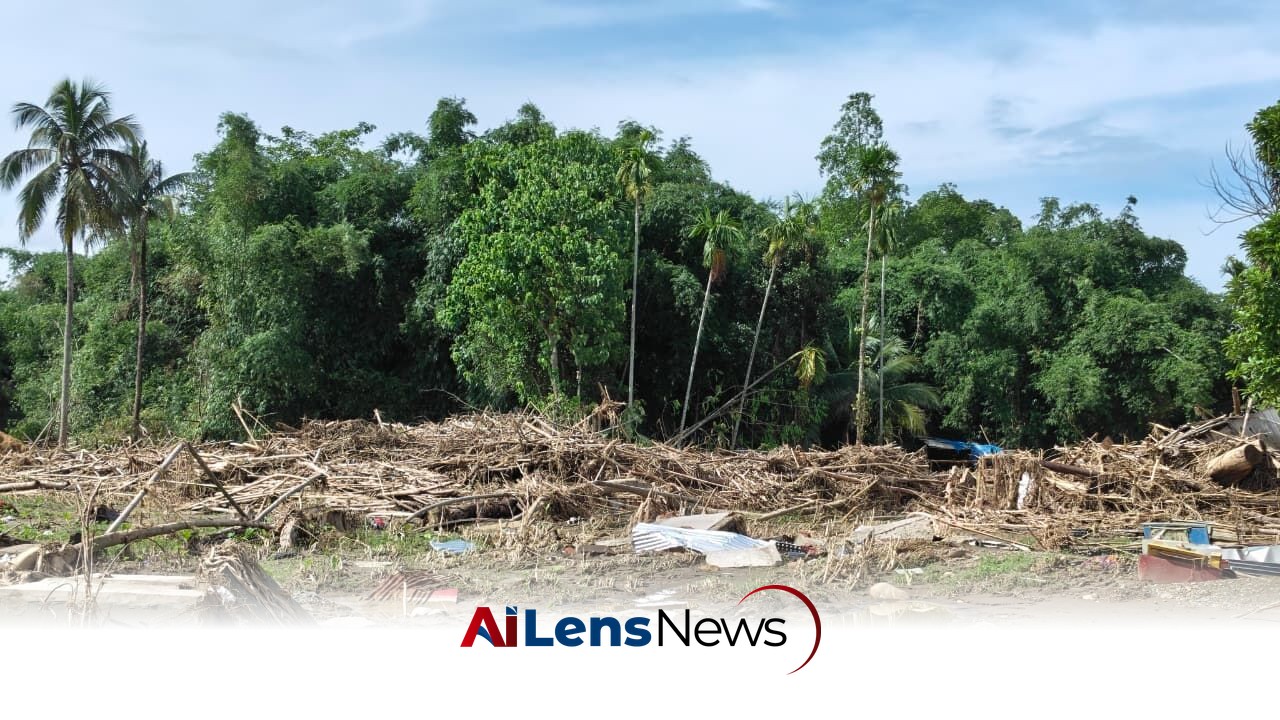


Survivors of Nepali Khuti return to a village in ruins, grappling with loss and the stench of decay as they begin the arduous task of rebuilding.
Imphal, India Jul 30, 2026 ALN: The first thing that strikes anyone entering Nepali Khuti is the smell. A pungent stench hangs over the village, carried by the humid air and growing stronger with every step.
Residents say it comes from the carcasses of cattle, goats, and poultry that remain scattered across lanes, courtyards, and fields, left to rot after the Dikhow River tore through the village on July 19. The aftermath of the flood has not only devastated the physical landscape but also left a deep psychological mark on the community. The destruction is a stark reminder of the vulnerability of rural populations to natural disasters, particularly in regions where infrastructure and emergency response systems are often inadequate.
"The stench is from the carcasses of our livestock that are rotting everywhere; our cattle, chickens, goats..." says a local woman, covering her nose with the edge of her anchal as she points towards what was once her neighbourhood. The loss of livestock is particularly devastating for these families, as many rely on their animals for both sustenance and income. In a region where agriculture is the primary livelihood, the impact of losing livestock extends beyond immediate grief; it threatens the economic stability of the entire community.
Beyond the smell lies a landscape of a village where destruction stretches as far as the eye can see. Concrete and mud houses have been reduced to heaps of rubble. The floodwaters not only swept away homes but also obliterated years of hard work and investment. Furniture remains half-buried under thick layers of silt. Motorcycles, bicycles, and four-wheelers lie overturned in courtyards and open fields where floodwaters hurled them. Children's toys, swept away, now lie half-submerged in mud, silent reminders of lives abruptly interrupted. The emotional toll of such loss cannot be understated, particularly for the children who are now left without a safe space to play or learn.
Outside homes that no longer have walls, schoolchildren spread water-soaked textbooks under the sun, hoping that at least a few pages can still be saved. Education, which is already a challenge in rural areas, faces another setback as families struggle to restore their lives. The loss of educational materials can hinder children's learning and development, potentially affecting their futures. Clothes, bedding, cupboards, and cooking gas cylinders are strewn across muddy fields, deposited wherever the floodwaters finally lost their force.
As of Thursday, apart from a lone concrete house and the remains of a few collapsed structures, almost nothing is left standing. "Eku nabasile; sob gol ge (Nothing is left; everything is gone)," says one survivor, staring at the ruins of what was once his home. The emotional weight of such a statement reflects a collective despair that permeates the air in Nepali Khuti.
Abandoned to flood
For many here, the disaster unfolded over hours that they say they will never forget. According to survivors, the Dikhow's rising waters had signalled danger long before the village was overwhelmed. Gopal Sharma says the river began swelling from the morning of Sunday, July 19. "By around 9–9.30 am, floodwaters first started entering the village. Within a short time, the water level rose rapidly," he says. His account highlights the urgent need for early warning systems in vulnerable areas, as timely alerts could potentially save lives.
Sensing the danger, Sharma and his family climbed onto the roof of their house. But around 11.30 am, a powerful surge swept them away. "The wave was terrifying," he recalls. "The floodwaters rose to more than 12 feet and tore our house apart. I was swept away by the force of the current. Everyone thought I had died, but I managed to save myself by clinging to a tree until the next day. My family spent the entire night stranded like that. Nothing was left. Everything was gone," he says. His story is one of survival against overwhelming odds, but it also underscores the chaos and fear that accompanies such natural disasters.
The torrent carried massive logs and debris downstream. Swept away along with the roof of their own house, Sharma and his family somehow managed to reach the roof of another house, where they found temporary refuge. This highlights the resilience of the community, as they banded together in the face of disaster, but it also raises questions about the adequacy of disaster preparedness and response measures in place. Residents allege that help did not arrive when they needed it most. They recall repeatedly calling the district administration, pleading for rescue as floodwaters engulfed the village.
"Initially, our calls were answered once or twice. We were told that a rescue boat would be sent. But no one came till evening. Later, they stopped answering our calls altogether," one survivor alleges. This lack of timely response has left many questioning the effectiveness of local governance and emergency services. With no official rescue in sight, families remained stranded, mostly on rooftops, until they were eventually rescued by a local boatman, who took it upon himself to assist his neighbors.
Picking up pieces
For some, the cost was irreparable. Navajyoti Duwara says he lost his younger sister and grandmother in the flood. He alleges that despite repeated pleas for assistance, no rescue personnel arrived. "My family survived for three days drinking rainwater and floodwater before any help reached them," he says. His account is a tragic reminder of the human cost of inadequate disaster preparedness and response systems. A section of local residents also claim that more than 200 people from Nepali Khuti remain missing after the flood. However, the authorities have not officially verified or confirmed this figure, leading to further anxiety among families who fear for their loved ones.
Since Wednesday, residents have slowly begun returning to the village. One by one, they walk back to homes they spent years building, only to find them reduced to rubble and mud. The emotional toll of returning to such devastation is immense, as many grapple with the reality of their losses. Some sift through debris in search of documents. Others gather utensils, broken furniture, or anything that can still be salvaged. Many simply stand in silence, looking at empty plots where their houses once stood. “Amar kitab bohi bur aase, kintu polox’or tolot (Our books are there, but under heavy layers of silt),” says a teenager, holding onto the hope of salvaging a few. This illustrates the tenacity of the human spirit, even in the face of overwhelming loss.
For the survivors of Nepali Khuti, the floodwaters may have receded, but the struggle has only begun. The road to recovery is fraught with challenges, including the need for immediate humanitarian assistance, long-term rebuilding efforts, and psychological support for those who have experienced such trauma. The implications of this disaster extend beyond the immediate community, as it raises critical questions about climate resilience, infrastructure investment, and the role of government in disaster management. As the community begins to rebuild, the lessons learned from this tragedy must inform future preparedness and response strategies to ensure that no one is left behind in the face of nature's fury.
To learn more about the latest developments in Society & Social Issues, stay updated with our exclusive reports and analyses on AiLensNews.

