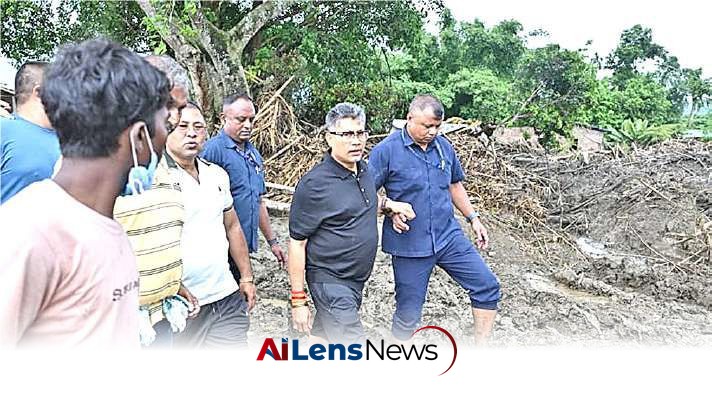


Sivasagar district is under renewed flood threat due to erosion of the Disang embankment, prompting emergency measures amid ongoing relief efforts.
Imphal, India Aug 2, 2026 ALN: After days of devastation caused by the recent flood, Sivasagar district faces a new threat as the Disang embankment has been damaged in fresh erosion at Betbari Barpatra, prompting emergency protection measures. If the rain continues in the catchment areas in Nagaland, the embankment will come under severe pressure. The water level of the Disang river at Nangalamora Ghat and AT Road crossing are rising as of 6 pm on Saturday.
However, the water levels of the Dikhow and the Mitong are falling, according to the Water Resources Department bulletin. Rumours of a breach of the Dikhow embankment at Meteka and Hatikhok caused serious panic among the people of the areas last night, but there is no such situation, and embankment strengthening by the Water Resource Department has been ongoing.
Flood relief items, including food, clothes, medicines, and tarpaulins, have been pouring in from all corners of the State and even as far as Punjab for the worst-hit Sivasagar and Charaideo residents.
Thousands of families in the two districts are still unable to return to their homes as mud and slush have filled their houses. For many, there are no homes at all after 13 days of the devastating flood that wiped out everything around.
Many families have been living under tents along the roads of Ramani Ali, AT Road, and BG Road. Although official figures put the death toll at 41 in Sivasagar district, it is expected to rise as the whereabouts of some people are still unknown.
Numerous NGOs and SHGs have made a beeline to these districts with loads of relief materials. Anajory of Rajahowli, Jorhat, led by its president Anwara Begum, distributed food items at Boliaghat on Friday.
The situation in Sivasagar reflects a broader pattern of seasonal flooding that has plagued the region for decades. The Brahmaputra River and its tributaries, including the Disang, Dikhow, and Mitong rivers, are prone to overflowing during the monsoon season, which typically runs from June to September. This annual flooding is exacerbated by deforestation, climate change, and encroachments on riverbanks, leading to increased erosion and reduced capacity for water absorption in the surrounding landscape.
The Disang embankment, which was originally constructed to protect the low-lying areas from flooding, has been a critical piece of infrastructure for the local communities. Its erosion poses a significant threat not only to the immediate vicinity but also to the broader ecosystem and agricultural practices in the region. Farmers in Sivasagar and Charaideo rely heavily on the fertile lands along the riverbanks for their livelihoods, and any disruption can have cascading effects on food security and economic stability.
Relief efforts have been mobilized rapidly, with government agencies and local organizations working together to provide immediate assistance to affected families. The distribution of essential items such as food, clothing, and medical supplies is crucial in the aftermath of such disasters. However, the logistics of delivering aid can be challenging due to damaged infrastructure and ongoing weather conditions. Roads may be impassable, and access to remote areas can be limited, complicating relief efforts.
In addition to immediate relief, there is a pressing need for long-term strategies to address the root causes of flooding in the region. Experts advocate for improved river management, reforestation efforts, and community education on sustainable land use practices. These measures could help mitigate the impact of future floods and enhance the resilience of local communities.
Furthermore, the psychological toll of flooding on affected individuals and families cannot be overlooked. Many people experience trauma and anxiety as they confront the loss of their homes, belongings, and in some cases, loved ones. Mental health support services are essential in the recovery process, providing affected individuals with the necessary resources to cope with their experiences and rebuild their lives.
The ongoing situation in Sivasagar serves as a stark reminder of the vulnerability of communities living in flood-prone areas. As climate change continues to intensify weather patterns, regions like Sivasagar may face even greater risks in the future. It is imperative for local, state, and national governments to prioritize disaster preparedness and response strategies to protect vulnerable populations and infrastructure.
As the community begins to assess the damage and plan for recovery, the resilience and solidarity of the people of Sivasagar are evident. Neighbors are coming together to support one another, sharing resources and providing comfort in times of need. This spirit of cooperation is essential for navigating the challenges ahead and rebuilding a stronger, more resilient community.
In conclusion, while the immediate threat from the Disang embankment's erosion is alarming, it also highlights the need for comprehensive flood management strategies that can address both the symptoms and causes of flooding in Sivasagar. Continued monitoring of river levels, timely dissemination of information, and community engagement will be critical in ensuring the safety and well-being of residents in the face of ongoing environmental challenges.
The Disang embankment has a long history, having been constructed to mitigate flooding risks that have historically plagued the region. Its integrity is vital not only for protecting local communities but also for maintaining the ecological balance of the surrounding areas. Flooding can lead to soil erosion, loss of agricultural productivity, and displacement of wildlife, further complicating the recovery process for affected families.
In recent years, the frequency and intensity of floods in the region have increased, prompting discussions among environmentalists and local leaders about the need for sustainable practices that can help reduce the impact of such disasters. This includes re-evaluating land use policies, enhancing flood forecasting systems, and investing in infrastructure that can withstand extreme weather events.
The role of local governance and community participation in disaster management is also crucial. Engaging residents in planning and implementing flood resilience strategies can empower them to take proactive measures in safeguarding their homes and livelihoods. Community-based approaches to disaster risk reduction have shown promise in various parts of the world, and Sivasagar could benefit from similar initiatives.
As the immediate crisis unfolds, the importance of collaboration between government agencies, NGOs, and local communities cannot be overstated. Each entity brings unique resources and expertise to the table, and their combined efforts are essential to ensure that relief reaches those who need it most. The involvement of local volunteers, who often have firsthand knowledge of the affected areas, can also enhance the effectiveness of relief operations.
Looking ahead, it is imperative for policymakers to consider the long-term implications of climate change on flood-prone regions like Sivasagar. This includes investing in research to better understand the changing dynamics of river systems and the potential impacts of climate variability on local weather patterns. By prioritizing adaptive strategies, communities can better prepare for future flooding events and minimize the disruption to their lives.
In summary, the situation in Sivasagar highlights the urgent need for a multi-faceted approach to flood management that encompasses immediate relief efforts, long-term planning, and community engagement. The resilience demonstrated by the people of Sivasagar in the face of adversity is commendable, and it underscores the importance of collective action in overcoming the challenges posed by climate change and natural disasters.
To learn more about the latest developments in Crime & Law, stay updated with our exclusive reports and analyses on AiLensNews.

