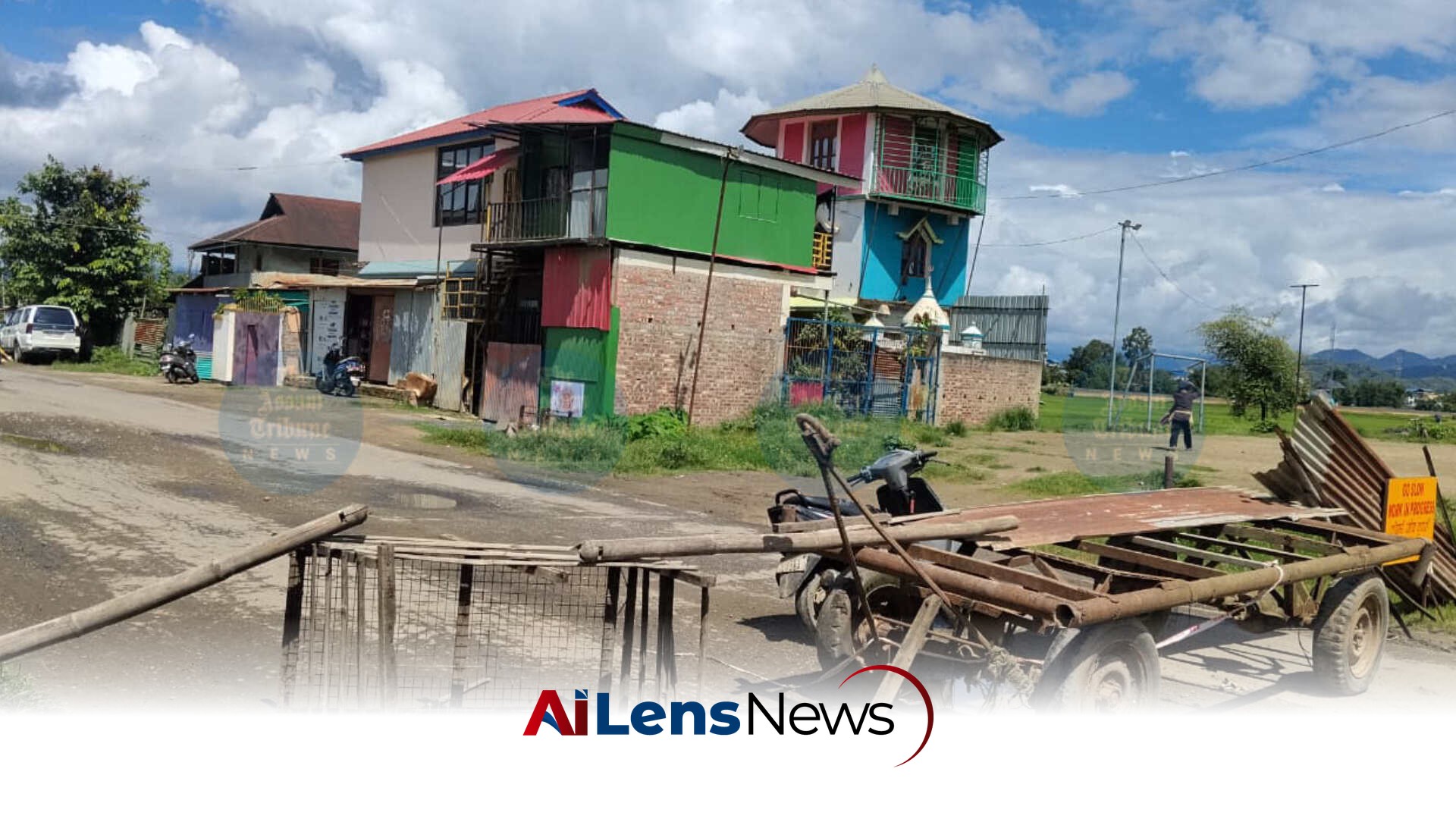


A two-day shutdown in Manipur's valley districts disrupts daily life as students demand the implementation of the National Register of Citizens before the upcoming Census.
New Delhi, India Aug 18, 2026 ALN: Union Home Minister Amit Shah has listened attentively to the demand for implementing the National Register of Citizens (NRC) in Manipur prior to the Census 2027 exercise, according to former chief minister N Biren Singh. This statement comes amid ongoing protests and a two-day shutdown across the valley districts of the state.
Singh, who returned to Imphal on Tuesday after a two-day visit to New Delhi, met with Shah on Monday to discuss the pressing demands. He stated, “Shah gave a patient hearing to our concerns. I genuinely believe and feel that there will be a positive response to the demands raised by the people. I also apprised Shah that people are not against the conduct of the census but are demanding NRC first and then the census.”
His remarks coincide with significant disruptions to normal life in five valley districts of Manipur on the first day of a two-day strike called by the Campaign for Just and Free Delimitation (JFD), a student organization advocating for the implementation of the NRC before the census.
Markets and educational institutions remained closed in Imphal East, Imphal West, Thoubal, Kakching, and Bishnupur, while public transport was largely absent from the roads. Government offices reported low attendance, although some private vehicles were seen operating. The strike, which commenced at midnight on Tuesday, had minimal impact in the hill districts, including Churachandpur.
In various parts of the valley, strike enforcers erected roadblocks using bamboo poles and stone boulders. At Kongba bazaar in Imphal East, reports indicated that some vegetable vendors were forced to close their shops. At Athokpam in Thoubal, protesters burned tires on the roads and chanted slogans of "No NRC, No Census." This agitation arises just days before the self-enumeration phase of Census 2027, which began on August 17, with the main house-listing operation scheduled from September 1 to September 30.
The demand for NRC has also led to confrontations between protesters and police. On Sunday, students demonstrating outside the Directorate of Census Operations in Imphal were dispersed after police fired tear gas shells, with reports of injuries among protesters during the police action.
The JFD continues to assert that the NRC must be implemented prior to the census, while authorities are pressing ahead with preparations for the scheduled census exercise.
The National Register of Citizens (NRC) is a contentious issue in India, particularly in states like Assam, where it was first implemented to identify undocumented immigrants. The NRC aims to provide a comprehensive list of legal citizens, thereby ensuring that only those who can prove their citizenship are included. This has raised concerns among various communities about potential exclusion and discrimination, especially among ethnic minorities and indigenous populations.
In Manipur, the demand for the NRC has gained traction among certain groups who argue that it is essential for protecting the rights and identity of the indigenous people. They fear that without an NRC, the demographic balance of the state could be altered, leading to an influx of outsiders, particularly from neighboring states and countries. This sentiment has been exacerbated by ongoing ethnic tensions and conflicts over land and resources in the region.
The protests and shutdowns reflect a broader discontent with the central government's policies and their perceived impact on local communities. The JFD's call for an NRC is not just about citizenship; it is also tied to issues of identity, representation, and the preservation of cultural heritage in a rapidly changing socio-political landscape.
As the Census 2027 approaches, the government faces a dual challenge: addressing the demands for an NRC while ensuring that the census is conducted smoothly and effectively. Census data is crucial for resource allocation, political representation, and planning for development initiatives. However, the current unrest raises questions about the feasibility of conducting the census in an atmosphere of heightened tension and distrust.
Amid these developments, the role of student organizations like the JFD is pivotal. They serve as a voice for the younger generation, often mobilizing public opinion and pushing for accountability from political leaders. The ongoing protests highlight the importance of civic engagement in shaping policies that affect people's lives.
Looking ahead, the implications of these protests could extend beyond Manipur. The demand for an NRC may resonate in other parts of India, where similar concerns about citizenship and identity are prevalent. As the central government navigates these complex issues, the balance between national security, demographic integrity, and individual rights will be a critical point of contention.
In conclusion, the situation in Manipur serves as a microcosm of the larger debates surrounding citizenship, identity, and governance in India. With the Census 2027 on the horizon, the coming weeks will be crucial in determining how these issues will be addressed and whether a resolution can be found that satisfies the demands of the people while maintaining social harmony.
To learn more about the latest developments in Local & Regional, stay updated with our exclusive reports and analyses on AiLensNews.

