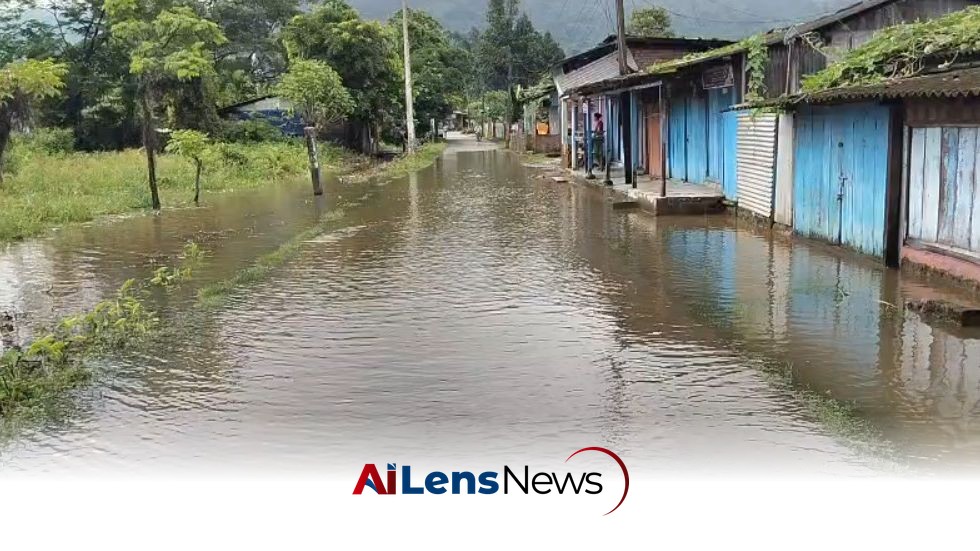


In Margherita, severe artificial flooding has sparked public outrage as residents call for urgent action from local authorities to address chronic waterlogging issues.
Imphal, India Jul 16, 2026 ALN: A single night of incessant rainfall on Wednesday exposed what residents described as years of administrative neglect, as several localities under the 83 No. Margherita Legislative Assembly Constituency were submerged by severe artificial flooding.
The deluge disrupted normal life across Ledo, Bargolai, and Margherita, leaving hundreds of families, commuters, students, and business owners grappling with waterlogged roads and inundated premises on Thursday as well. The immediate aftermath of the flooding saw schools closed, businesses halted, and emergency services stretched thin as they attempted to respond to the crisis.
Residents argued that the flooding was not merely the result of heavy rainfall but a consequence of an inadequate drainage network, poor stormwater management, and the absence of long-term urban planning. This situation has been exacerbated by a lack of investment in infrastructure, which has left many areas vulnerable to flooding during the monsoon season.
Public anger was directed at government representatives, particularly three-time MLA Bhaskar Sharma, whom many accused of failing to resolve the recurring problem despite repeated appeals over the years. The residents' frustration is compounded by the perception that their concerns have been routinely overlooked by local and state authorities.
"The affected areas have been suffering from chronic waterlogging for decades. Every spell of moderate or heavy rain transforms roads, marketplaces, and residential colonies into virtual lakes, causing immense hardship to the public. Despite numerous assurances from elected representatives and the authorities, no effective or permanent solution has been implemented," a member of the Assam Jatiyatabadi Yuba Chatra Parishad alleged. This sentiment reflects a broader dissatisfaction with political leadership in the region, as many residents feel that their needs are not being met.
Among the worst-affected locations were Ledo Railway Station and the surrounding commercial establishments and residential neighborhoods. The Ledo-Bargolai-Margherita stretch of the National Highway was also inundated, disrupting traffic and making movement difficult for both pedestrians and motorists. Commuters were seen wading through knee-deep water, while several vehicles struggled to navigate the submerged road. This disruption has not only affected daily commutes but also hindered the transportation of goods and services, further impacting the local economy.
Residents attributed the recurring crisis to the lack of scientifically designed drainage channels and poor maintenance of the existing drainage network. They alleged that clogged and undersized drains repeatedly fail to discharge rainwater efficiently, resulting in severe waterlogging even after relatively short spells of rain. The inadequate infrastructure has led to a cycle of flooding that has become increasingly difficult to break, with each incident compounding the damage to roads and property.
"MLA Bhaskar Sharma has failed to find a permanent solution. He has not been able to bring any scheme from Dispur for the people here. The drains are not scientifically designed, which is why even the National Highway gets inundated," the organization member claimed. This statement underscores the need for a comprehensive review of the drainage systems and urban planning strategies in the region, as well as the necessity for political accountability in addressing these pressing issues.
The organization warned that if the MLA failed to take concrete steps to provide a permanent solution to the artificial flooding, it would launch a mass agitation. This potential mobilization reflects the growing impatience among residents who feel that their voices are not being heard. Community leaders have indicated that they are prepared to take further action, including protests and public demonstrations, to draw attention to the inadequacies of their local government.
The implications of this situation extend beyond immediate relief efforts. Persistent flooding can lead to long-term economic challenges, including a decrease in property values, increased insurance costs, and a potential decline in local business activity. Furthermore, the health risks associated with standing water, such as the proliferation of mosquitoes and waterborne diseases, pose an additional concern for residents.
Addressing the flooding issue requires a multi-faceted approach that includes not only improving drainage systems but also implementing sustainable urban planning practices. This could involve engaging with environmental experts to design solutions that consider the natural landscape and weather patterns, as well as incorporating community feedback into planning processes.
In the wake of the flooding, local authorities will need to reassess their strategies for disaster management and infrastructure development. This may include allocating resources for upgrading existing drainage systems, conducting thorough assessments of flood-prone areas, and exploring innovative solutions such as green infrastructure that can help absorb excess rainwater.
As the monsoon season continues, the urgency for action grows. Residents of Margherita and surrounding areas are hopeful that their calls for change will be met with a serious response from their elected representatives. The need for accountability and effective governance is clearer than ever, as the community seeks to break free from the cycle of flooding that has plagued them for far too long.
In conclusion, the recent flooding in Margherita serves as a critical reminder of the importance of effective urban planning and infrastructure investment. As residents demand a permanent solution, the onus is on local and state authorities to respond decisively and ensure that the community is protected from future flooding events. The path forward will require collaboration, innovation, and a commitment to prioritizing the needs of the people in the face of climate challenges and urbanization pressures.
To learn more about the latest developments in Local & Regional, stay updated with our exclusive reports and analyses on AiLensNews.

