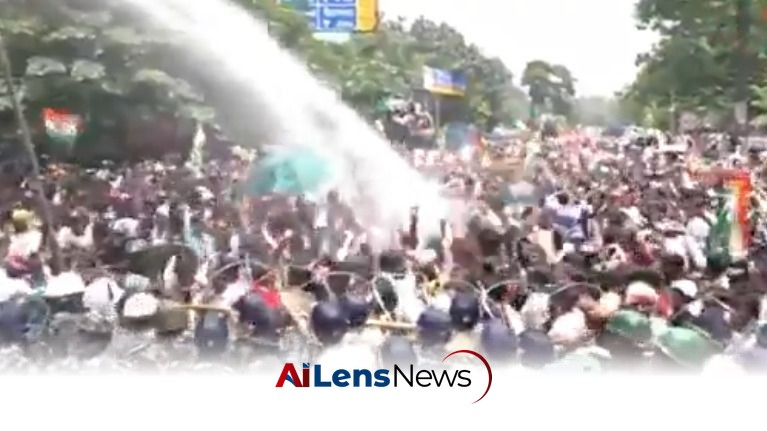


Students in Jharkhand persist in their protests against alleged irregularities in recruitment exams, demanding reforms and accountability from the government.
Imphal, India Aug 13, 2026 ALN: The ongoing agitation by students in Jharkhand over alleged irregularities and paper leaks in recruitment examinations conducted by the Jharkhand Public Service Commission (JPSC) and Jharkhand Staff Selection Commission (JSSC) continued on Thursday, with protesters reiterating that their movement will not end until concrete action is taken on their demands.
The protests, which began several weeks ago, have drawn significant attention to the recruitment processes in the state, highlighting a growing dissatisfaction among students regarding the integrity and transparency of these examinations. The JPSC and JSSC are responsible for filling vacancies in various government departments, and any perceived flaws in their processes can have far-reaching implications for the careers of thousands of aspiring candidates.
Several students participating in the protest said their primary objective is to secure meaningful reforms in the recruitment process and ensure accountability for any wrongdoing. They urged the government to approach the issue with seriousness and respond to students’ concerns in a fair and transparent manner. The students' demands extend beyond mere cancellation of exams; they are calling for systemic changes that would address the root causes of the alleged irregularities.
One student articulated the sentiment of many protesters, emphasizing that the focus of the movement is not merely on cancelling examinations but on addressing the underlying issues that have led to the current situation. "So, the main demand of those protesting there is reforms. We are also suffering because they have demanded that our examinations be cancelled. But cancelling the examinations does not in any way mean that everything will be set right. It would only allow those responsible for the irregularities to escape, because there would be no investigation," a student told IANS.
Another protester echoed these sentiments, stating that while governments may change over time, the need for accountability must remain a priority. He asserted, "The government should address the students’ issues with sensitivity and seriousness and take proper cognisance of them. Governments will come and go and change with time, but accountability must be fixed. The government should sincerely address and fulfil the issues currently being raised. The students’ primary demand is that the CGL examination be cancelled, reforms be introduced, and accountability be fixed so that students do not have to wander from one place to another in the future."
The protests have also drawn attention to the physical and mental toll that such sustained agitation can take on students. Reports indicate that some protesters have required medical attention and were taken to hospitals due to deteriorating health conditions. Despite these challenges, the determination of the students to continue their agitation remains strong. One student mentioned, "Some of the students have gone to freshen up. Today marks the 20th day...Many people are also on hunger strike, and several of them have had to be taken to hospitals. But the point is that 20 days have passed, and the government has still not fulfilled our demands. That is why we have been here for 20 days. We will remain here until all our demands are fulfilled."
Student leader Ravindra provided insight into the interactions between the protesters and local authorities, stating, "We had a meeting with the SSP yesterday, but he did not mention that FIRs were being registered against students. Our protest was historic, with students strengthening and raising their voice for their rights. If the administration feels that some anti-social elements were present who were trying to divert the students' movement, the government should identify them. But while doing so, it should keep in mind that around 50,000 students were present there. If one or two percent were such unwanted or anti-social elements, only those people should be identified, and students should not be harassed in any way."
The backdrop of these protests is a series of controversies surrounding recruitment examinations in Jharkhand, which have raised questions about the legitimacy of the processes employed by the JPSC and JSSC. Allegations of paper leaks and irregularities have not only fueled student unrest but have also drawn criticism from various stakeholders, including educational institutions, civil society groups, and political parties. The situation has escalated to a point where it has become a significant issue in public discourse, prompting calls for comprehensive reforms in the recruitment system.
In recent years, the integrity of competitive examinations in India has been a topic of national concern, with similar protests emerging in various states over allegations of corruption and mismanagement. The Jharkhand students' movement is part of a larger trend, where young aspirants are increasingly vocal about their rights and the need for a transparent and accountable recruitment process. This growing awareness among students reflects a broader societal demand for reform and integrity in public service recruitment.
The implications of these protests extend beyond the immediate demands of the students. They highlight a critical need for the government to reassess its recruitment policies and practices to restore public trust in the system. Failure to address the students' concerns could lead to prolonged unrest and further disillusionment among the youth, which may have lasting consequences for the political landscape in Jharkhand and beyond.
As the protests continue, it remains to be seen how the government will respond to these escalating demands. The students have made it clear that they are prepared to maintain their agitation until their voices are heard and their demands are met. The outcome of this movement could set a precedent for how similar issues are handled in the future and may influence recruitment processes across the country.
In conclusion, the ongoing protests by students in Jharkhand represent a significant moment in the fight for transparency and accountability in public recruitment processes. As students continue to rally for their rights, their determination serves as a reminder of the power of collective action in the pursuit of justice and reform. The government now faces the challenge of addressing these concerns effectively to quell unrest and restore faith in the recruitment system.
To learn more about the latest developments in Crime & Law, stay updated with our exclusive reports and analyses on AiLensNews.

